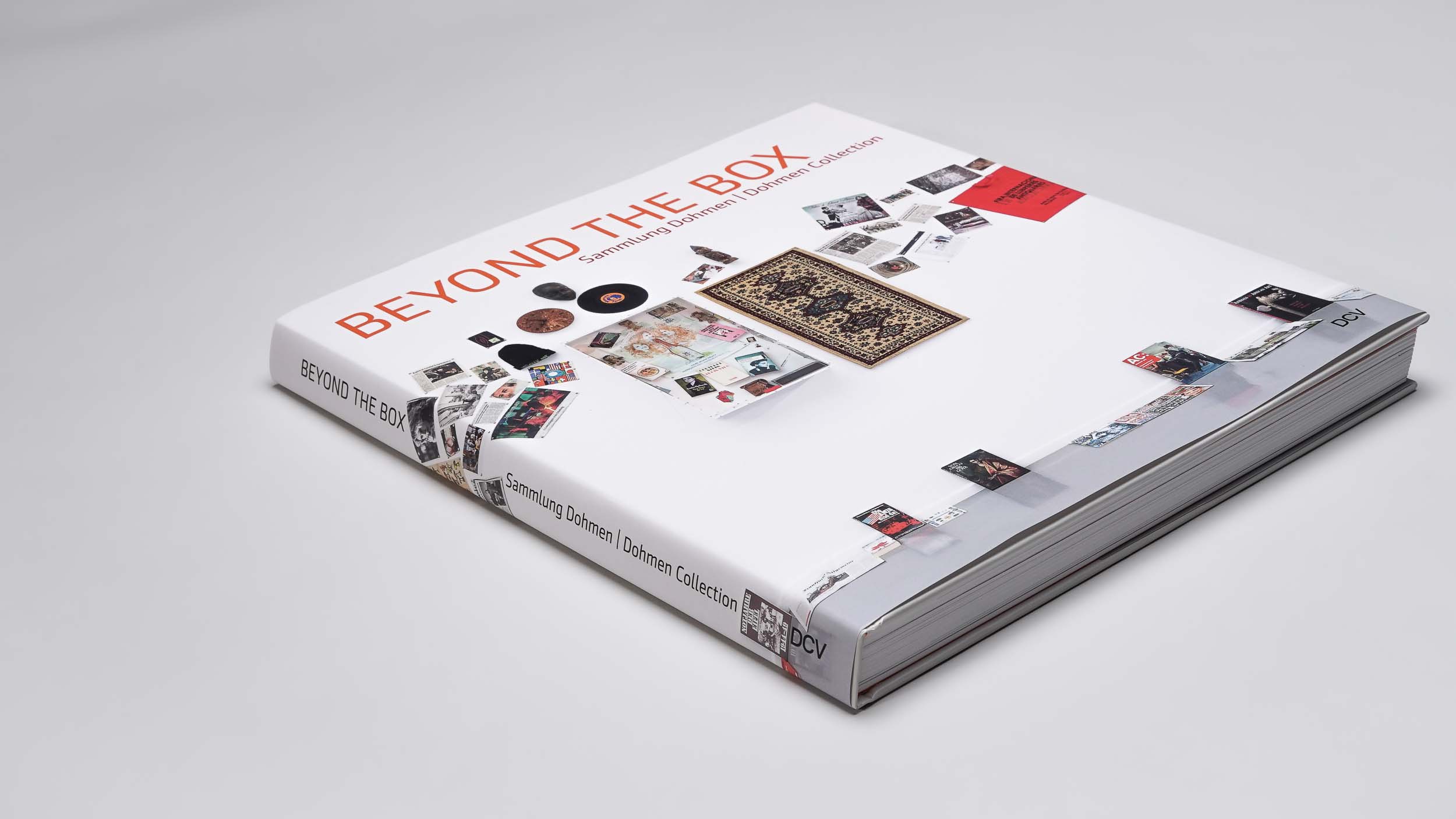
Beyond the Box
Dohmen Collection
 | |
|---|---|
| Author(s) | Christoph Balzar, Renate Puvogel, Oliver Zybok |
| Design | Axel Baltzer, Cologne |
| Cover | Hardcover |
| Size | 24 x 28 cm |
| Pages | 206 |
| Illustrations | 135 |
| Language(s) | German, English |
| ISBN | 978-3-96912-023-1 |
Breaking the Mold of Convention
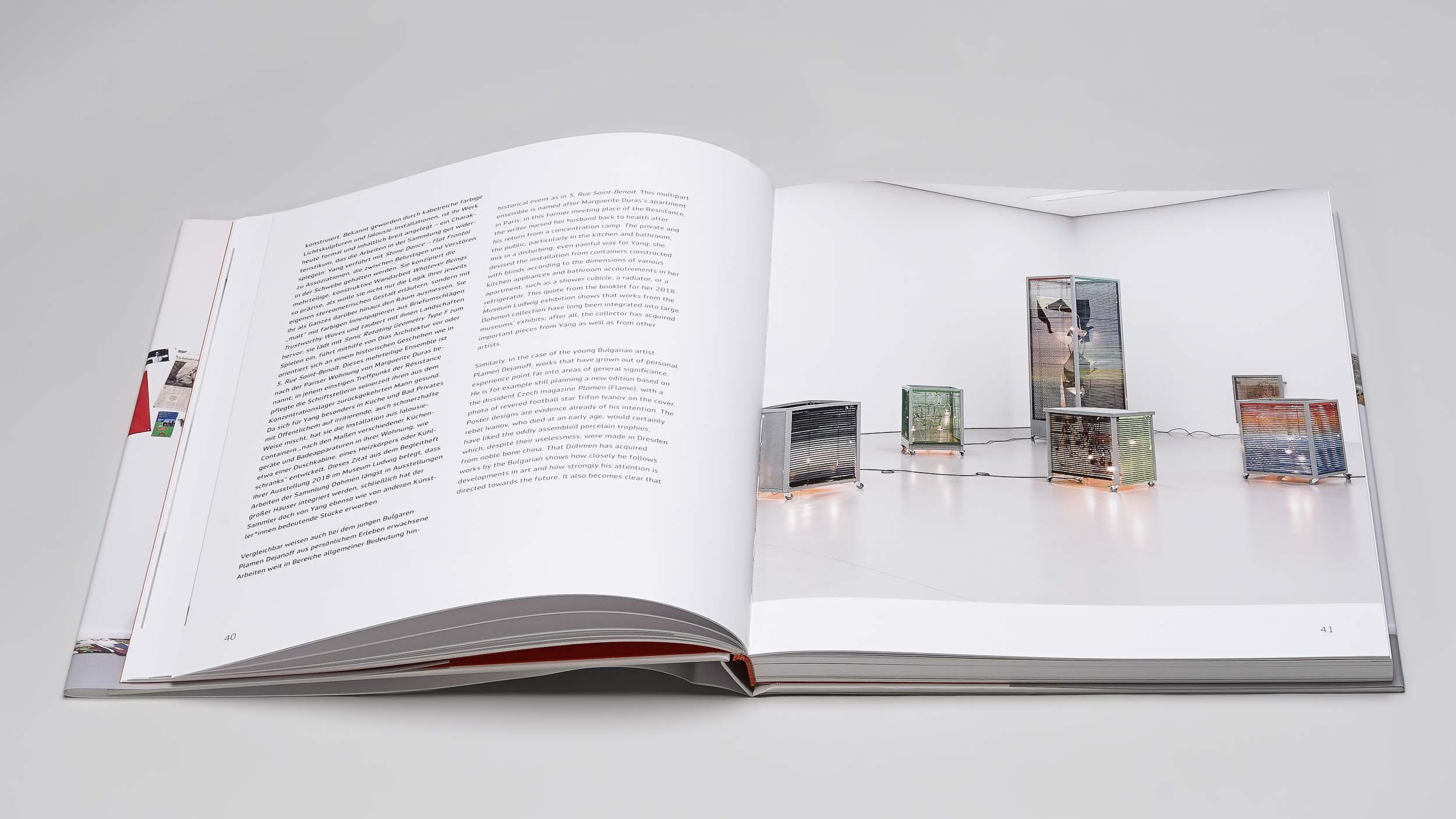
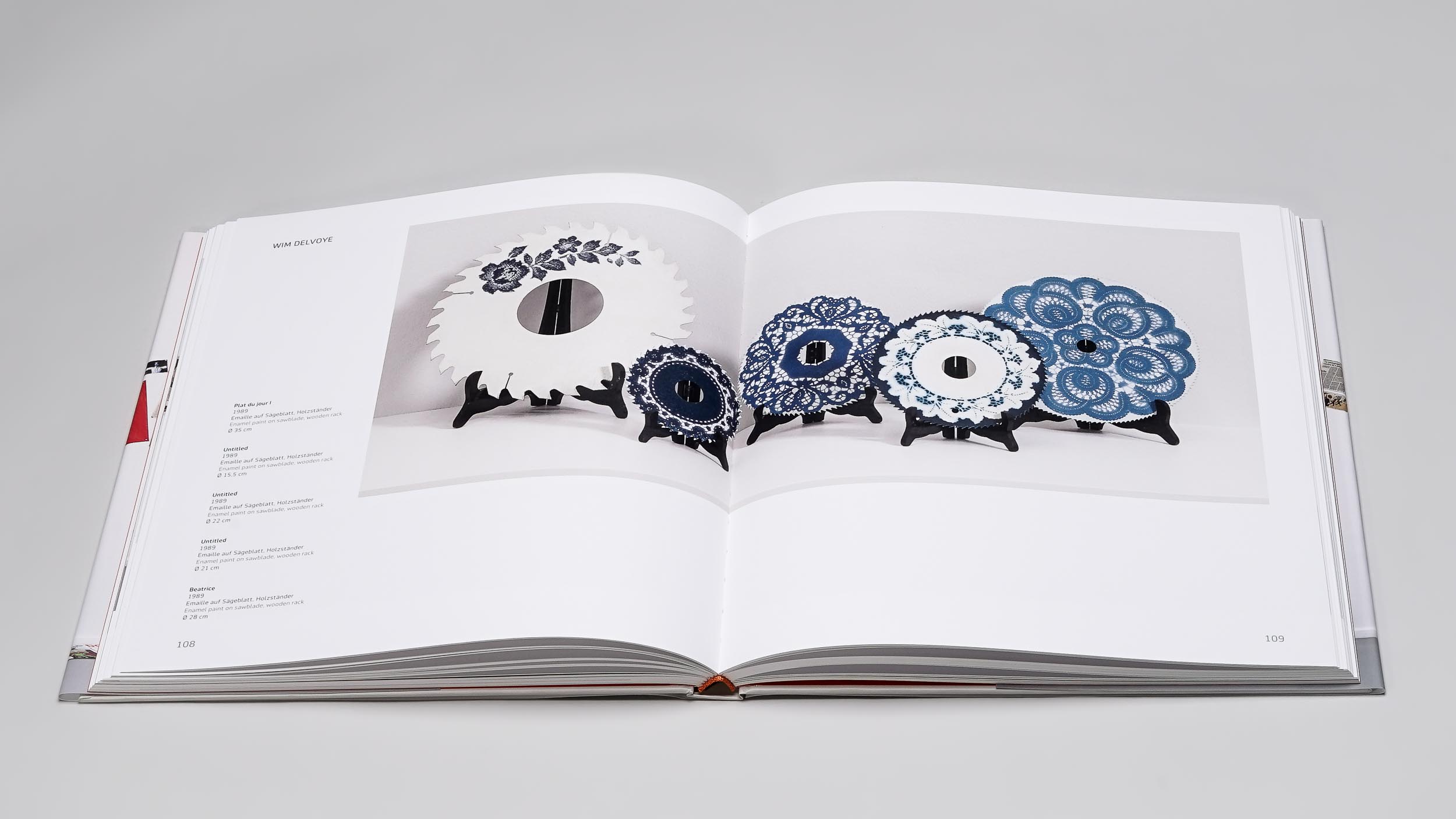
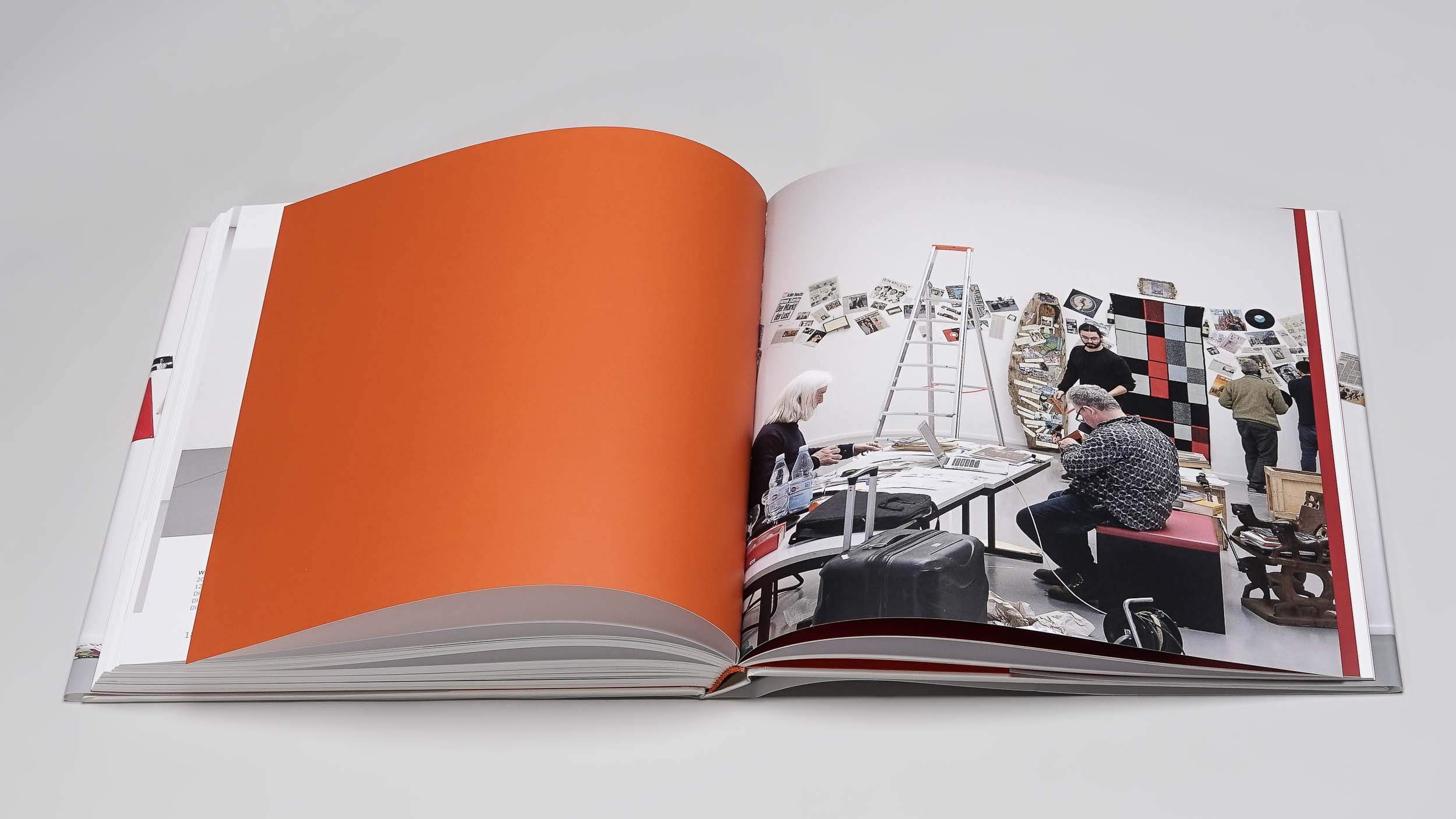
Presenting installations, sculptures, objects, and paintings from Mexico, Cuba, West Africa, Israel, Bulgaria, Russia, South Korea, and Japan, rounded out by extraordinary works from the U.S. and Europe, this selection from the Dohmen Collection features artists from countries that did not typically register on “Western” art radars until fifteen years ago. It was the seminal documenta 11 (2002), curated by a team led by Okwui Enwezor, that ushered in a departure from the contemporary art world’s entrenched geopolitical ideas. This book showcases a treasure that has long been ahead of its time yet did not attract public attention: the private collection of Werner Dohmen, a physician in Aachen. It includes works by Mariana Castillo Deball, Wim Delvoye, Jimmie Durham, Diango Hernández, Rodney McMillian, Pavel Pepperstein, Nora Turato, Haegue Yang, and other artists who continue to provoke audiences, ask probing questions, and prompt fresh thinking.
Dr. med. Werner Dohmen has been head of the board of Neuer Aachener Kunstverein since 1988. In addition to building his own collection, he has been a committed supporter of the intercultural project No es arte, which advocates for the return of goldwork of the pre-Colombian Tairona people that was stolen from sacred sites during the colonial conquest of South America.
More books
-

Stephan Kaluza
Die dritte Natur14€ Add to cartThe Nature of Art as Totality and Idyll
The philosophy of nature is central to the artist Stephan Kaluza’s (b. Bad Iburg, 1964; lives and works in Düsseldorf) work. As he sees it, there exists a succession of different natures: first nature is Kaluza’s designation for a world as immediately felt by (early) humans, part of an encompassing and close-range experiential totality they labeled ‘nature’ and perceived as a physical, but also spiritual and emotional concatenation of events. Second nature is stripped down to an objective and utilitarian quality; nature becomes a resource, the basis of life, the environment. In a kind of linguistic turn, speech mediates a surrogate, an alternative world, that positions nature as culture’s opposite; the former becomes replaceable in favor of latter. Yet this culture is far from devoid of yearnings for the immediacy that it has lost, and so develops an ‘artificial idyllic nature’ in turn. This third nature of the arts—a purely human nature—harks back to the archetypes of a first nature in escapism and totalized immersion.
-

Cristina Lucas
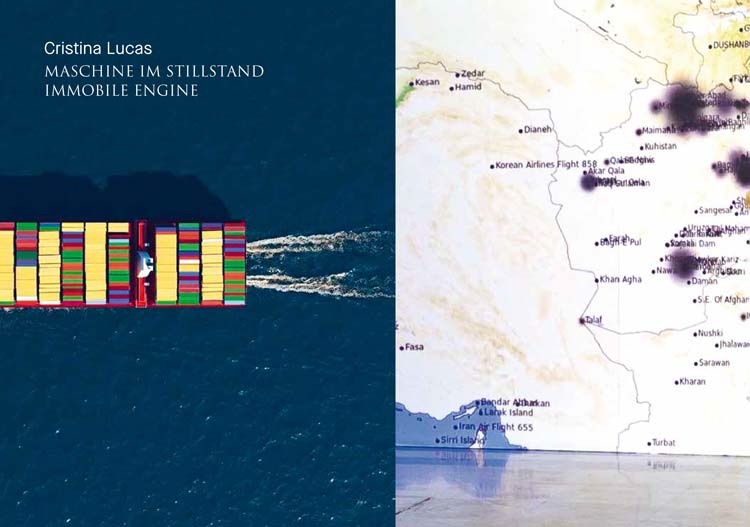
Immobile Engine29€ Add to cartMechanisms of Power
The Spanish artist Cristina Lucas (b. Jaén, 1973; lives and works in Madrid) works in a wide range of media and genres. Central concerns include the confrontation of subjective and political historiographies and a critical examination of cultural stereotypes. The publication’s point of departure is the multichannel video installation Unending Lightning, begun in 2013, in which Lucas undertakes a painstaking study of the history of aerial warfare. The book also showcases works that limn a contemporary perspective on value chains and the capitalization of time and landscape. Moreover, the artist has developed a corpus of critical cartographic models that offer algorithmic, philosophical, poetic, or, in some instances, humorous visualizations of unexpected nexuses. The first German-language publication on Cristina Lucas’s art, it offers a comprehensive survey of her oeuvre to date.
Cristina Lucas studied fine arts at the University of California and the Universidad Complutense, Madrid. She has had residencies in Paris, Amsterdam, and New York. Her work has been exhibited at MUDAM, Luxembourg; the Museo de Arte Contemporaneo, Santiago de Chile, and the Museo Nacional Thyssen-Bornemisza, Madrid; Kiasma, Helsinki; and the Centre Pompidou, Paris, among others.
-

DAWN OF HUMANITY – ART IN PERIODS OF UPHEAVAL
37€ Add to cartThe book and exhibition present works from the first two decades of the twentieth century from the Kunstmuseum Bonn’s collection in dialogue with contemporary creative positions. What the works have in common across the distance of a century is their genesis in, and reflection on, a time of major social and political crisis. Back then, life had been profoundly changed by the industrial revolution; nowadays, climate change, wars, and the rising political power of right-wing ideologies are transforming the life of our communities. The presentation conceives art as a tool that lets us interrogate the world and imparts fresh intellectual impulses, and so also plays an active part in our societies. The title Menschheitsdämmerung – Dawn of Humanity – is borrowed from the poetry anthology of the same title released by Kurt Pinthus in 1919, which samples the Expressionist lyric poetry of the young century in four chapters: “Downfall and Outcry”; “Love Human Beings”; “Awakening of the Heart”; “Entreaty and Indignation.” Florian Illies, who already wrote an afterword for the 2019 centenary edition of Menschheitsdämmerung – the bestselling poetry anthology in the history of German literature – contributed the keynote essay in the book.
Artists: Nevin Aladağ, Francis Alÿs, Kader Attia, Yael Bartana, Rebekka Benzenberg, Monica Bonvicini, Andrea Bowers, Heinrich Campendonk, Louisa Clement, Max Ernst, Georg Herold, Franz M. Jansen, Alexej von Jawlensky, Käthe Kollwitz, Wilhelm Lehmbruck, Max Liebermann, August Macke, Helmuth Macke, Goshka Macuga, Marie von Malachowski-Nauen, Carlo Mense, Zanele Muholi, Heinrich Nauen, Grace Ndiritu, Anys Reimann, Deborah Roberts, Daniel Scislowski, Paul Adolf Seehaus, Tschabalala Self, Monika Sosnowska, William Straube, Emma Talbot, Hans Thuar, Lawrence Weiner
- Release September 2025

The Magnificent Seven+
Strong Contemporary Female Artists44€ Add to cartWhen The Magnificent Seven hit the silver screen in 1960, heroism was firmly men’s business. Now it is women artists who are redefining the art world with visionary energy. Sebastian C. Strenger portrays outstanding women making art today, including Ingeborg Lüscher, Elfie Semotan, Xenia Hausner, Valérie Favre, Sandra Vásquez de la Horra, and Cristina Lucas. Their works question power structures, play with identity, or deconstruct prevailing narratives. Their art is figurative or abstract, narrative or conceptual, political or introspective. These women are changing the art market and dominate the new canon at international institutions by calling existing structures in question and opening up spaces for fresh thinking.
- Out of stock

Kurt Weidemann
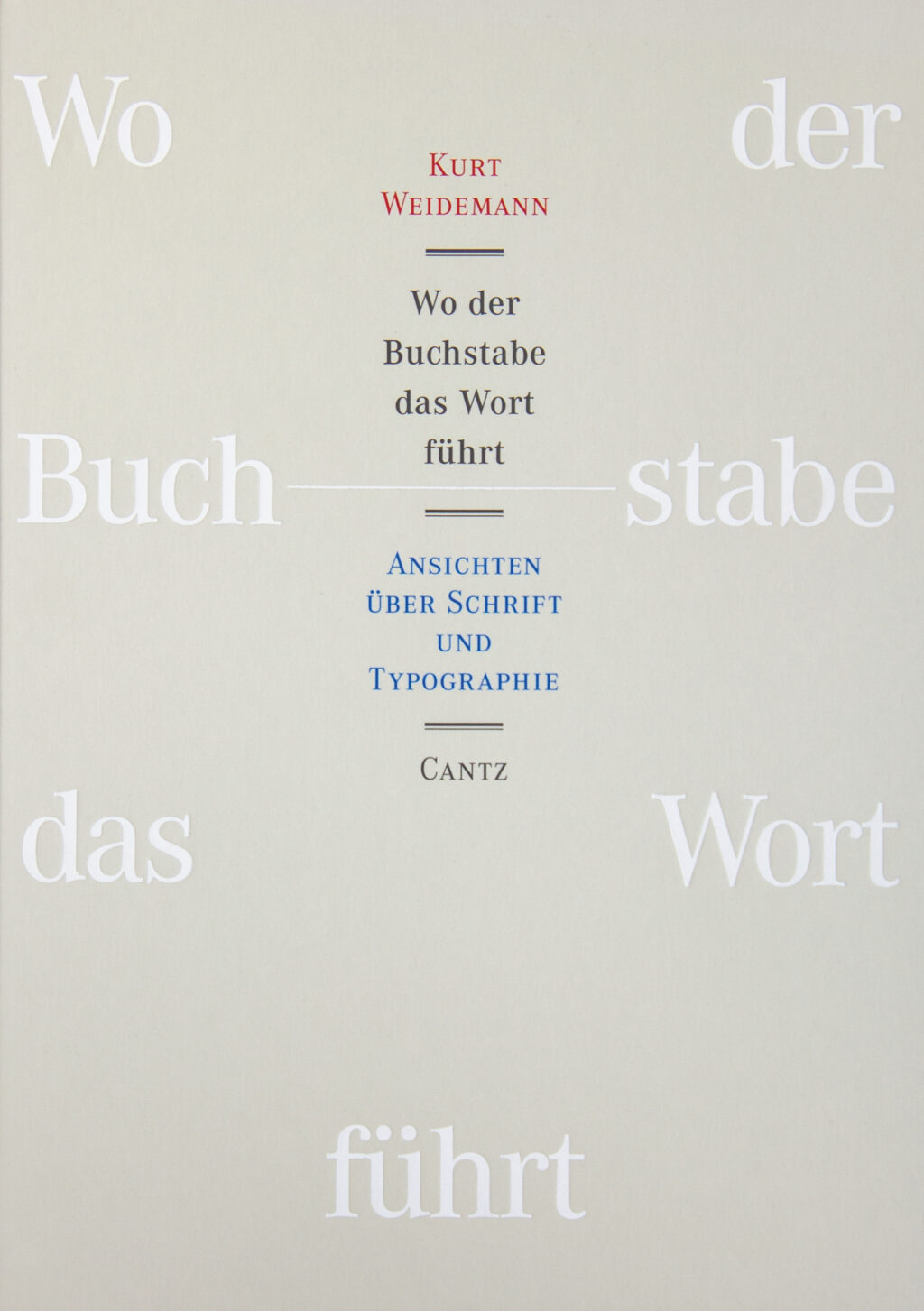
Wo der Buchstabe das Wort führt49,95€ Read moreSignierte Sonderauflage
Kurt Weidemanns Ansichten über Schrift und Typografie ist das beeindruckende Ergebnis eines über Jahrzehnte erlebten und reflektierten Berufslebens als Schriftsetzer, Typograf, Autor, Lehrer und Berater. Das Buch schildert die persönlichen, philosophischen und fachlichen Ansichten seines Metiers.
-

Matthew Davis
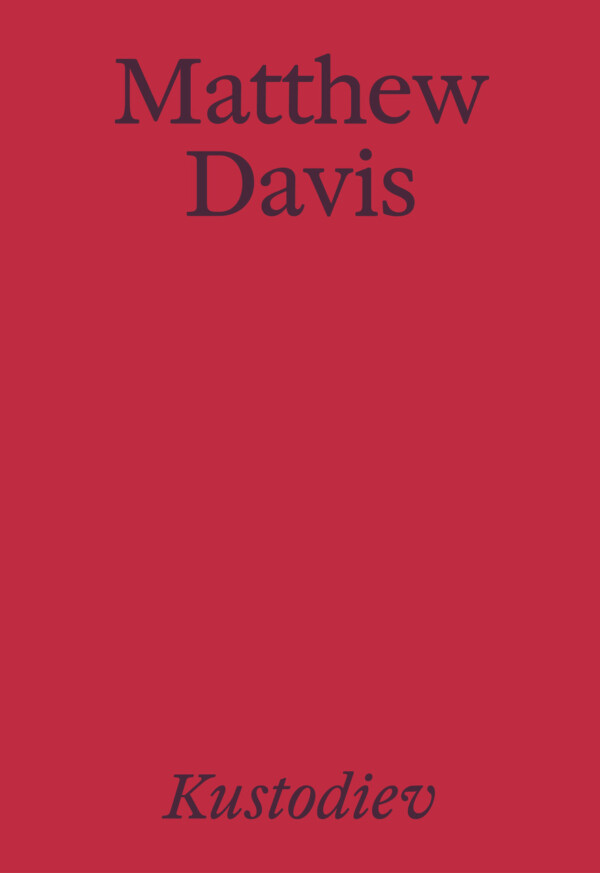
Kustodiev28€ Add to cartAn Expressive Instant in Painting
The art of Matthew Davis (b. 1969, Colchester, UK; lives and works in Berlin) operates between the micro and macro dimensions, between control and chance. Working with extraordinary precision, the artist applies drops of synthetic resin varnishes and enamel paints to canvases laid flat. The artist’s book Kustodiev showcases a recent innovative turn in Davis’s output, whose latest works were inspired by the lusciously colorful pictures of the Russian painter Boris Kustodiev (1878–1927). Kustodiev was manufactured using offset presses and Office Offset, a largely forgotten reproduction process based on miniature offset printing machines. The publication is released in a limited edition of 250 copies.
Matthew Davis studied at the Camberwell College of Arts, London, and the Norwich School of Art and Design. His work has been shown at the Konrad-Adenauer-Stiftung, Berlin; Künstlerhaus Wien, Vienna; Kunsthalle Wilhelmshaven; and other museums and galleries.
- Release January 2026
Valentina Jaffé
Dripping Folds and Melting States23€ Add to cartDripping Folds and Melting States is published in conjunction with the young artist Valentina Jaffé’s most extensive institutional solo exhibition to date. Blending artist’s book and catalogue, the volume gathers works from the past five years by Jaffé, who lives and works in the Rhine–Neckar metropolitan region. Taking an interdisciplinary and inter-media approach, she continually refines the conception of collage that is central to her art. Her creative universe is informed by intersections, imbrications, and the exploration of in-between states—by the concurrence of mutability and constancy.
Created out of long-fibered paper and awash in color, the artist’s visual spaces are transformed with each new environment and have an air of breathing membranes. Her ceramics, meanwhile, play with contrasts of hardness and softness, fragility and stability, coldness and warmth. The book reflects Jaffé’s multifaceted experimentation and is enhanced by scholarly contributions by Carolin Heel and Fedra Benoli, who add depth to her engagement with space, body, and material.
-

10 Jahre Württembergische Volksbühne
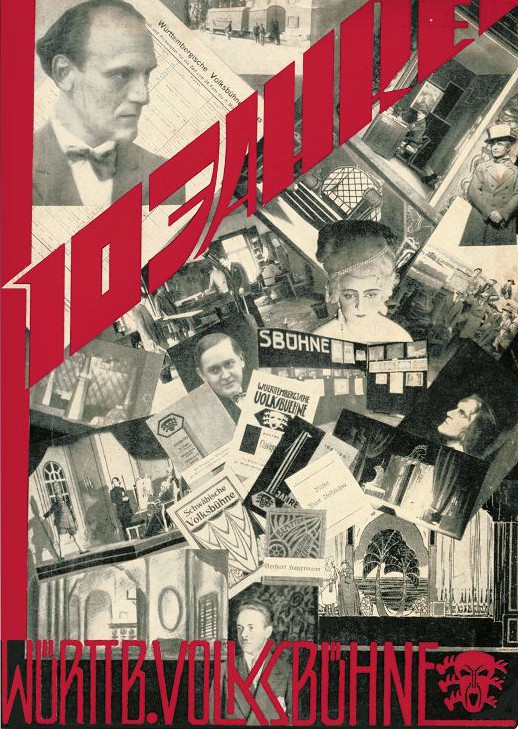
Reprint der Festschrift von 192915€ Add to cartCentennial Publication of the Württembergische Landesbühne Esslingen
In 2019, the Württembergische Landesbühne Esslingen (WLB)—one of the oldest regional theatres in Germany—is celebrating its 100th anniversary. On the occasion of this anniversary, the tenth commemorative publication by the Württembergische Volksbühne from 1929 is being reprinted. The unique document of the time visualizes in a special way the important role that the topics of cultural education and culture in rural areas, which are still relevant today, played in the young Weimar Republic immediately after the First World War. The brochure also documents both the mission and the daily work of the theater. In addition, the reprint is complemented by an essay from Joachim J. Halbekann, the principal of municipal archive of Esslingen, providing—for the first time in the history of the WLB—a comprehensive historical essay that examines the time betweeen 1919 and 1933/34.
-

Alexander Ruthner
Cour: Sommer36€ Add to cartContemplating Nature in a Reduced-Mobility Environment
“The events of the year 2021, which was defined by lockdowns, the pandemic, and restrictions, has brought out the resonance in my pictures of Gustave Courbet’s realism,” Alexander Ruthner (b. Vienna, 1982; lives and works in Vienna) says about his most recent works: oil paintings featuring lush green vegetation and veritable down comforters painted all-over in saturated color gradients. The works will make their public début as the publication is released in the summer of 2021, hence the word “Sommer” in the title. The other word, “Cour,” is a nod to the first syllable of the French painter’s name as well as French for “court,” a term the artist creatively reinterprets as a synonym for the solitary “castle of the mind” to which we have retreated under pandemic conditions. Ruthner, who studied with Peter Kogler, Daniel Richter, and Albert Oehlen, revisits the boscage and pasture painting of past eras in new works that propose a distinctive personal interpretation of that tradition’s charm.
Alexander Ruthner’s work has been shown at Kunsthalle Wien, the Whitechapel Gallery, London, and the National Museum of Montenegro, among other venues.
-
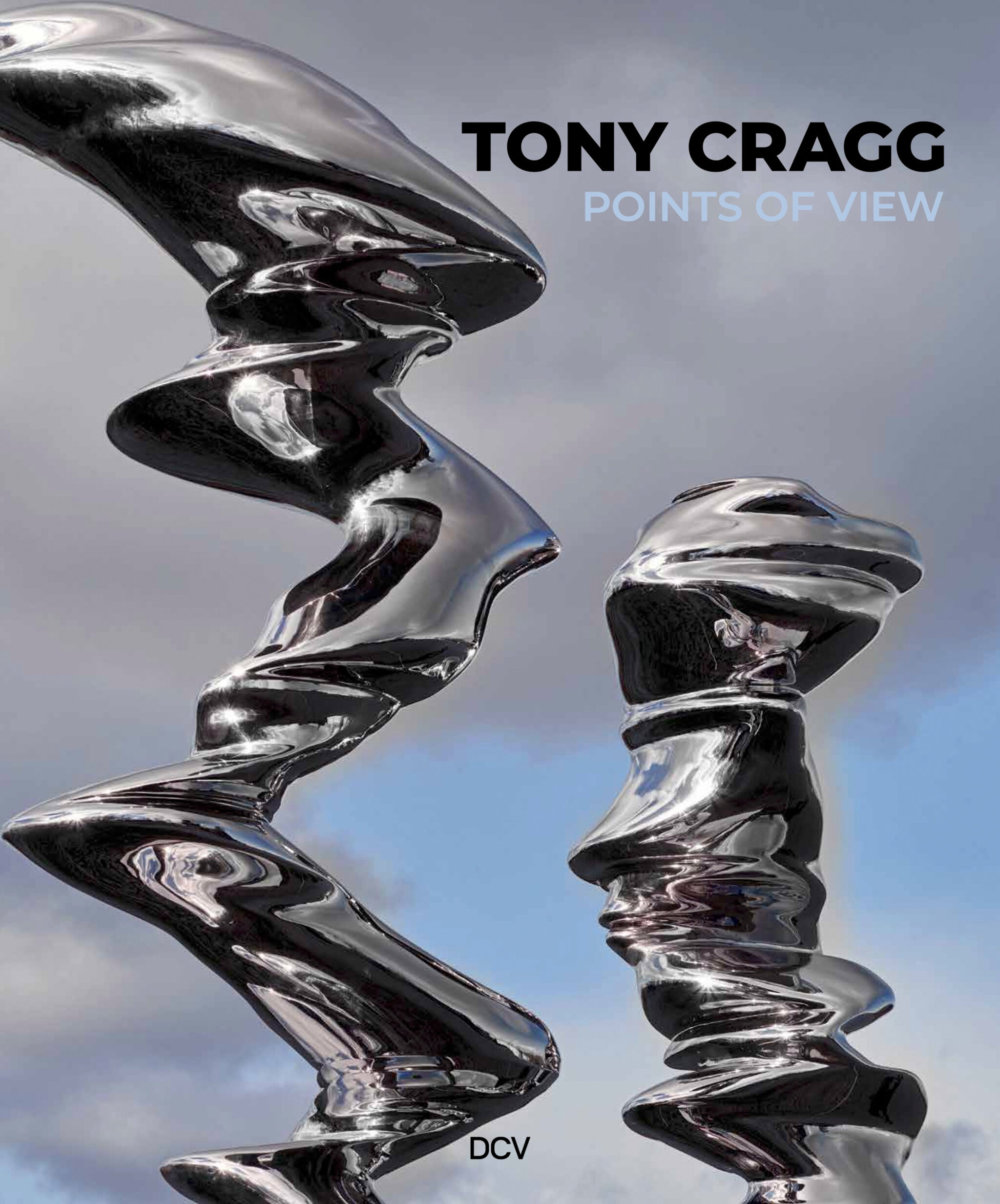
Tony Cragg
Points of View24€ Add to cartThe biomorphic and monumental sculptures of British sculptor Tony Cragg (born 1949, lives in Wuppertal) impress with their virtuosity and their dynamic appearance. They might even evoke movement, as if they are still becoming. Often exhibited outdoors, and in church or museum contexts, they blend into their surroundings like organic entities. Since the 1960s, Cragg’s search for sculptural form manifested through methods like layering and stacking existing materials, rearrangement, and assemblage. He now employs both traditional and new technologies and materials, yet his sculptures have to be seen in clear contrast to normative, repetitive industrial production. This book documents Cragg’s 2025 exhibition in the Anhaltische Gemäldegalerie Dessau.
-

Pokorny
25€ Add to cart“Abstraction means the omission of the irrelevant and the unnecessary in order to find more substantial content and form.”—Werner Pokorny
His often monumental sculptures can be found in many places in Germany and abroad, including Aachen, Berlin, Busan (South Korea), Frankfurt am Main, Freiburg, Karlsruhe, Riehen, Saarbrücken, and Stuttgart. Werner Pokorny works (b. 1949, Mosbach; lives and works in Ettlingen) exclusively with Corten steel for his outdoor sculptures and with wood, steel, and bronze for his indoor works. Well-known basic forms such as bowls, spheres, cuboids, and houses serve as points of departure and reference, which are abstracted by reduction, rotation, tilting, or combination with other elements. The artistic field of tension characteristic of Pokorny’s impressive sculptural oeuvre is due to the oscillation between form and abstraction, figure and reduction, hard edges and soft curves.
-

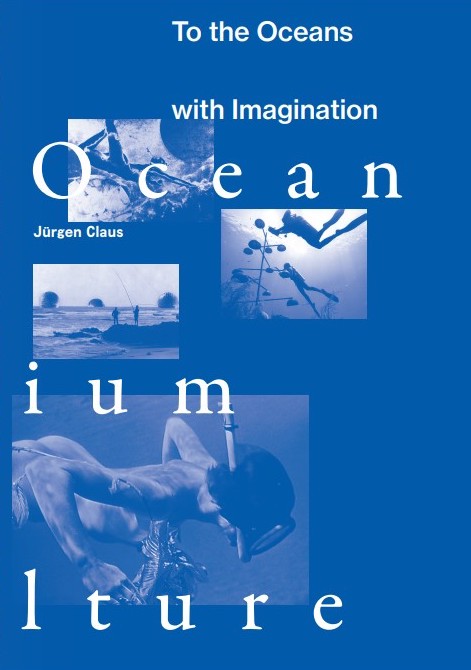
Jürgen Claus
To the Oceans with Imagination18€ Add to cartThe Sea as a Space of Artistic Experience
Jürgen Claus’s (b. 1935, Berlin; lives and works in Aachen and Baelen, Belgium) oeuvre encompasses paintings, films, light and solar installations, and underwater art. He is also a prolific writer on art, with theoretical works that have sold over 100,000 copies. “Jürgen Claus is the first one to see the ocean through an artist’s rather than a scientist’s lens,” Michel Ragon writes. In this book, Claus intertwines his experiences working on the fascinating underwater installations with a pressing contemporary concern: the global efforts to restore the seas to health. The publication combines visual art, architecture, poetry, and music for a multifaceted engagement with the world’s oceans.
Jürgen Claus majored in theater studies at the Universität München and was a research associate at the Massachusetts Institute of Technology (MIT) and professor of media art at the Kunsthochschule für Medien Köln, Cologne.
-

Räume hautnah (GERMAN)
Draiflessen Collection32€ Add to cartWe live in spaces that we shape in accordance with our own ideas. Our everyday lives leave traces in them that speak to our habits. Spaces promise shelter and belonging, but they can also instill a sense of constraint. We grow into the spaces we inhabit—and they in turn become expressions of our personalities. Conversely, spaces, depending on their architecture and location, inform our existence. RÄUME HAUTNAH gathers works of art that, rather than conceiving of the human sphere and the spatial domain as separate, comprehend them in their complex entanglements: in bodily experience, emotional dependency, or the instinctive need for protection. An essay by Olesja Nein, the project’s curator, offers an introduction to the exhibition and takes the reader on a tour, describing each artist’s space of activity and supplying helpful information. Philipp Zitzlsperger, meanwhile, zooms in on a key aspect of the art in the exhibition, the imprint as an artistic technique with a distinctive aura, and illuminates its origins and significance since the dawn of modernism.
Artists: Absalon, Shannon Bool, Heidi Bucher, Eileen Gray, Do Ho Suh, Mary Mattingly, Tracey Snelling, Francesca Woodman
-

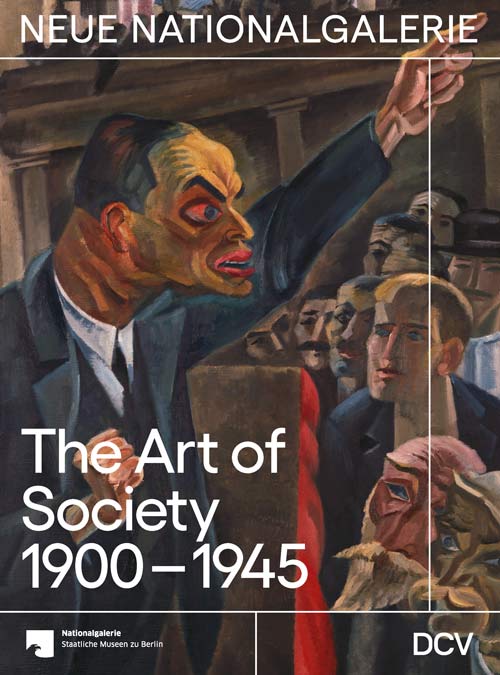
The Art of Society
1900–194529€ Add to cartThe Collection of the Nationalgalerie, Berlin
The Neue Nationalgalerie in Berlin, the last building designed by Mies van der Rohe, has been closed a full six years for refurbishment. To mark its reopening the museum is presenting the highlights of its classical modernist collection under the title The Art of Society, 1900–1945. Visionary, critical, resigned or utopian, the paintings and sculptures bear witness to art’s dialogue with prevailing social conditions – from the German Empire to the First World War, the Weimar Republic and ultimately National Socialism. The catalogue documenting all works in the exhibition traces the major artistic tendencies during the first half of the 20th century in thirteen chapters. The Art of Society, 1900–1945 offers a renewed encounter with works by Edvard Munch, Ernst Ludwig Kirchner, Tamara de Lempicka, Lotte Laserstein, Otto Dix, George Grosz, Max Beckmann, and many others that is as captivating as it is illuminating.
Click here for the German edition.
-

Roland Schappert
Coronasehnsucht14€ Add to cartThe coronavirus pandemic hit us in a time of disparate foci of attention. A fundamental lack of comprehension and hate speech contrast sharply with an unspoken consonance of ideas as well as feelings. What do reality, statistics, love, and yearnings do to us? They are playing a game with reality, sans fiction. Relationships sustain our lives. What was unmistakable before is now manifest, with stark certainty. Are we ready for loving dissension? Can we bear to think only as far ahead as we can see? How do our emotions answer these questions, and how does our intellect? The Cologne visual artist and writer Roland Schappert retraces his personal voyage through this sun-kissed rain-drenched time. The book is a diary-like tour de force of digital amorous overtures, an attempt to explain the world of art via WhatsApp, and the real challenges of life as a single artist in a major German city in precarious circumstances.
-

Sabrina Fritsch
syntaxerror28€ Add to cartSabrina Fritsch’s (b. Neunkirchen/Saar, 1979; lives and works in Cologne) paintings explore the potentials of the compositional process and the mechanisms of perception. Many of them feature coarse structures, textile surfaces, and delicate superimpositions. In this publication, Fritsch, who was recently appointed professor at the Düsseldorf Academy of Fine Arts, presents a résumé of the painterly oeuvre she has developed since her graduation from the same school in 2008. It encompasses two related books, each of which undertakes a structured study of a major strand in Fritsch’s art. One offers a chronological survey of a representative selection of works created between 2008 and 2019 that illustrate her playful and experimental engagement with the constituents of the painted picture: the picture-as-object, the organization of pictorial space, and the phenomenology of physical color. In addition to works on canvas boasting a wide variety of applications of materials and paint, it also covers serial variations in prints. The other showcases three exhibitions and bodies of work dating from 2020 and 2021 that are dedicated to the three color systems RGB, black-and-white (BAW), and CMYK.
-

Adrian Schiess
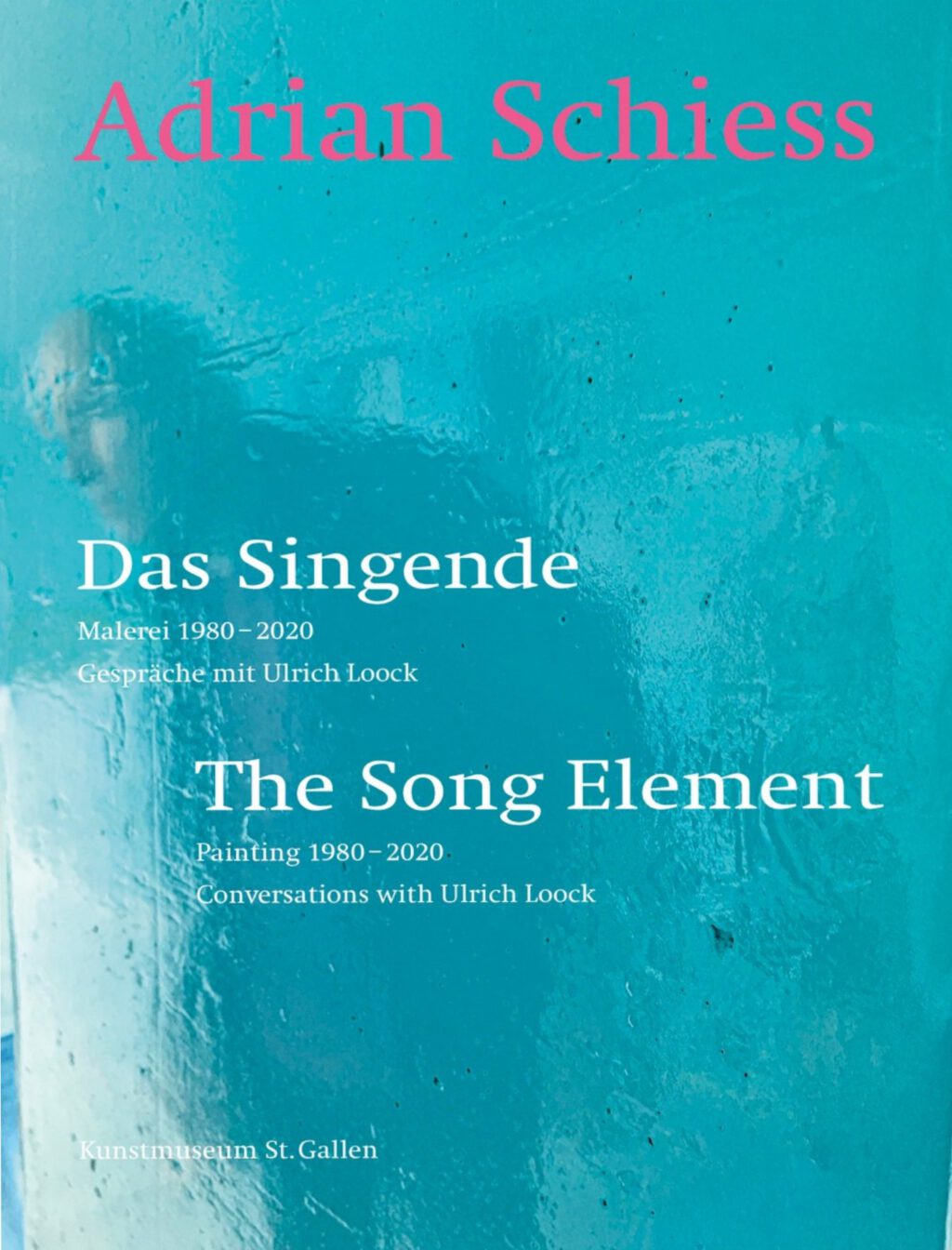
The Song Element68€ Add to cartThe Renowned Swiss Artist and His Work in Its Architectural Setting
Smoothly painted panels laid out on the floor have earned Adrian Schiess (b. 1959, Zurich; lives and works in Mouans-Sartoux, France) international renown. His objects, which may be placed in a room as desired, are conceived as platforms of creative engagement with the appearance and disappearance of painting. They have become integral components of buildings by world-famous architects including Norman Foster and Herzog & de Meuron. For this book, Schiess has compiled spectacular series of photographs and extensive conversations that probe the peculiar quality of his work: hybrid and fluctuating and yet always utterly distinctive. It is the first publication to put the focus on this essential aspect of his output, documenting works created between 1993 and 2018.
Adrian Schiess studied at the Kunstgewerbeschule Zürich and trained as a graphic designer. His works were on display at the 44th Biennale di Venezia and at documenta IX.
-

Larissa Kikol
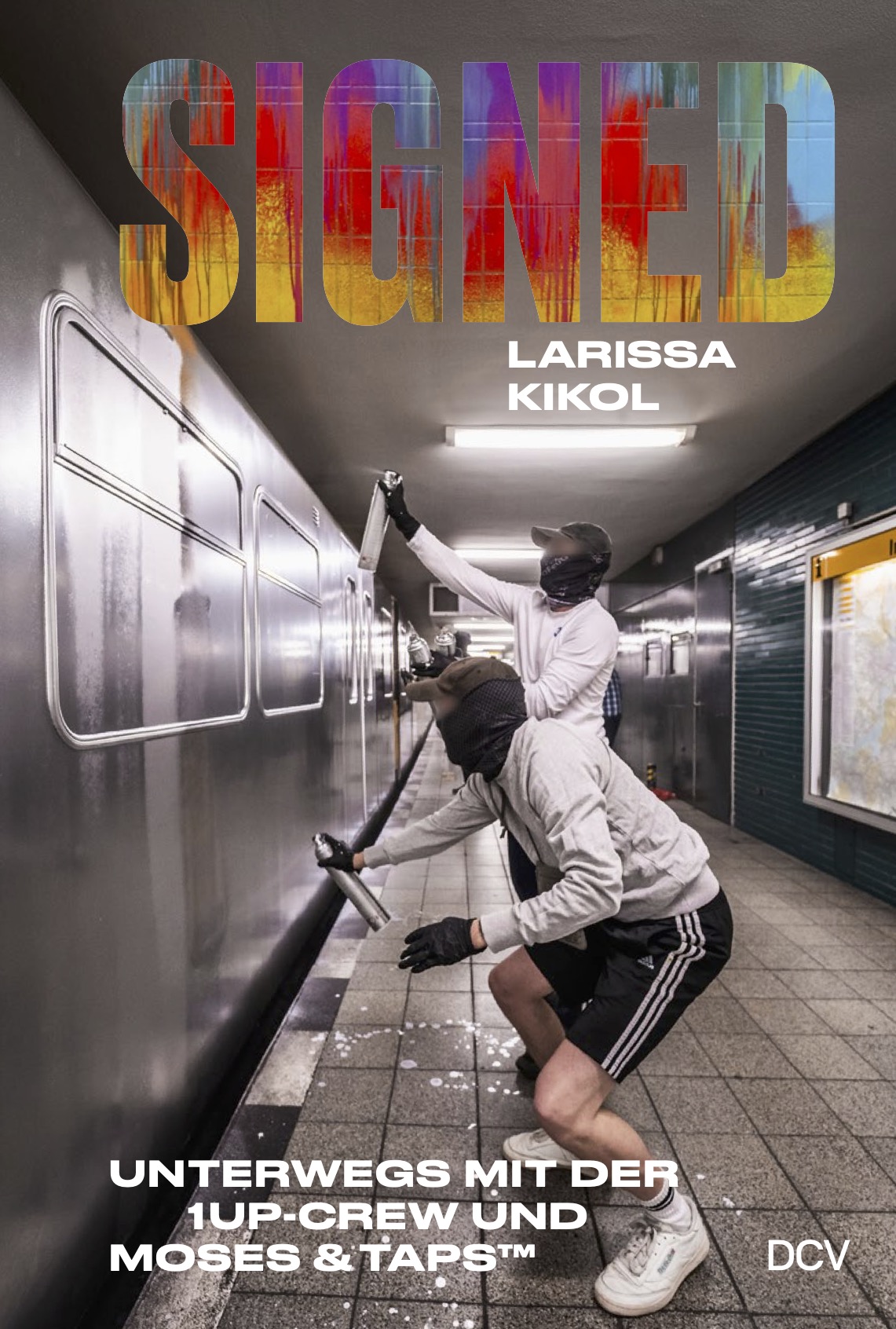
SIGNED. Unterwegs mit der 1UP-Crew und Moses & Taps18€ Add to cartWho owns the city? It is a question to which graffiti artists and politicians have very different answers. 1UP and Moses & Taps are international stars of the scene, realizing radical creative concepts in spectacular actions. The art critic Larissa Kikol shadowed them on their nocturnal forays for three years and gathered her experiences in a book that has become a singular tribute to the graffiti scene. It lets us witness the genesis of the artists’ works on the knife’s edge between civil disobedience, criminal liability, and an irrepressible freedom. Traveling throughout Germany, Kikol records absorbing dialogues that reflect the contrast between different worlds: the legal and the illegal art worlds, painting and protest. Always on the hop and in danger of being discovered and arrested, she ventures beyond the bounds of permissible art, into subway tunnels, up on roofs, across switchyards. A portrait emerges of Germany and Berlin and the power relations that shape our society.
Larissa Kikol (b. 1986) works as a freelance art critic, art scholar, and writer. She writes for Die Zeit, Spiegel Online, Art, Kunstzeitung, Mare, Monopol Online, and Kunstforum International. In 2016, she won C/O Berlin’s international Talents award in the art criticism category. She teaches and lectures at art schools and universities in Germany and France.
Kikol studied stage design and dramaturgy in Berlin-Weißensee and obtained a Ph.D. in art studies from the Karlsruhe University of Arts and Design. She lives and works in Marseille and Cologne.
-

SERIES
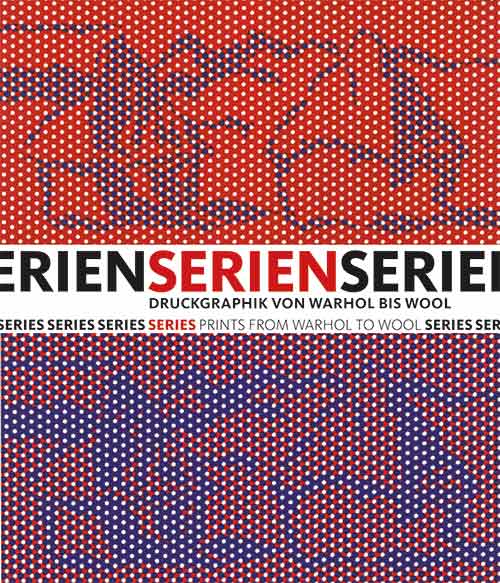
Prints from Warhol to Wool40€ Add to cartA Creative Strategy and Technique of Modernism
Series are open systems, telling stories, toying with rhythms, permitting variations, and documenting creative processes. Andy Warhol’s famous silkscreen prints made the serial iteration of images his trademark stratagem. In the mid-1960s, Pop Art and Fluxus had established the fine art print as a medium in which seminal work was being done. New graphic techniques such as serigraphy and offset printing, used with aggressive colors and punchy motifs, not only allowed for large numbers of copies, they also opened the door to an unprecedented engagement with the imagery of popular print and advertising media. Opening with an inquiry into how serial fine art prints are made, the book presents and contextualizes the explosive visual and political energy of graphic series. The numerous illustrations and essays are rounded out by an interview with Thomas Schütte and Ellen Sturm.
With works by Josef Albers, Joseph Beuys, Ulla von Brandenburg, John Cage, Helen Cammock, Nina Canell, Jim Dine, Dan Flavin, David Hockney, Jenny Holzer, Olav Christopher Jenssen, Donald Judd, Ronald B. Kitaj, Maria Lassnig, Sol LeWitt, Roy Lichtenstein, Richard Lindner, Robert Mangold, Brice Marden, Stefan Marx, Bruce Nauman, Dennis Oppenheim, Nam June Paik, Sigmar Polke, Gerhard Richter, Dieter Roth, Fred Sandback, Nora Schultz, Thomas Schütte, Dasha Shishkin, Frank Stella, Rosemarie Trockel, Victor Vasarely, Wolf Vostell, Andy Warhol, Corinne Wasmuht, Emmett Williams, Christopher Wool, and others.
-

Sinje Dillenkofer
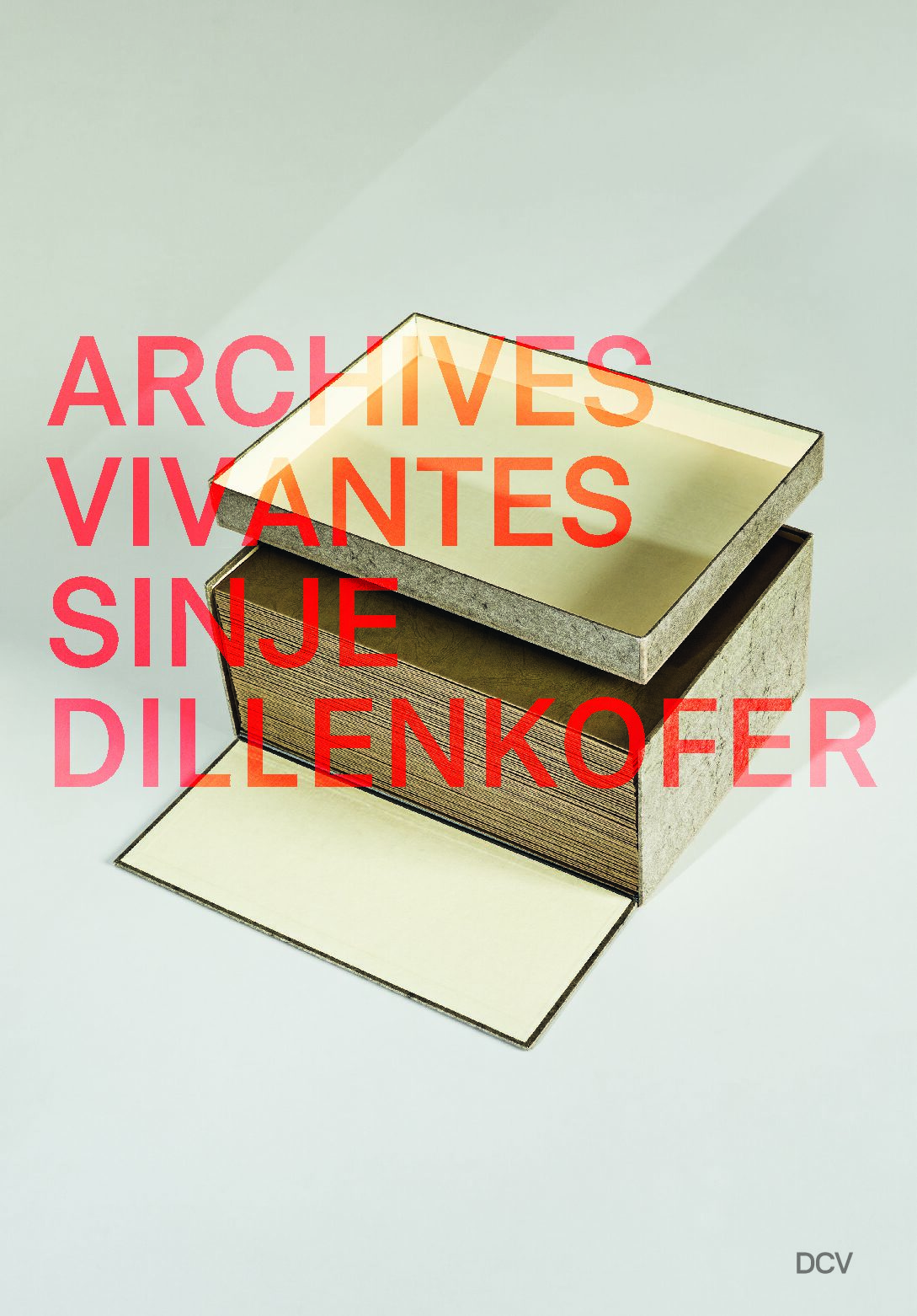
Archives Vivantes34€ Add to cartSinje Dillenkofer’s (b. Neustadt a.d.W., 1959) body of work ARCHIVES VIVANTES inquires into the idea of the “archive,” harnessing the means of visual art to allow us to see and perceive what the archive does not reveal. With staged photographs that combine conceptual rigor with a wide spectrum of creative techniques and devices, Dillenkofer’s pictorial essay turns the spotlight on specimens, artifacts, graphic art, and writings compiled by the explorer and naturalist Alexander von Humboldt (1769–1859) and the ornithologist Carlo von Erlanger (1872–1904). Examining the archive as a model of nature and reality as well as a mirror of “human nature,” the artist develops compositional ideas inspired by the peculiar features of the objects in the collections in visual analogies, pictorial spaces, and spatial compositions. Animals and plants that died long ago “in the service of science” are vividly embodied through the distinctive use of light and shadow. The resulting pictures consider the archive in a new context, framed by our complex relationships with nature, humankind, society and its values and ideals, circumstances and constellations of power. The pictures were taken in six German collection archives: at the Museum bei der Kaiserpfalz Ingelheim, the Naturhistorisches Museum Mainz, the Senckenberg Forschungsinstitut und Naturmuseum Frankfurt, the Stadtmuseum Berlin, and the Stuttgart State Museum of Natural History. Dillenkofer was the first artist to be invited by the Berlin State Library—Prussian Cultural Heritage to translate Humboldt’s American travel diaries into art.
Sinje Dillenkofer studied at the Stuttgart State Academy of Art and Design and has taught at universities and art academies. Her work is held by the Victoria & Albert Museum in London, the ZKM | Center for Art and Media Karlsruhe, the Staatsgalerie Stuttgart, and the Berlinische Galerie, among others.