MEUSER
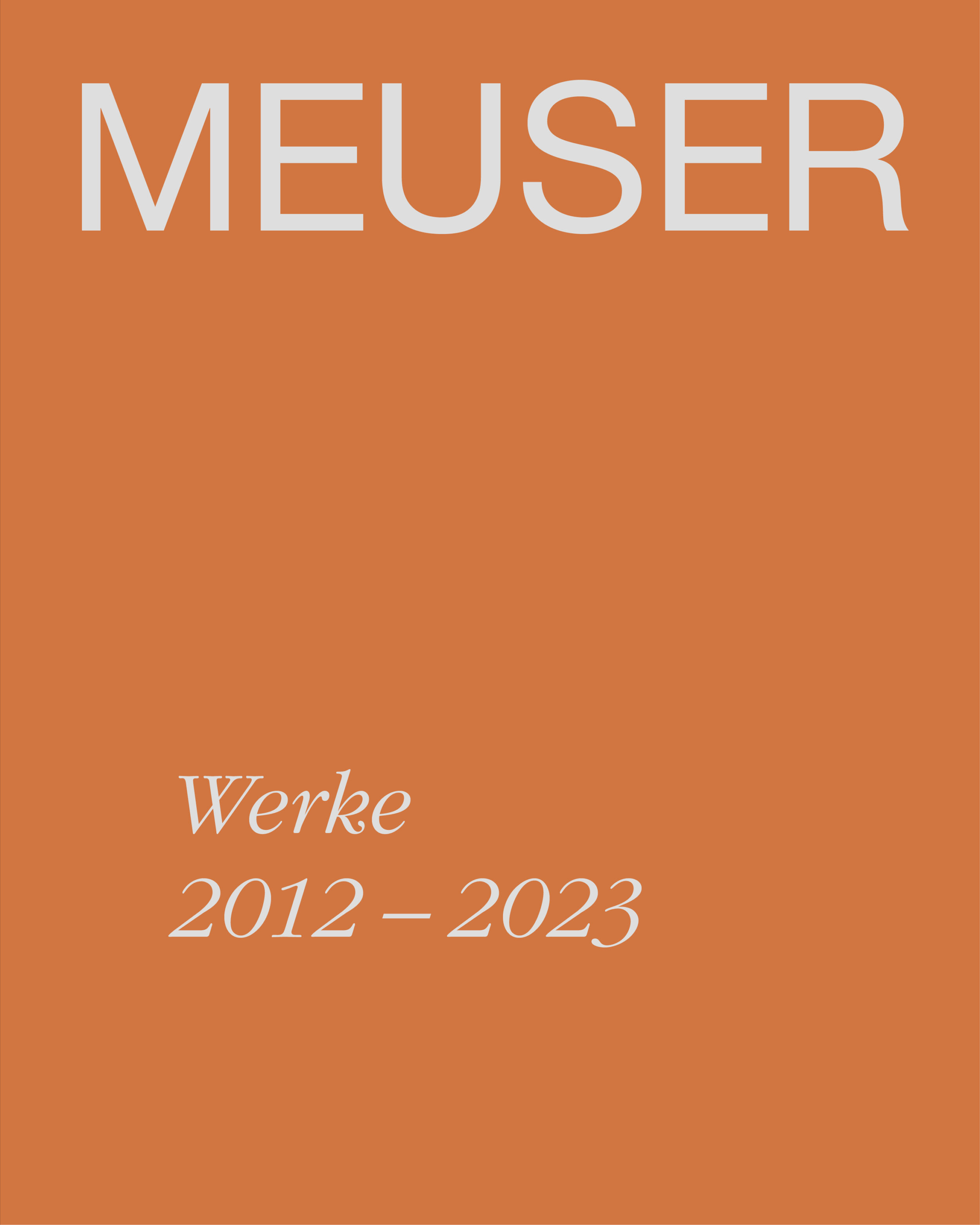
Werke 2012–2023 (GERMAN)
 | |
|---|---|
| Editor(s) | Bärbel Grässlin, Christian Malycha, Claes Nordenhake, Gisela Capitain, Jochen Meyer, Thomas Riegger |
| Author(s) | Alexander Linn, Christopher Williams, Elizabeth Anne Johnson, Gregor Jansen, Hannah Eckstein, Noemi Smolik, Peter Pakesch, Ulrike Groos |
| Design | Studio Martin Steiner |
| Size | 24 x 30 cm |
| Cover | Hardcover |
| Pages | 160 |
| Illustrations | 85 |
| Language(s) | German |
| ISBN | 978-3-96912-119-1 |
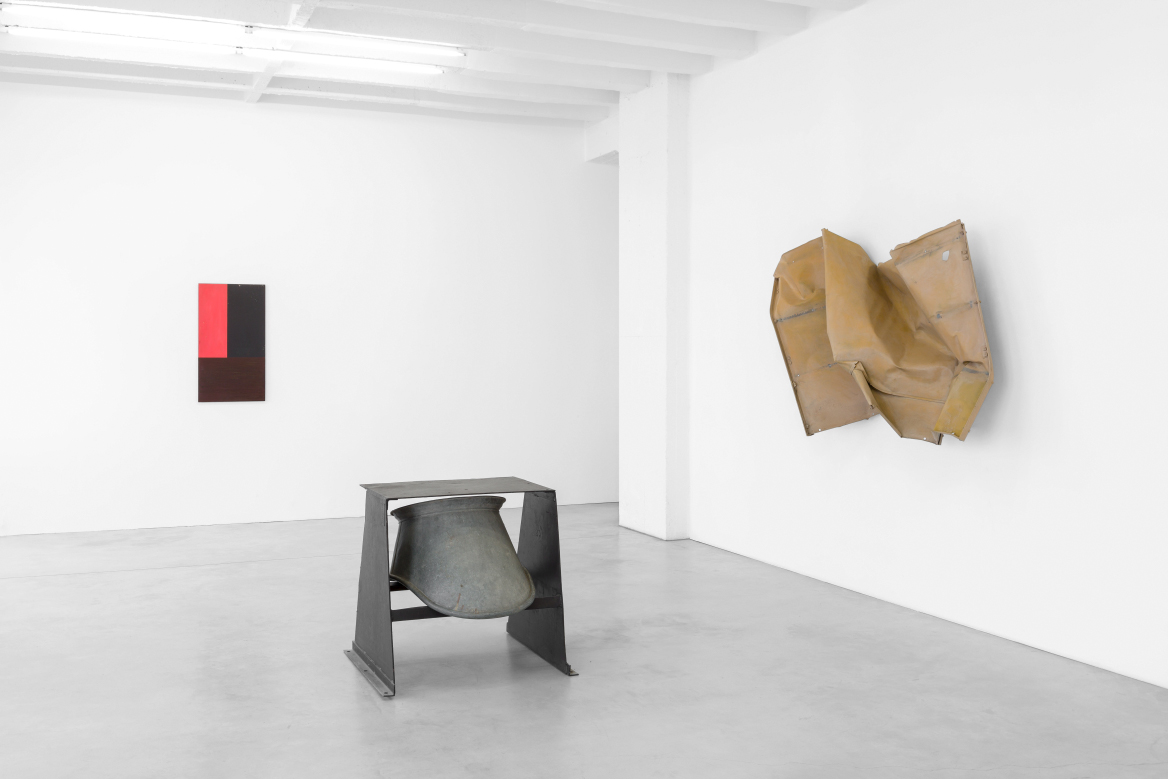
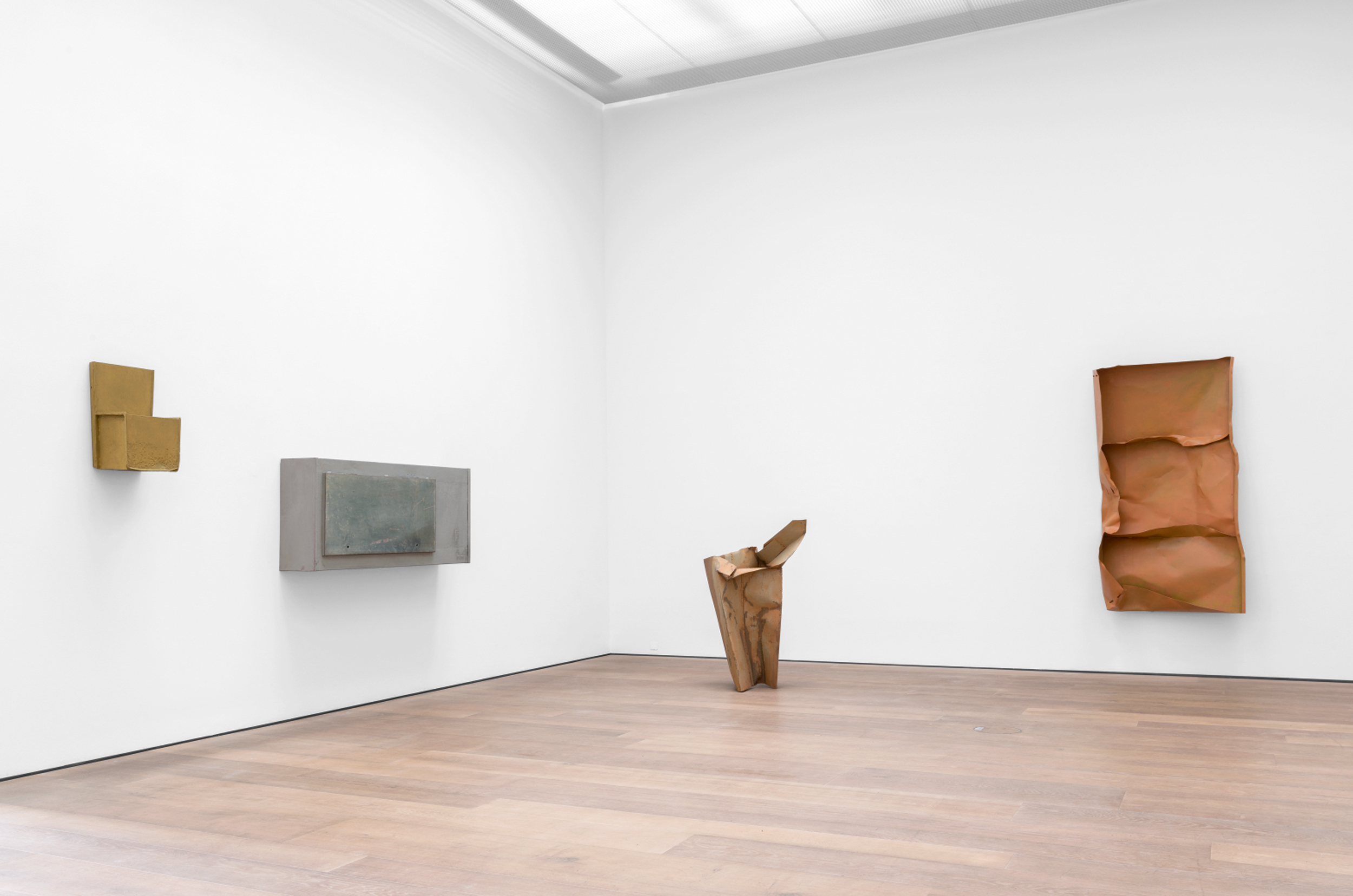
Ever since his studies with Joseph Beuys and Erwin Heerich, since his first exhibitions – for instance at ‘Kippenberger’s Office’ in 1979 – Meuser (b. Essen 1947, lives and works in Karlsruhe) has been a solitaire. His sculptures are unyielding and unruly, just as much as they are vulnerable and tender. They are witty and heart-touchingly charming.
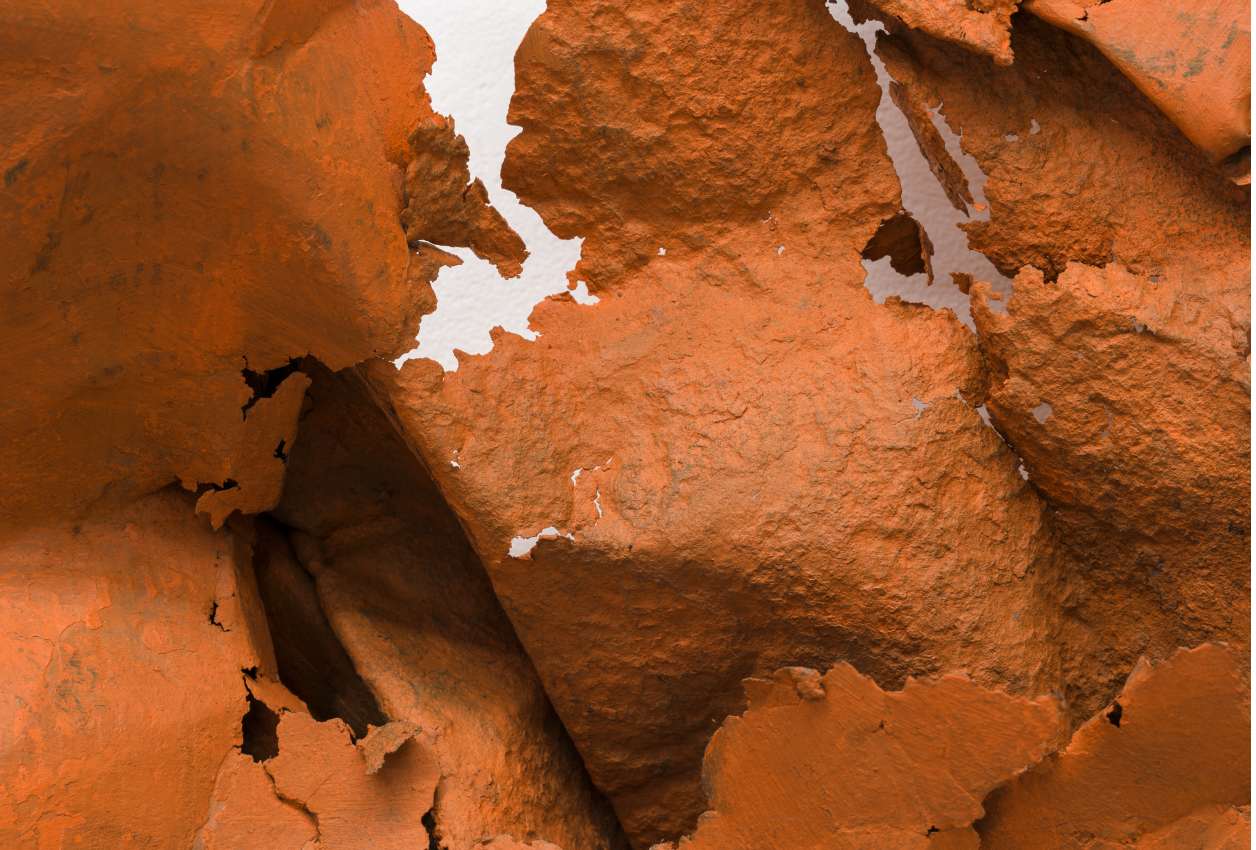
Meuser finds his material in the scrapyard. Confidently and empathically, he reinstates form and dignity to the remnants and vestiges of industrial society. As a romantic, he grants things a life of their own and turns them into self-reliant protagonists, once more. Unwaveringly, he works to re-poetize a standardized and maltreated world.
The lavishly designed monograph is published on the occasion of Meuser’s 75th birthday, presenting works and exhibitions from the past ten years. Eight international authors and scholars create a dazzling mosaic and reveal how Meuser boldly holds his own in face of Duchamp, Minimalism, and Social Sculpture. An open-ended outlook.
Meuser studied 1968–1976 at Art Academy, Düsseldorf with Joseph Beuys and Erwin Heerich. 1991 he received the ars viva award. 1992-2015 professorship at Academy of Fine Art, Karlsruhe.
Since 1976, numerous institutional solo and group exhibitions and works in international collections: Bundeskunsthalle, Bonn; Deichtorhallen, Hamburg; documenta IX / Fridericianum, Kassel; Fundació Joan Miró, Barcelona; Joanneum, Graz; Kunsthalle Düsseldorf; Museum of Contemporary Art, Monterrey; Martin-Gropius-Bau, Berlin; Museum Abteiberg, Mönchengladbach; Museum Folkwang, Essen; Museum moderner Kunst Stiftung Ludwig, Vienna; Museum Morsbroich, Leverkusen; Rijksmuseum Twenthe, Enschede; Sakip Sabanci Museum, Istanbul; Städtische Galerie, Karlsruhe; Vanhaerents Art Collection, Brussels; ZKM | Museum für Neue Kunst, Karlsruhe.
More books
- Release February 2026

BOOM!
7 years of nova space48€ Add to cartFrom 2019 to 2025, nova space, Bauhaus-Universität Weimar’s university gallery put up 21 projects, which this volume documents in image and text. As both an experimentation field and meeting place, nova connected international artists, students, faculty, and the public under the enthusiastic direction of curator Katharina Wendler. Her essay provides insight into the unique history of this mobile and interdisciplinary gallery, its program as well as the continuous development of new curatorial formats. The final act of nova is an exhibition in book form, for which artists, architects, designers, typographers, and filmmakers were invited to create work that freely associates around the theme of BOOM!—inspired by the image of the supernova.
ARTISTS: A.O. LAURA ABERHAM, MARGRÉT H. BLÖNDAL, ZUZANNA CZEBATUL, BJÖRN DAHLEM, DAVID DIAO, HANNAH SOPHIE DUNKELBERG, NADINE FECHT, LIAM GILLICK, JANA GUNSTHEIMER, NSCHOTSCHI HASLINGER, STEF HEIDHUES, JUDITH HOPF, VERENA ISSEL, CHRISTIN KAISER, IAN KIAER, RAGNAR KJARTANSSON, VERA KOX, SCHIRIN KRETSCHMANN, YUTAKA MAKINO, STEFAN MARX, ERIC MEIER, AD MINOLITI, BRUCE NAUMAN, PRINZ GHOLAM, HANNAH RATH, KARIN SANDER, FETTE SANS, KATRIN STEIGER, JAN TICHY, WOLFGANG TILLMANS, IGNACIO URIARTE, ROBIN WAART, YOUNG BOY DANCING GROUP, FRANCIS ZEISCHEGG, KARLA ZIPFEL AND MANY MORE
-

Michelle Jezierski
Simultaneous Spaces34€ Add to cartMichelle Jezierski’s (b. Berlin, 1981; lives and works in Berlin) paintings unfurl simultaneous spaces that are awash in light. Contrasts between bright and dark and muted as well as lucent hues engender a singular atmosphere characterized by depth and dynamism. The artist is as invested in the perception of these constructed spaces as in the capaciousness of natural landscapes. In her paintings, luminous colors and geometric disturbances achieve shifting balances between the extremes of order and chaos, light and shadow, interior and exterior, structure and flux. Simultaneous Spaces, the artist’s first comprehensive monograph, presents forty-five works painted between 2017 and 2022.
Michelle Jezierski studied with Tony Cragg at the Berlin University of Arts and graduated from Valérie Favre’s class in 2008. She also received a fellowship for a semester abroad at Cooper Union, New York, where she studied with Amy Sillman.
-

Emil Nolde
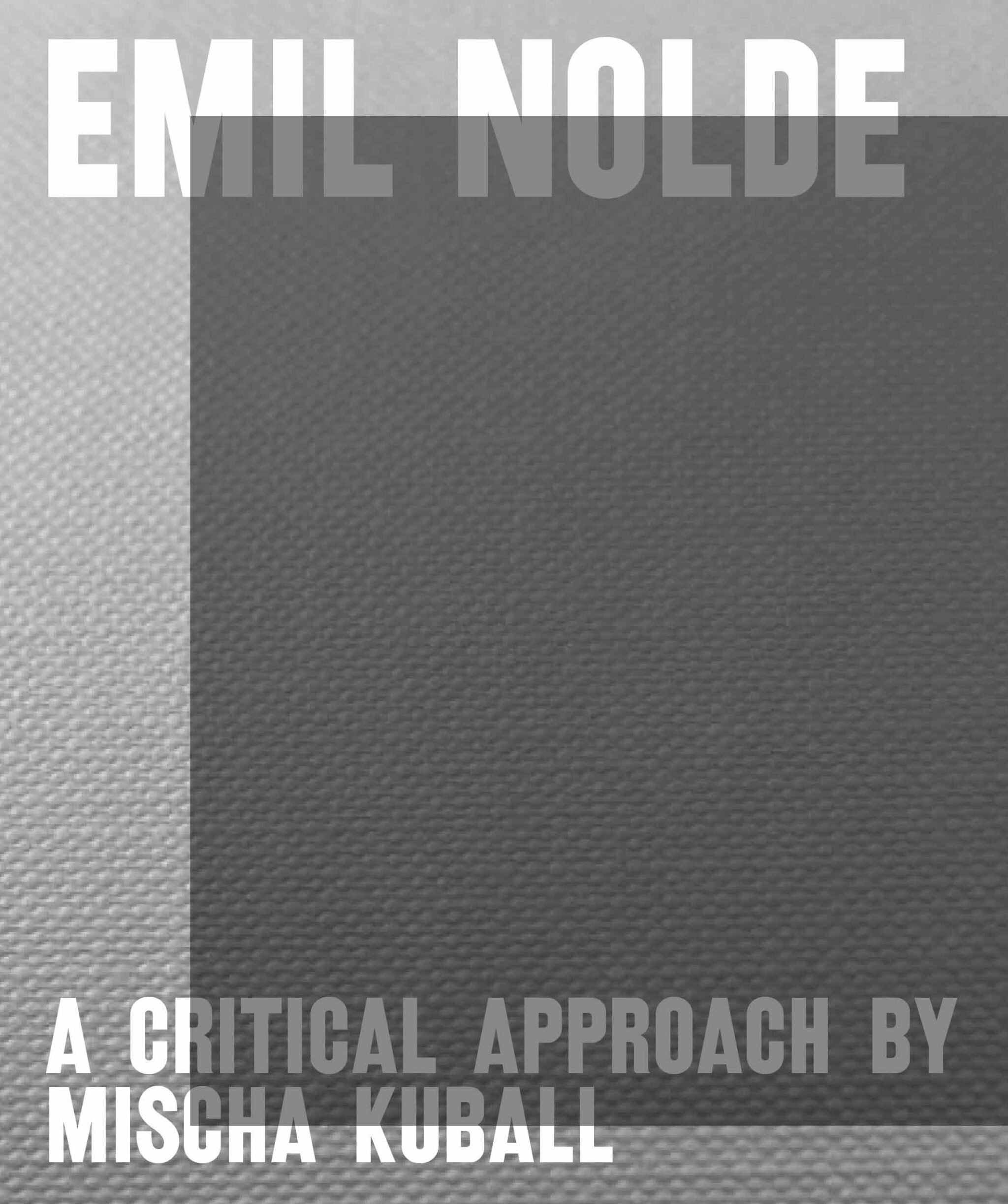
A Critical Approach by Mischa Kuball40€ Add to cartWhat is Visible and What is Not
Mischa Kuball (b. 1959, Düsseldorf; lives and works in Düsseldorf) investigates public and institutional spaces and the social and political discourses that shape them. At the invitation of the Draiflessen Collection and with support from the Nolde Stiftung, the conceptual artist grappled with the life and oeuvre of the painter Emil Nolde (1867–1956) and created a body of work titled Nolde/critique/Kuball. In piece after piece, Kuball drains Nolde’s works of the colors that made the Expressionist famous, challenging the beholder’s preconceptions and examining perception and its constituent processes. Laid out in black and white, the book accordingly directs our attention not only to what a picture shows, but also to how structures and organizing principles emerge into view.
Mischa Kuball has been professor of public art at the Kunsthochschule für Medien Köln, and associate professor of media art at the Staatliche Hochschule für Gestaltung/ZKM Karlsruhe since 2007.
Note: This publication is released in German, English and Dutch. When ordering, please let us know which edition you would like to receive. Use the annotation box on the checkout page.
-

Chunqing Huang
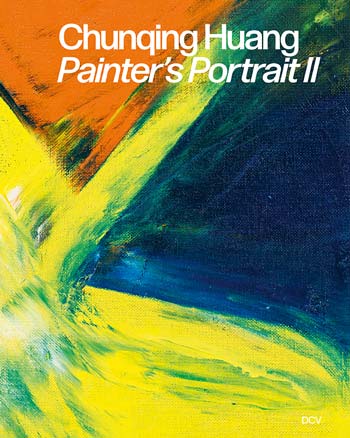
Painter’s Portrait II18€ Add to cartThe artist Chunqing Huang’s (b. Heze, China, 1974) Painters’ Portraits are anything but conventional likenesses. The portraits of artists including Louise Bourgeois, Anselm Kiefer, Martin Kippenberger and Imi Knoebel are acts of gestural-expressive abstraction and probing visual studies of the artist’s own recollections. Chunqing Huang paints meditations on art itself, systematically working through the vocabulary of abstract painting from Germany to the United States. The series Painter’s Portrait II features Chunqing Huang’s thirty most recent works from a series the artist has been transferring to canvases measuring 40 x 30 cm since 2016.
Painter’s Portrait II represents Chunqing Huang’s personal reflections on her influences, from Impressionism to expressive tendencies in abstract painting, which now make its début in book form. The catalogue showcases the portraits, each of which is distinguished by its own gestural quality and individual palette.
Chunqing Huang studied painting and interdisciplinary art at the Städelschule, Frankfurt am Main, where Wolfgang Tillmans and Peter Angermann were her teachers, and graduated from Hermann Nitsch’s master class. The German-Chinese artist’s work has been featured in numerous solo and group exhibitions. A first selection from the Painter’s Portrait series was on view at Kunsthalle Wiesbaden and Museum Wiesbaden in the summer of 2021; the catalogue Painter’s Portrait II is released in conjunction with her exhibition of the same title at 68projects, Berlin.
-

Harte Zeiten
Ciężkie Czasy34€ Add to cartIncreasingly pressing global political and societal challenges are always also rewarding subjects of creative engagement, and sometimes artists devise anticipative approaches to real-world problems.
Harte Zeiten—Ciężkie Czasy is a cooperative venture launched by Künstlerbund Baden-Württemberg; Port25—Raum für Gegenwartskunst, Mannheim; and Galeria Miejska bwa, Bydgoszcz, Poland. It showcases works by altogether ten Polish and ten German contemporary artists. Putting the principle that art knows no boundaries into practice, the publication, with statements from Wolfgang Ullrich, Joanna Kiliszek, Schamma Schahadat, and others as well as documentation of the symposium held in September 2021, inspires forward-looking reflections on the conditions in which cultures thrive and similarities and differences between the two countries and beyond.
-
Johannes Schütz
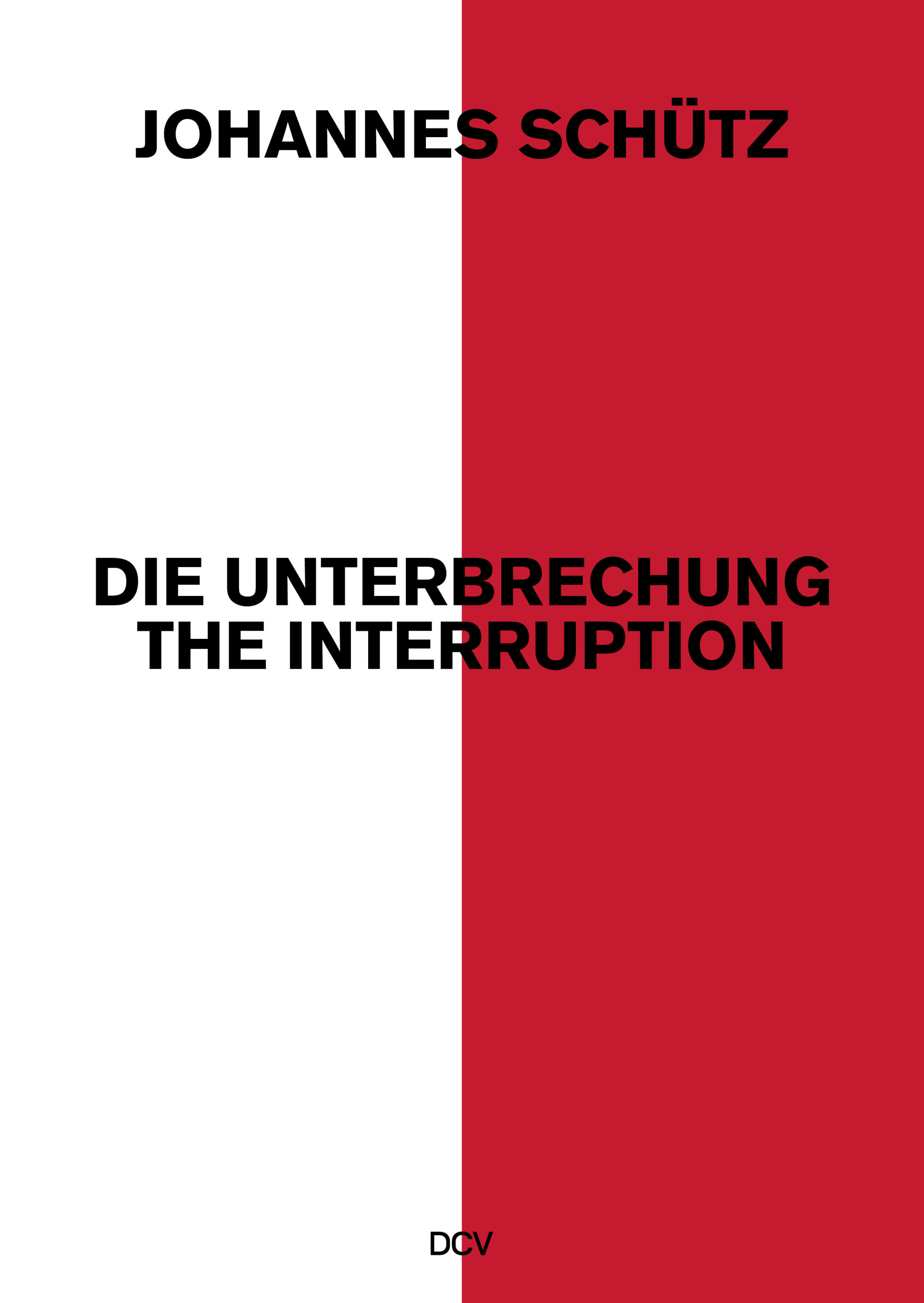
Die Unterbrechung / The Interruption48€ Add to cartJohannes Schütz (b. Frankfurt am Main, 1950; lives in Berlin) is one of the best-known stage designers and directors working today. His style may be characterized as “simple, clean, and radical.” All major theatres and opera houses in the German-speaking countries and beyond have showcased Schütz’s work. He trained with Wilfried Minks and created his first stage setting for Luc Bondy in 1971. His career then took him to Berlin’s Schillertheater and the Kammerspiele in Munich, later he became head of stage design at the Bremer Theater and the Schauspielhaus Bochum. Schütz taught scenography at the ZKM Center for Art and Media Karlsruhe from 1992 until 1998 and has been professor of stage design at the Düsseldorf Academy of Fine Arts since 2010.
In his book Die Unterbrechung, he meets Annette Storr to discuss his new work for the stage, which is documented by maquettes and photographs and, most often, by stills from the performances. The productions represented include Penthesilea by Heinrich von Kleist, Landestheater Salzburg, 2018; Hamlet by William Shakespeare, Schauspielhaus Bochum, 2019; Reich des Todes by Rainald Goetz, Deutsches Schauspielhaus Hamburg, 2020; Richard II by William Shakespeare, Burgtheater, Vienna, 2021; and Der Idiot by Dostoevsky, Thalia Theater, Hamburg, 2021.
-

wolfgang thiel
skulpturale standpunkte38€ Add to cartWolfgang Thiel (b. Zweibrücken, 1952; lives and works in Plochingen) is a sculptor who makes figurative work. He is especially interested in the southern German tradition of colorfully painted sculpture, which he seeks to bring into the twenty-first century. His experimental handling of various genres and materials suggests a researcher’s mind. Switching between different materials is key to Thiel’s approach because their particular characteristics demand his constant attention. Å playful aspect is essential to all his works, which include large-format sculptures in public settings (more than thirty have been installed in Germany) as well as sculptural garden landscapes, stage designs, and costumes.
The opulent wide-format book containing almost three hundred illustrations offers a representative overview of Wolfgang Thiel’s oeuvre and includes the first complete chronological catalogue raisonné of his works in wood.
Wolfgang Thiel studied at the Stuttgart State Academy of Art and Design from 1970 until 1976 and later taught at his alma mater from 1987 until 1991. From 2008 until 2018, he held a teaching position at the Hochschule für Technik Stuttgart. In 1990, he won the Art Award of the City of Stuttgart. Since 1977, Thiel’s work has been showcased in numerous solo exhibitions in Switzerland, France, and Germany.
- Release February 2026
Tim David Trillsam
Willkommen im Panoptikum38€ Add to cartWith his idiosyncratic figurative bronze sculptures Tim David Trillsam (born 1985 in the Swabian Alb) has hit a nerve. The artist’s “self memorials” ask the viewer to remember the transience and illusion of this very self. Although Trillsam employs a loaded material that evokes many great sculptors before him, his own sculptures resist the past. His figures are tangibly protagonist of the present and they provoke with their exaggerated sensuality, twisted bodies, and oversized hands and feet. “The oversizing is programmatic. As is the skeptical approach to the human species. Trillsam proceeds as a thoughtful questioner with doubt yet also irritation,” writes Dorothee Baer-Bogenschütze. Her in-depth art-historical analysis is part of this forthcoming book about Trillsam’s oeuvre since 2012.
-
Jagoda Bednarsky
SHADOWLAND ET AL40€ Add to cartJagoda Bednarsky’s (b. Złotoryja, Poland, 1988; lives and works in Berlin) paintings are pop-cultural and nostalgic borrowings that she transfers into the grotesque register, with allusions to stereotyped role models between hypermasculinity and matriarchy. Unfurling pastel-colored hillscapes composed of breasts, breast pumps, vulvas, figures from Greek myth, and motifs from flora and fauna, Bednarsky’s Shadowland series interrogates traditional ideas of femininity and motherhood. The depiction of the female breast serves as a metaphor referring to the titular “Shadowland,” where this part of the body is still perceived as a sexualized object rather than as natural. The title, one might note, is borrowed from a culture magazine first published in New York in 1919 in which the artist spotted Art Deco illustrations that became a vital source of inspiration. Despite the dense aggregation of fraught symbols and referential gestures, the sensual, poetic, and richly imaginative works exude a lightness that stems from their translucency and subtle irony.
The comprehensive volume presents Bednarsky’s works from between 2018 and 2023 and a singular conversation with the artist.
Jagoda Bednarsky studied fine arts, first at Kunsthochschule Kassel (2008–2009), then at HfBK Städelschule, Frankfurt am Main, with Michael Krebber and Monika Baer (2009–2014).
-

Judit Reigl
Kraftfelder / Centers of Dominance28€ Add to cartBeginning in the 1950s, Judit Reigl (b. Kapuvár, Hungary, 1923; d. Marcoussis, France, 2020) builds a singular creative oeuvre between abstraction and figuration, between Surrealism and gestural painting. After studying art in Budapest, Reigl flees Hungary in 1950; arriving in Paris, she is introduced to André Breton, who organizes her first exhibition in 1954. Under the influence of the École de Paris, she branches out into écriture automatique, then shifts toward free expression. Like her contemporaries Jackson Pollock and Helen Frankenthaler in New York, she lays out ever larger unprimed canvases on the floor and works them with a brush, her fingers, or other instruments. After 1966, bodily shapes emerge from her abstractions, and figures reappear in the pictures.
On occasion of Reigl’s centenary and the gift of three major works, the Neue Nationalgalerie mounts the artist’s first solo exhibition at a museum in Germany. The book surveys the oeuvre of one of the most important protagonists of European art in the second half of the twentieth century.
Judit Reigl studied painting at the Academy of Fine Arts in Budapest from 1942 until 1945 and was a fellow at the Hungarian Academy in Rome in 1947–48. From 1950 onwards, she lived and worked in France.
- Release December 2025

Cahier 002
Silke Wagner. bürgersteig22€ Add to cartBetween 2001 and 2002, a VW bus bearing the inscription “Lufthansa Deportation Class” was on display in various German cities. It was part of the provocative bürgersteig action by Silke Wagner (born 1968, lives in Frankfurt) about Lufthansa providing aircraft for deportation purposes. The bus sparked heated debates and became a vehicle for activist networking and communication among citizens. The participatory art project was groundbreaking at the time in its collaboration with civil justice initiatives. Cahier 002 documents bürgersteig for the first time with all its aspects, disclosing the sources for the action as well as material on the legal conflicts that followed the project.
-

Ingo Mittelstaedt
Courtesy15€ Add to cartPerception and Comprehension in Photography
Ingo Mittelstaedt (b. 1978, Berlin; lives and works in Berlin and Hamburg) creates staged photographs, combining and contrasting them with diverse objects in expansive installations. His pictorial arrangements probe a variety of concerns and imageries that he sources from museum settings or the modes of representation in ordinary advertising brochures. Gestures of showing, pointing, bringing out, and uncovering are leitmotifs in Mittelstaedt’s canny and subtly humorous exploration of the potentials and limitations of the photographic medium.
Ingo Mittelstaedt studied fine arts at the Hochschule für Bildende Künste Braunschweig and received numerous emerging-artist awards, including the New York fellowship of the Niedersächsische Sparkassenstiftung. His work has been shown at Kunstverein Hannover, the Wilhelm-Hack-Museum, Ludwigshafen, Marta Herford, and elsewhere.
-

Margret Eicher
Lob der Malkunst38€ Add to cartContemporary Visual Communication in a Historic Weaving Technique
Margret Eicher’s (b. Viersen, Germany, 1955; lives and works in Berlin) large-format tapestries combine the baroque form of the woven picture with familiar motifs excerpted from contemporary media images. She digitizes her sources and then assembles them in painstaking editing work on the computer. The resulting ‘media tapestries’ occupy the interface between the traditional work of art as a physical object and the electronic noise of the digital realm: two worlds that at first glance would seem to be incompatible yet find themselves in harmonious union in Eicher’s art. In Göttliche Liebe (Divine Love), for example, Caravaggio’s Crowning with Thorns meets a kissing gay couple from a pro-tolerance campaign in Berlin, while Botticelli’s Birth of Venus is sampled together with a subway station in Frankfurt. In conceptual art production, the creative idea is central and its realization becomes secondary; in a final twist, Lob der Malkunst (Praise of Painting) elects this practice as its artistic lodestar. Eicher installs the painter Martin Kippenberger in the interior of Berlin’s Paris Bar, where he poses as a dandy and presides over a clash between the different tendencies in the art of the twentieth and twenty-first centuries.
-

Etsu Egami
Rainbow18€ Add to cartWhat is worth talking about in art eludes language. Aesthetic experience is without words, like a human encounter that touches upon our innermost being. Etsu Egami is interested in the margins of understanding, where the communication of ideas and feelings threatens to fail, where forms become illegible. That is the point on which she homes in with her brush, which she wields in a rough calligraphic style, putting almost translucent oil paints on the canvas. Spectral faces emerge that dissolve into abstraction; abstract forms, beheld from the corner of one’s eye, momentarily coalesce into a likeness. Painting, to Egami, is a physical and performative act, the brush an extension of her arm, bringing a picture into being in sweeping rhythmical motions. As we contemplate her work, that momentum imparts itself to us: first our eyes begin to wander, then we feel our bodies stir, and finally the spirit, too, pulsates in the rhythm of the brush. Gathering Egami’s most outstanding works, this catalogue is a universal invitation to join a peculiar dance, an arc of light the artist traces across all barriers to understanding and that speaks to our senses.
- temporarily not available
MEUSER
Works 2012–2023 (ENGLISH)Read moreEver since his studies with Joseph Beuys and Erwin Heerich, since his first exhibitions – for instance at ‘Kippenberger’s Office’ in 1979 – Meuser (b. Essen 1947, lives and works in Karlsruhe) has been a solitaire. His sculptures are unyielding and unruly, just as much as they are vulnerable and tender. They are witty and heart-touchingly charming.
Meuser finds his material in the scrapyard. Confidently and empathically, he reinstates form and dignity to the remnants and vestiges of industrial society. As a romantic, he grants things a life of their own and turns them into self-reliant protagonists, once more. Unwaveringly, he works to re-poetize a standardized and maltreated world.
The lavishly designed monograph is published on the occasion of Meuser’s 75th birthday, presenting works and exhibitions from the past ten years. Eight international authors and scholars create a dazzling mosaic and reveal how Meuser boldly holds his own in face of Duchamp, Minimalism, and Social Sculpture. An open-ended outlook.
Meuser studied 1968–1976 at Art Academy, Düsseldorf with Joseph Beuys and Erwin Heerich. 1991 he received the ars viva award. 1992-2015 professorship at Academy of Fine Art, Karlsruhe.
Since 1976, numerous institutional solo and group exhibitions and works in international collections: Bundeskunsthalle, Bonn; Deichtorhallen, Hamburg; documenta IX / Fridericianum, Kassel; Fundació Joan Miró, Barcelona; Joanneum, Graz; Kunsthalle Düsseldorf; Museum of Contemporary Art, Monterrey; Martin-Gropius-Bau, Berlin; Museum Abteiberg, Mönchengladbach; Museum Folkwang, Essen; Museum moderner Kunst Stiftung Ludwig, Vienna; Museum Morsbroich, Leverkusen; Rijksmuseum Twenthe, Enschede; Sakip Sabanci Museum, Istanbul; Städtische Galerie, Karlsruhe; Vanhaerents Art Collection, Brussels; ZKM | Museum für Neue Kunst, Karlsruhe.
-

Jan Muche
Agora42€ Add to cartTracing the Wear of the Life of Labor
The visual art of Jan Muche (b. 1975, Herford; lives and works in Berlin) revolves around forms that bring to mind structural steelwork, giant industrial installation components, or scaffolding. His constructivist-abstract paintings and sculptures look back on steel as a symbol of industrialization and the working class, which featured in unflappably cheerful and adulatory depictions that were characteristic of the twentieth century’s ideologies – Communism, Stalinism, National Socialism, actually existing Socialism. Muche’s roughhewn aesthetic combines proletarian charm with the spirit of onward and upward, taking the beholder to regions not untinged by dissonance. This book, supported by the Leinemann-Stiftung für Bildung und Kunst, brings his reflections on the significance of work and the impact of digital technology on physical toil as well as his engagement with yesteryear’s “heroes of labor” into focus.
Jan Muche trained as lithographer and studied with Karl Horst Hödicke at the Hochschule der Künste Berlin.
-

Larissa Kikol
SIGNED. Unterwegs mit der 1UP-Crew und Moses & Taps18€ Add to cartWho owns the city? It is a question to which graffiti artists and politicians have very different answers. 1UP and Moses & Taps are international stars of the scene, realizing radical creative concepts in spectacular actions. The art critic Larissa Kikol shadowed them on their nocturnal forays for three years and gathered her experiences in a book that has become a singular tribute to the graffiti scene. It lets us witness the genesis of the artists’ works on the knife’s edge between civil disobedience, criminal liability, and an irrepressible freedom. Traveling throughout Germany, Kikol records absorbing dialogues that reflect the contrast between different worlds: the legal and the illegal art worlds, painting and protest. Always on the hop and in danger of being discovered and arrested, she ventures beyond the bounds of permissible art, into subway tunnels, up on roofs, across switchyards. A portrait emerges of Germany and Berlin and the power relations that shape our society.
Larissa Kikol (b. 1986) works as a freelance art critic, art scholar, and writer. She writes for Die Zeit, Spiegel Online, Art, Kunstzeitung, Mare, Monopol Online, and Kunstforum International. In 2016, she won C/O Berlin’s international Talents award in the art criticism category. She teaches and lectures at art schools and universities in Germany and France.
Kikol studied stage design and dramaturgy in Berlin-Weißensee and obtained a Ph.D. in art studies from the Karlsruhe University of Arts and Design. She lives and works in Marseille and Cologne.
-

Wolfgang Gäfgen
Photographic Miracles45€ Add to cartA Mysterious Play of Light and Shadow
While Wolfgang Gäfgen’s (b. Hamburg, 1936; lives and works in Stuttgart and Esslingen) hand drawings and woodprints are widely acclaimed, only connoisseurs are familiar with his photographic oeuvre. The extensive body of analog black-and-white and color photographs spans the decades from the late 1960s to the present and is no less accomplished than the artist’s graphic works and prints. This book, with essays by Christian Gögger, Olivier Kaeppelin, Clemens Ottnad and Michel Poivert, is the first to gather a large selection of these pictures, illustrating the interdependencies between works in the different visual media of expression. Artfully arranged still lifes breathe a spectral animation into ostensibly trivial everyday objects. The human figures that appear now and then seem to be engaged in cultic performances; many of the photographic works are accompanied by ironic quotes from the earlier history of art or allusions to historic myths.
-
DAWN OF HUMANITY – ART IN PERIODS OF UPHEAVAL
37€ Add to cartThe book and exhibition present works from the first two decades of the twentieth century from the Kunstmuseum Bonn’s collection in dialogue with contemporary creative positions. What the works have in common across the distance of a century is their genesis in, and reflection on, a time of major social and political crisis. Back then, life had been profoundly changed by the industrial revolution; nowadays, climate change, wars, and the rising political power of right-wing ideologies are transforming the life of our communities. The presentation conceives art as a tool that lets us interrogate the world and imparts fresh intellectual impulses, and so also plays an active part in our societies. The title Menschheitsdämmerung – Dawn of Humanity – is borrowed from the poetry anthology of the same title released by Kurt Pinthus in 1919, which samples the Expressionist lyric poetry of the young century in four chapters: “Downfall and Outcry”; “Love Human Beings”; “Awakening of the Heart”; “Entreaty and Indignation.” Florian Illies, who already wrote an afterword for the 2019 centenary edition of Menschheitsdämmerung – the bestselling poetry anthology in the history of German literature – contributed the keynote essay in the book.
Artists: Nevin Aladağ, Francis Alÿs, Kader Attia, Yael Bartana, Rebekka Benzenberg, Monica Bonvicini, Andrea Bowers, Heinrich Campendonk, Louisa Clement, Max Ernst, Georg Herold, Franz M. Jansen, Alexej von Jawlensky, Käthe Kollwitz, Wilhelm Lehmbruck, Max Liebermann, August Macke, Helmuth Macke, Goshka Macuga, Marie von Malachowski-Nauen, Carlo Mense, Zanele Muholi, Heinrich Nauen, Grace Ndiritu, Anys Reimann, Deborah Roberts, Daniel Scislowski, Paul Adolf Seehaus, Tschabalala Self, Monika Sosnowska, William Straube, Emma Talbot, Hans Thuar, Lawrence Weiner
-

nolde/kritik/documenta (English)
42€ Add to cartEmil Nolde (1867–1956) ranks among the best-known classic modernists. Contemporary perceptions of the artist and his oeuvre are informed by mythmaking as well as its deconstruction. After the Second World War, Nolde himself and art historians of the time portrayed him as a victim of Nazi persecution. More recent critics have drawn attention to his anti-Semitic views and his opportunism in his dealings with the Nazi authorities.
With support from the Nolde Foundation, Seebüll, the Düsseldorf-based conceptual artist Mischa Kuball (b. 1959) delved into the documentary record to shed light on this profoundly ambivalent figure and frame a critical perspective on Emil Nolde’s output and actions. The first fruits of his endeavors were shown at the Draiflessen Collection, Mettingen, in the winter of 2020–2021.
Kuball continued his research at the invitation of the documenta archive, Kassel. Based on his findings, the exhibition project “nolde / kritik / documenta” illuminates the ways in which life and oeuvre are interwoven and inquires into the contradictions of modernism, which Emil Nolde as a man and artist may be said to have embodied. The focus of the new project is on the staging of Nolde’s works at the first three editions of the documenta exhibition series (1955, 1959, 1964), which were instrumental to establishing the “Nolde myth.”
An enlarged and revised edition of the catalogue “nolde / kritik / documenta” is released in conjunction with the exhibition at the Fridericianum, Kassel (December 9, 2022–February 19, 2023).
Mischa Kuball has been professor of public art at the Academy of Media Arts Cologne and associate professor of media art at the Karlsruhe University of Arts and Design/ZKM since 2007.