Frank Morrison
 | |
|---|---|
| Editor(s) | Richard Beavers |
| Author(s) | Dr. Charles Moore, teddy raShaan reeves, phd. |
| Design | Anna Lustberg |
| Size | 24 x 30.8 cm |
| Cover | Hardcover |
| Pages | 96 |
| Illustrations | 48 |
| Language(s) | English |
| ISBN | 978-3-96912-254-9 | Release January 2026 |
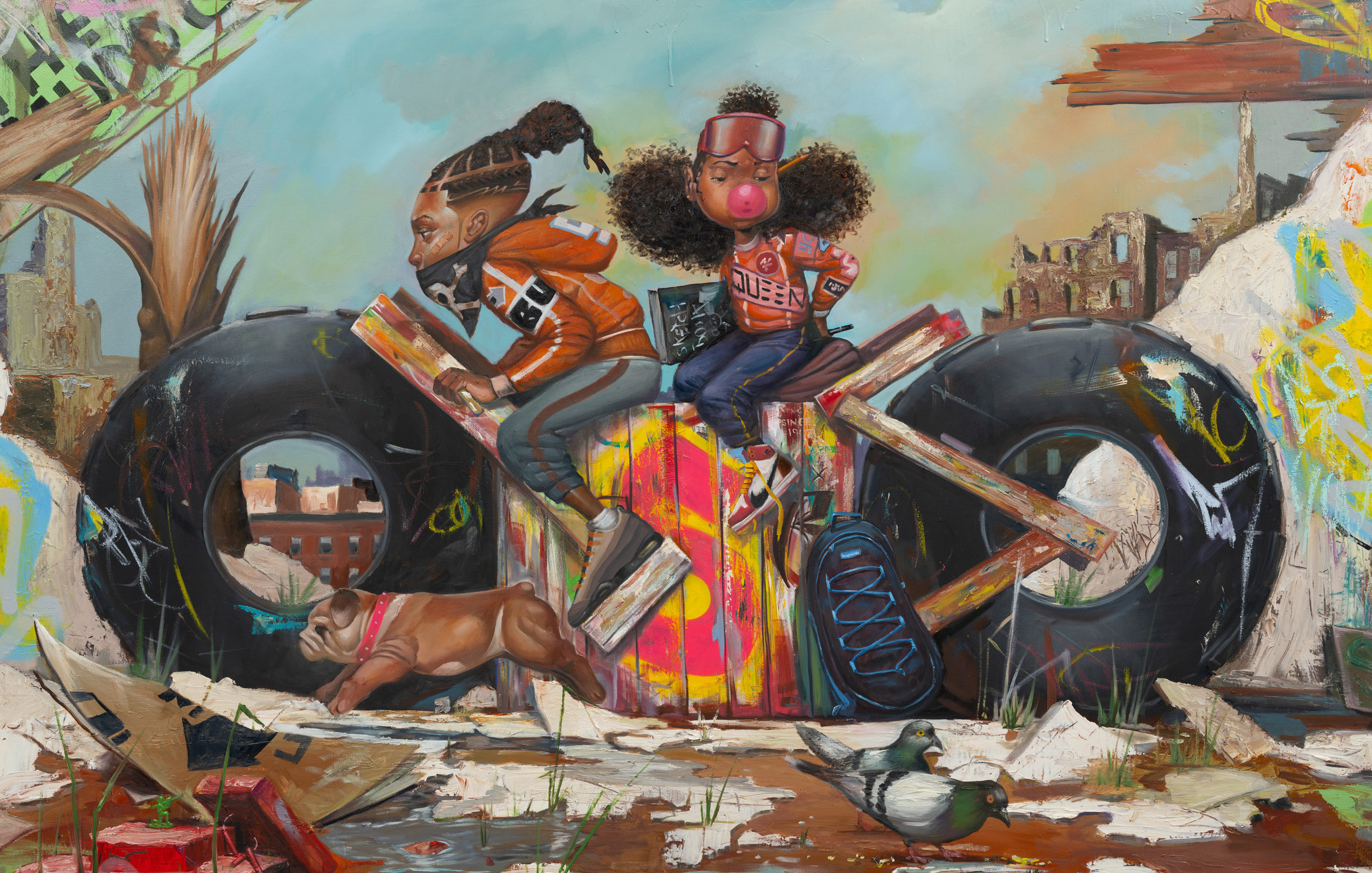
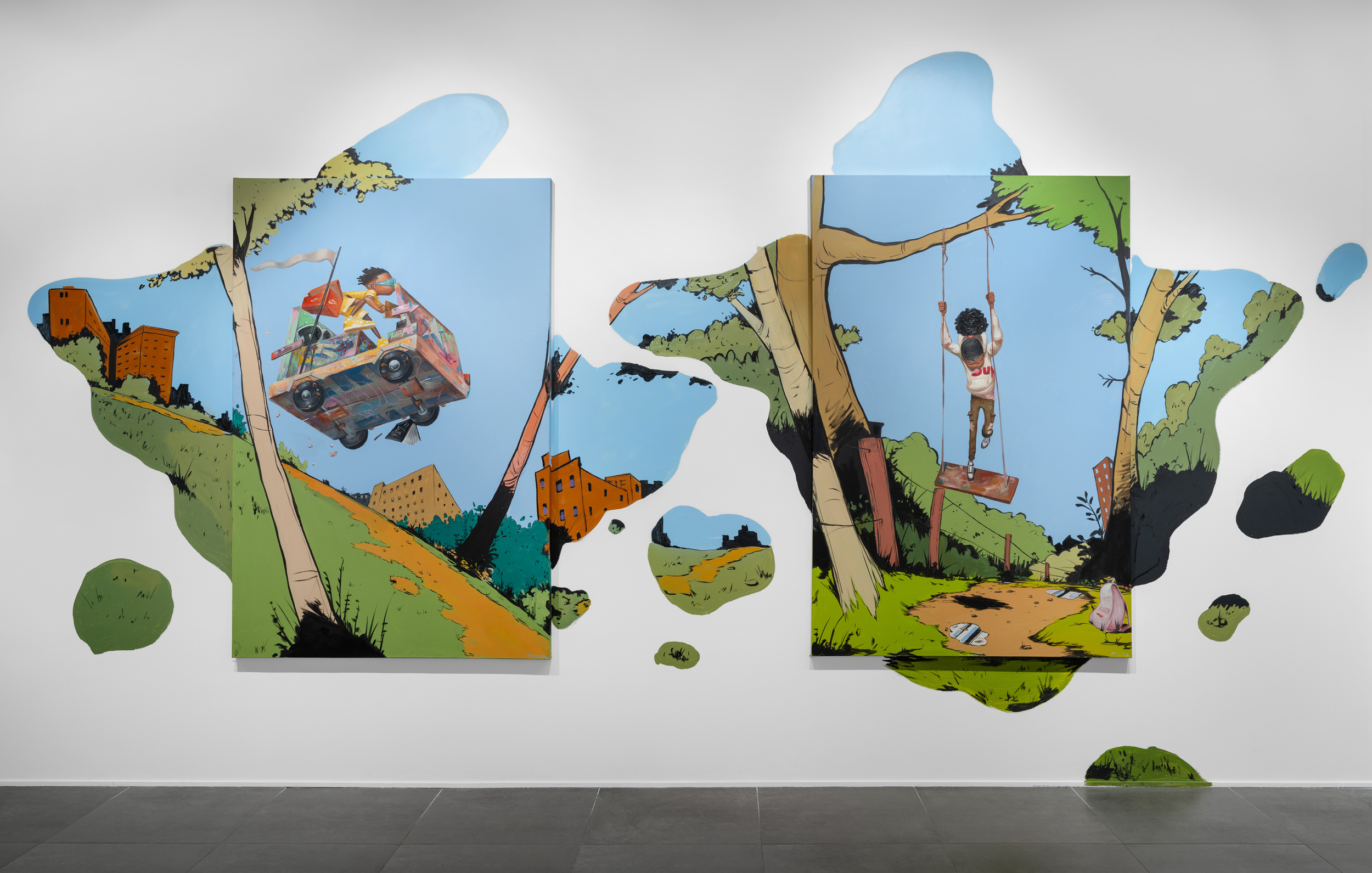
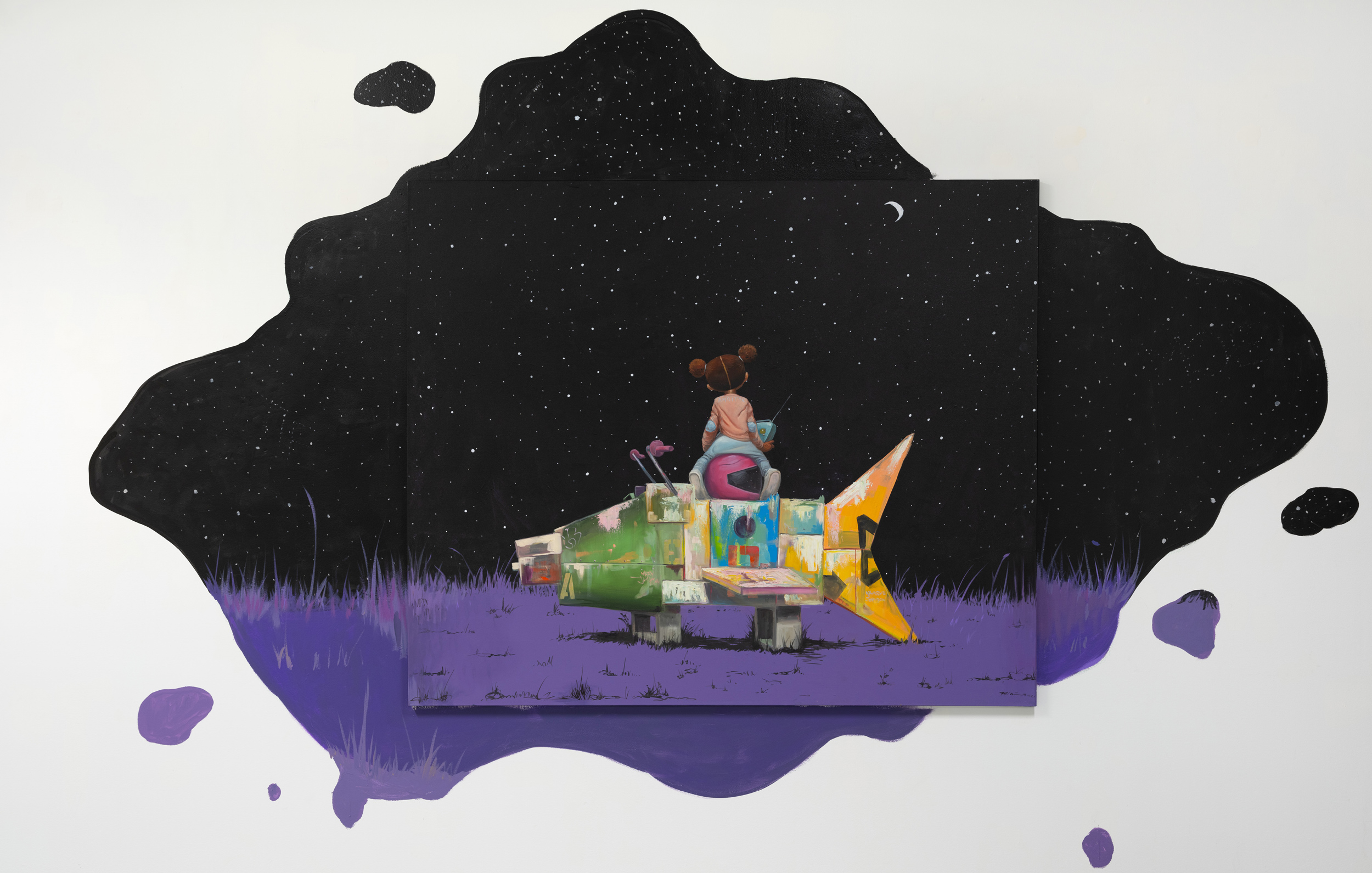
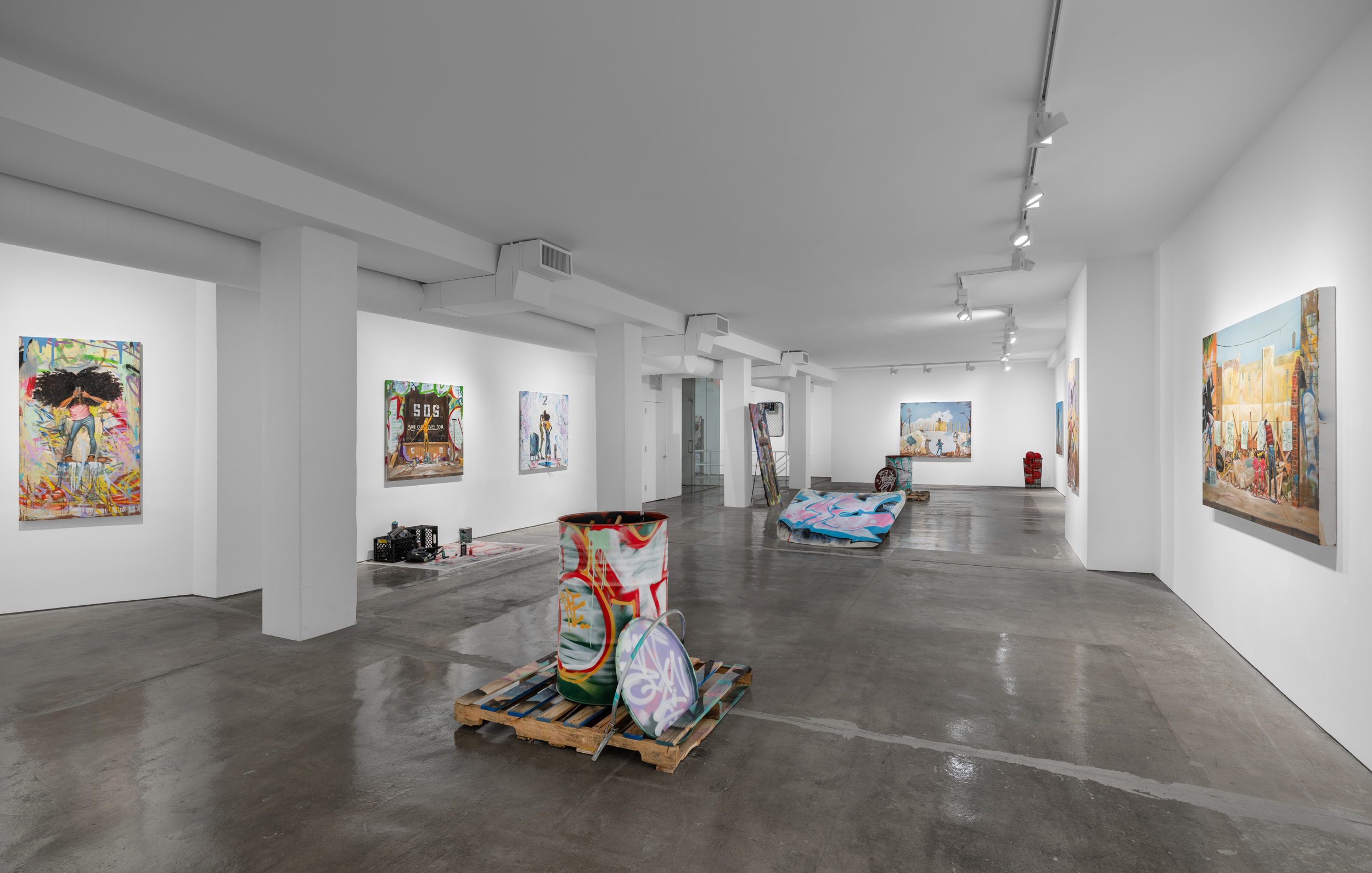
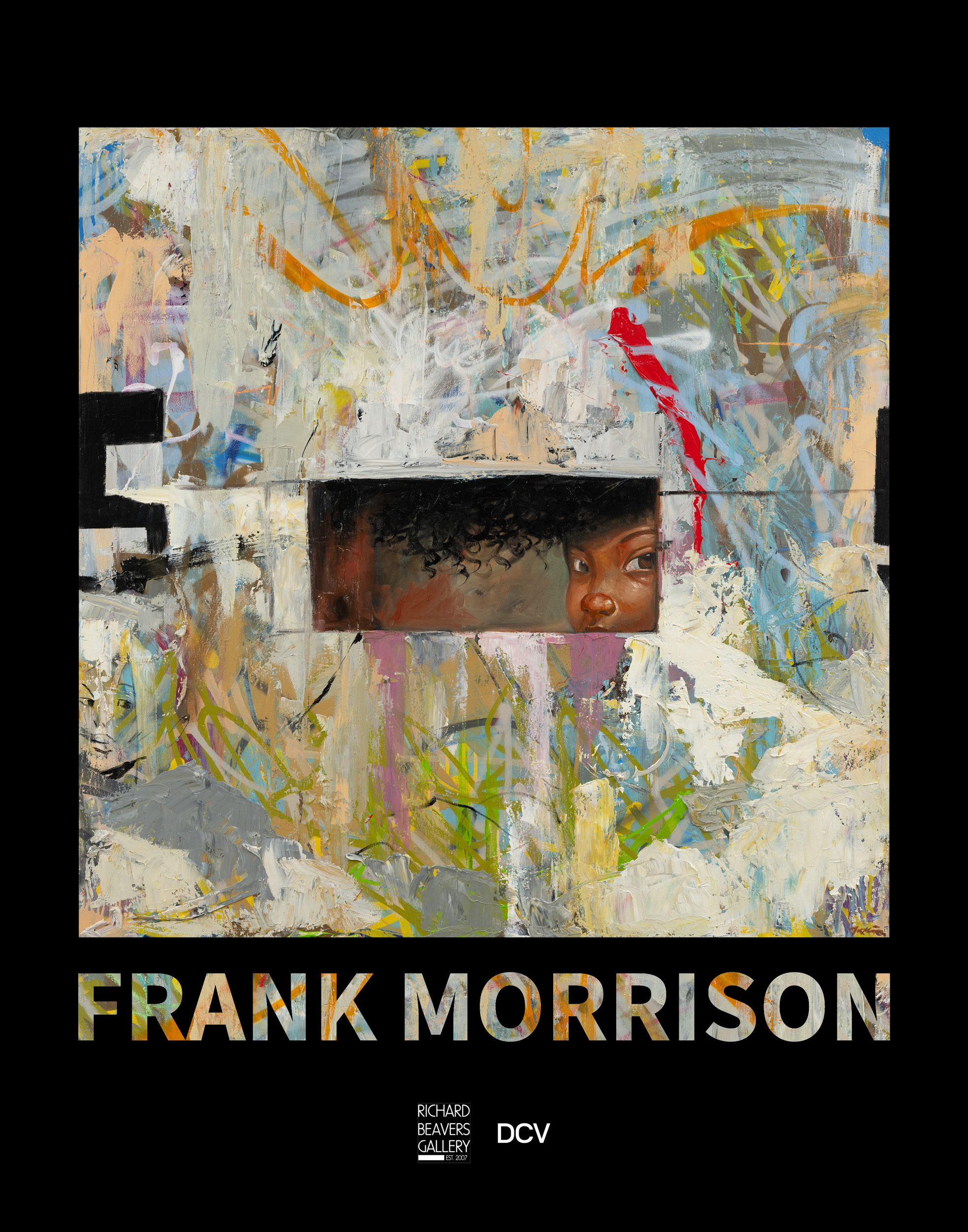
The dynamic Neo-Mannerist images of painter and illustrator Frank Morrison (born 1971, lives in Atlanta) celebrate the resilience and dignity of African Americans in everyday life. A child of institutionalized racism in the US, he can testify that creativity and solidarity could never be suppressed in the segregated and brutally marginalized communities. Hip-hop and graffiti are resistance. Clichés of inner-city struggle are vividly refuted in this book. The volume documents Morrison’s recent exhibitions, one of which is dedicated to the younger generation: frame-braking images that interweave narrative forms of comics and pop art with illustration. Morrison’s gallery calls the book an explosive tribute to genius flourishing in institutionalized exile.
Release January 2026
You may also like…
- Release January 2026

Charles Moore
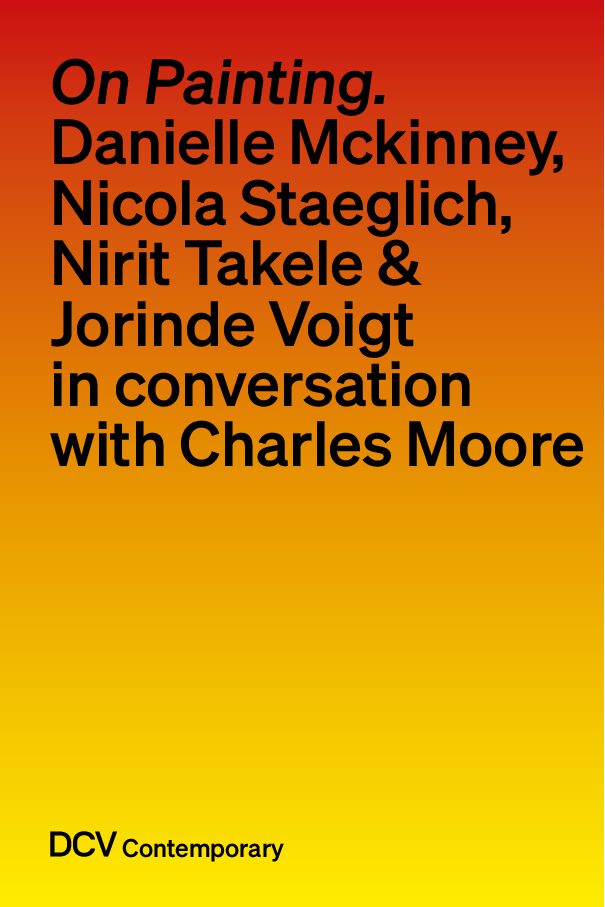
On painting16€ Add to cartFor On Painting, New York-based art historian and curator Charles Moore, interviewed four women artists about their practice, asking them to reveal their motives and aspirations. This publication consists of four interviews, each containing an introduction by Moore and illustrations of the artist’s works. Danielle Mckinney, who paints exclusively Black women, reflects on her experiences as a woman growing up in the US South. Nicola Staeglich creates subtle layered abstract works to evoke new perspectives and the potential for change. Nirit Takele elaborates on how her Ethiopian Jewish heritage has shaped her painting practice. Jorinde Voigt, who creates complex installations inspired by notation systems, discusses the use of algorithms and the beauty to be found in the unexpected.
More books
-

John M Armleder
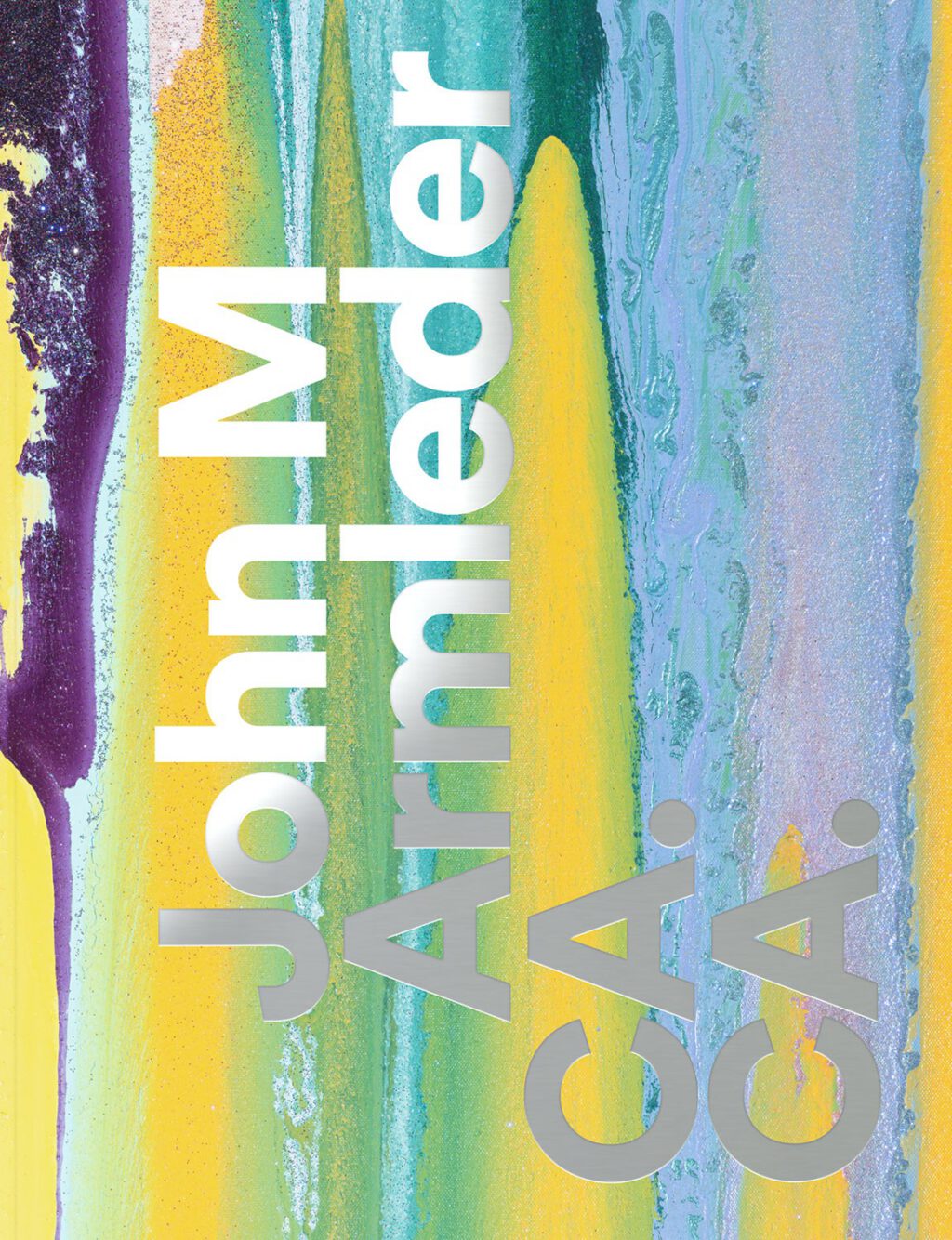
CA. CA.19€ Add to cartCommentaries on our Present Day Realities and the Status of Art
John M Armleder (b. 1948, Geneva; lives and works in Geneva and New York) is one of the most influential contemporary conceptual, performance and object artists. The profound and the banal, control and coincidence, high culture and everyday life coalesce in Armleder’s work to create a unique experience. The works of the Swiss – often humorous or ironically twisted commentaries on contemporary reality – draw on the formal repertoire of Classical Modernism, as well as on video and design. The book focuses on large-scale, site-specific installations and wall pieces, showing in detail the broad spectrum of Armleder’s work.
John M Armleder studied at the École des Beaux-Arts in Geneva. He represented Switzerland 1986 at the 42nd Biennale di Venezia and participated in documenta 8 one year later. His work has been exhibited at the Museum of Modern Art, New York, Palais de Tokyo, Paris, and Belvedere, Vienna, amongst others.
-

Heike Negenborn
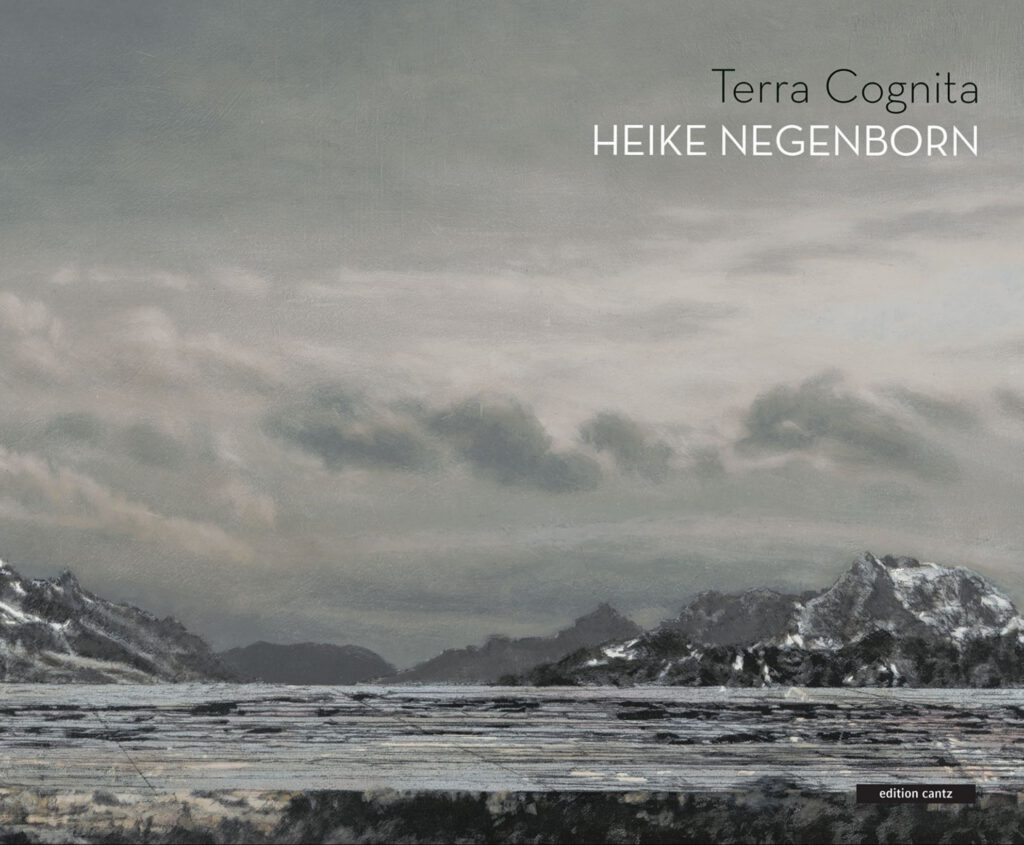
Terra Cognita24€ Add to cartLebensraum of our Time: Contemporary Landscape Painting
The central theme of Heike Negenborn (b. 1964, Bad Neuenahr-Ahrweiler; lives and works in Windesheim) is the seen lebensraum. In reference to seventeenth-century Dutch landscape painting, her works stand in a specific tradition of capturing reality. With her new group of works titled Net-Scape – Landscape in Transition, Negenborn transfers art historical references into contemporary images. The artist is interested in the possibilities of media transfer and the increasing appropriation of analog reality by the digital image. The present volume provides impressive insights into the developments of the landscape painter from 2007 to 2020.
Heike Negenborn studied fine arts at Austin College, Texas, Art Education at Johannes Gutenberg Universität Mainz, and Painting and Printmaking at the Akademie für Bildende Künste Mainz.
-

Michelle Jezierski
Verge28€ Add to cartHow does a simple line become a horizon? When do we begin to see colors and shapes as a landscape? Michelle Jezierski’s painting homes in on the tipping point at which our perception begins to oscillate between color/surface and space/representation. At that very point, she captures the essence of the landscape as such, which is not a concrete place but a metaphor for inner states of affairs. To get there, Jezierski distills what she sees in her surroundings down to the elements of painting—shapes and colors—which just barely intimate a pictorial space while persistently drifting toward abstraction. The defining feature of her technique is that she layers several pictorial planes and spaces on the canvas in staggered arrangements. “Perpetually discovering new ways to unsettle the visual space,” as she puts it, she engenders ruptures and structures that open up multiple perspectives and a portal for reflection on one’s own perception. Above all, however, the cuts lend her pictures a peculiar rhythm that powerfully pulls in the gaze, making the reader paging through this catalogue forget time and space.
-

Susanne Rottenbacher
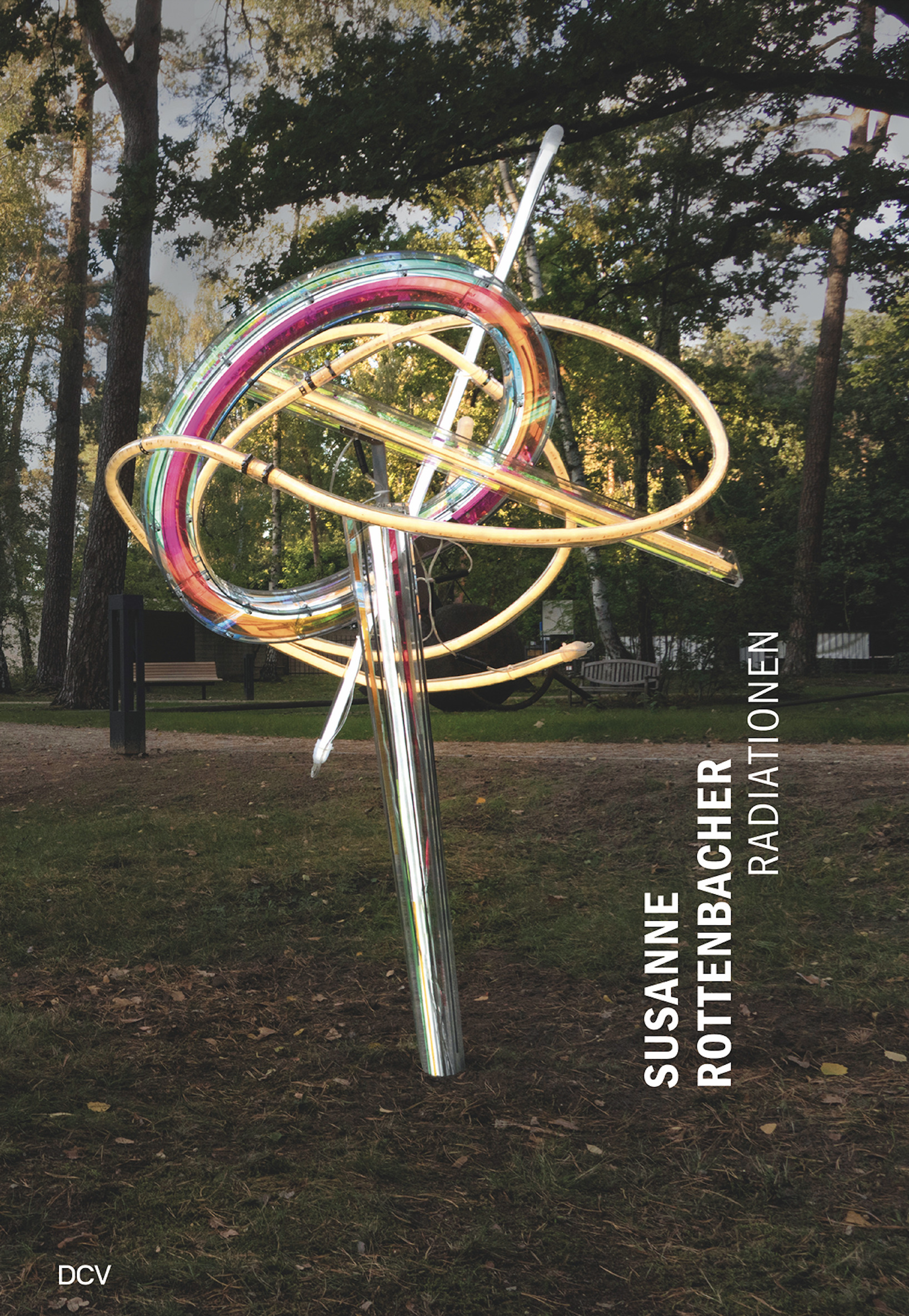
Radiationen40€ Add to cartIn expansive compositions in light, Susanne Rottenbacher (b. Göttingen, 1969; lives and works in Berlin) visualizes the fire of life in its timebound and fluid dimension. Plotinus called fire the “spiritual potency of beauty.” Pursuing a similar vision, Rottenbacher’s works orchestrate light as energy in space. To this end, the artist, who studied light and stage design in the United States and the United Kingdom, creates weightless luminous choreographies realized in colorful LED technology in combination with acrylic glass as a translucent vehicle of form. The results are installations in three dimensions that are deeply silent yet unfold in a magical ecstasy of light.
In Christian sacred architecture, light has been deployed and perceived since the Middle Ages as the aesthetic equivalent of the divine mind’s lucidity. The history of light art, by contrast, is much younger, going back to the years after the First World War. Having built her creative practice over the past fifteen years, Rottenbacher not only continues a century-old tradition of light art in Europe and the U.S.; her works also anticipate a future in which humanity will have room for feelings no less than for scientific knowledge.
- Out of stock

Hans Karl Zeisel
Hundred and more34,95€ Read morePossibilities of concrete art
What is possible without turning away from the cocrete? In the Bauhaus tradition, the typographer, graphic artist, designer and author Hans Karl Zeisel opens up countless design options with basic forms. His wooden cuboids demand a humorous approach to sculpture. They are creativity training, study tools and meditation game all in once. A playful experiment that reveals the diversity of concrete art.
-

CHRISTIAN ROTHMANN
The Light Touch45€ Add to cartA Monograph of Curiosity
Christian Rothmann (b. Kędzierzyn, Poland, 1954; lives and works in Berlin) is an artistic jack-of-all-trades, a builder of bridges between cultures, and a restless globetrotter and traveler across time. He takes photographs wherever he goes, especially when he is on the road, gathering documentaries with a creative edge, spontaneous yet powerfully symbolic pictures, or conceptual series. His motifs have included basketball hoops in the most unbelievable places, toys in restaurants and stores, exotic dishes, and—in the sequence Legs of the World—beautiful legs, of real-world women, but also of advertising-poster idols and art objects. He has a special knack for recruiting accomplices from all age groups and across social and cultural differences, as for his series you and me or Mother & Daughter. Fierce large-format paintings and delicate watercolors on small paper formats from Rothmann’s studio in Berlin-Kreuzberg complement his long-term photographic projects. The Light Touch presents the artist’s variegated visual art on almost five hundred pages.
-

Ilit Azoulay
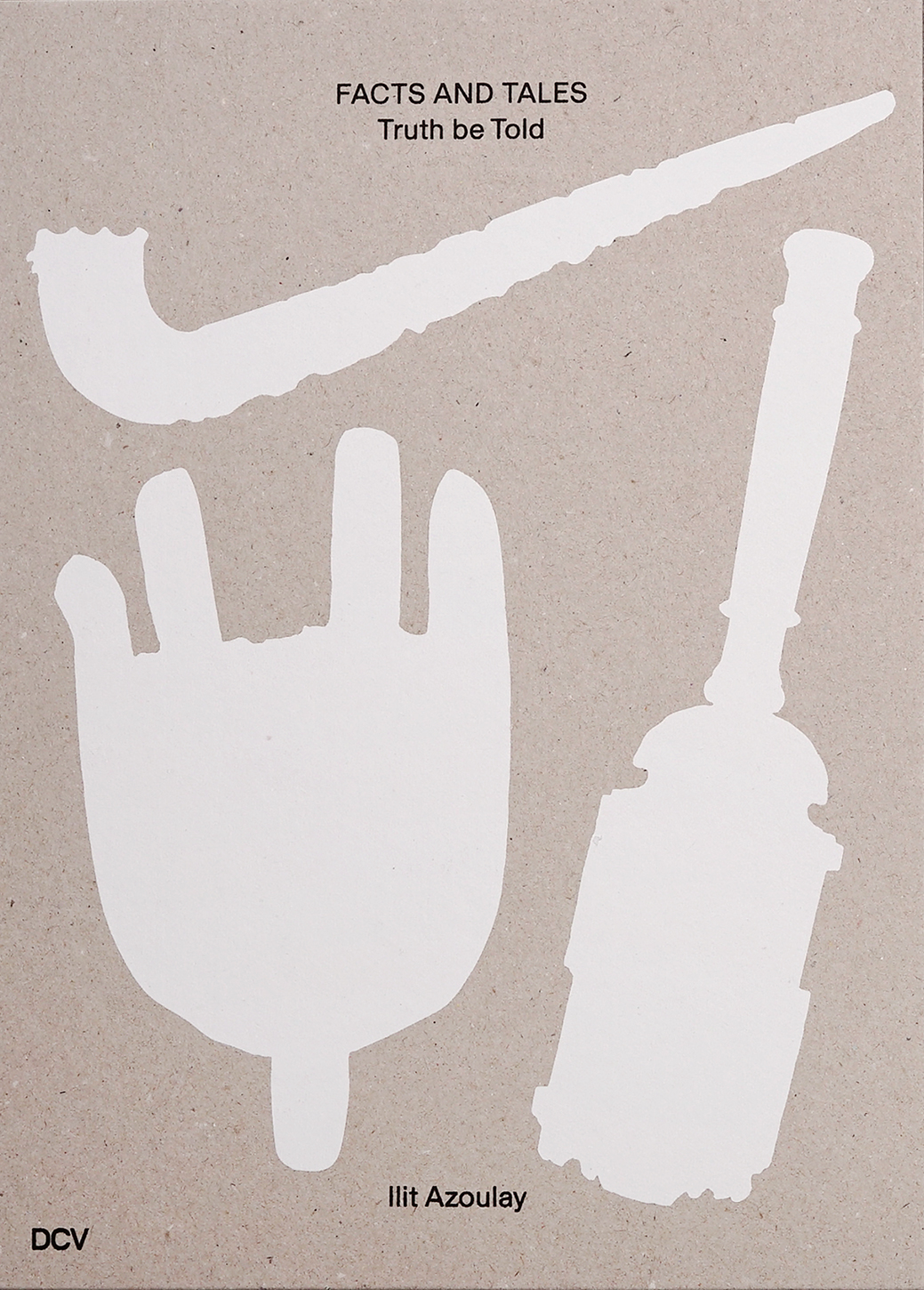
Facts and Tales. Truth be Told120€ Add to cartIn an era in which multiple perspectives and oral histories are increasingly vital, Facts and Tales—Truth Be Told delves into the haunting work of Ilit Azoulay. The artist, who was born in Jaffa in 1972, transforms objects, archives, and museum holdings into vessels, challenging traditional hierarchies of knowledge. In her most recent solo exhibition Mere Things at the Jewish Museum, New York, Azoulay presents works that probe the delicate balance between factual representation and nuanced storytelling.
The publication accompanying the exhibition includes archival pages, the artist’s notes, and depictions of the works as well as an introduction by curator Shira Backer and an essay by the art critic, curator, and writer Sarit Shapira, who passed away in 2018. Titled Houses of Junk and Specters: On Ilit Azoulay’s Early Works, it underscores the importance of honoring both factual accuracy and oral histories and invites readers to explore the complex interplay between concrete evidence and the rich and nuanced stories.
Azoulay has devised a singular method to shed light on the blanks in hegemonic narratives and expose them. As though to produce an extortion letter, she clips her pictures from archival materials and photographs of the walls of abandoned buildings and composes them in collages interweaving a multiplicity of views. The resulting works question the exclusive truth claim of museum expertise and reveal its constructed quality. The catalog of her works, designed as a box replete with texts and images, reflects this approach, aiming to dismantle established narratives and open up diverse perspectives.
Box containing 6 different standalone publications, limited edition of 500 copies
THIS PUBLICATION WAS MADE POSSIBLE BY THE GENEROUS SUPPORT OF THE GALLERY LOHAUS SOMINSKY, MUNICH
-

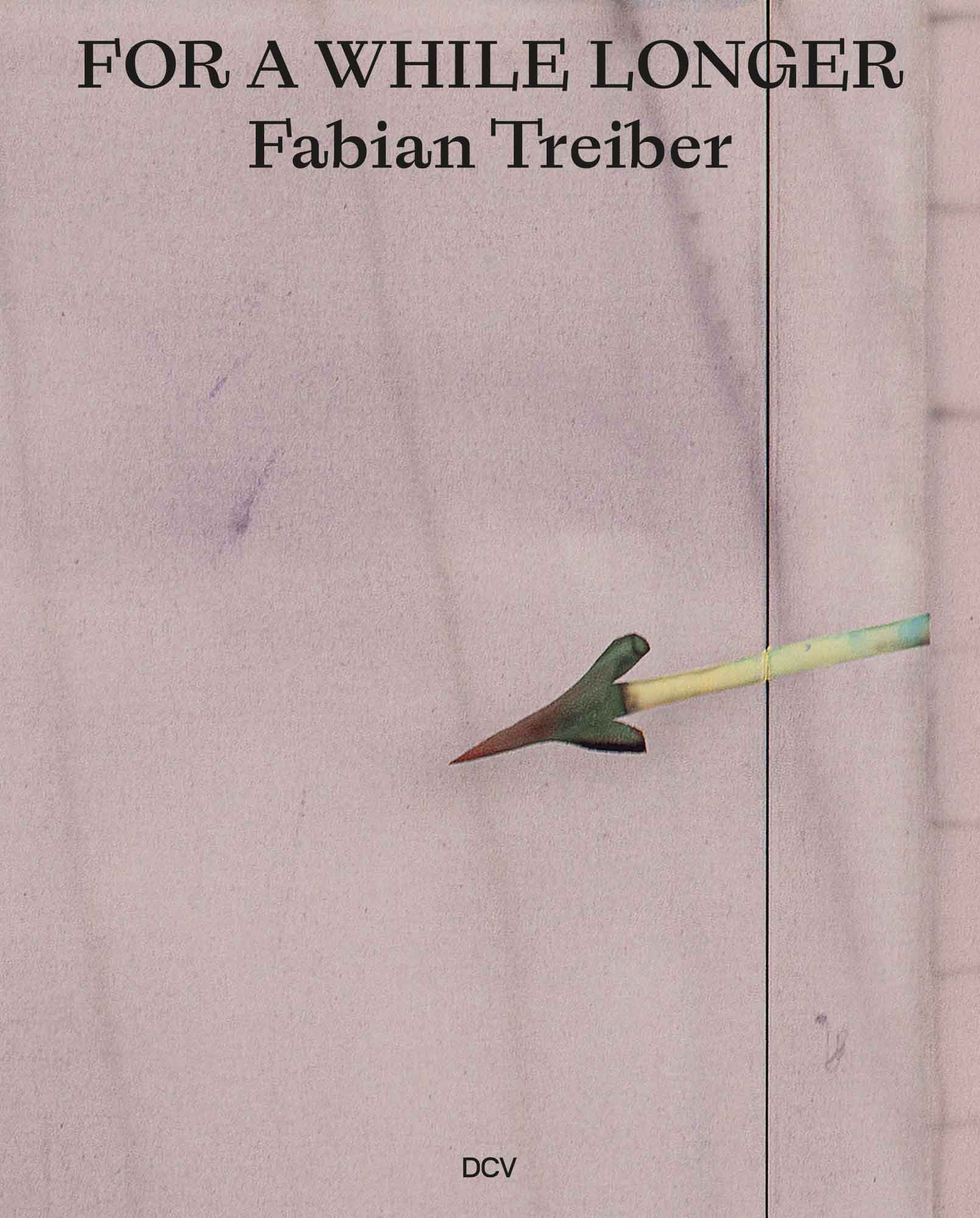
Fabian Treiber
For a While Longer34€ Add to cartUnstable Prototypes of a Reality We Know
Fabian Treiber’s (b. Ludwigsburg, 1986; lives and works in Stuttgart) paintings show what appear to be interiors while interrogating subjective projections and our perceptions of reality. The artificial spaces bear witness to human existence even though there are no people to be seen. In his still lifes, Treiber negotiates classical questions of painting: form and structure, color and composition, representation of space and organization of the surface. His paintings primarily implement formal rather than narrative decisions. This lets the artist provoke a deliberate breach in which the ostensibly fallacious emerges as the essential quality of painting—the effect is that of works that seem somehow off but are actually just right.
Fabian Treiber studied painting and intermedia design at the Stuttgart State Academy of Art and Design (ABK Stuttgart). His works have won him a Karl Schmidt Rottluff Fellowship; he was also a finalist for the 2021 Hans Purrmann Grand Prize. He has had numerous solo shows, including at Kunsthalle Nürnberg, Nuremberg; Kunstverein Ludwigsburg; and Galerie Ruttkowski;68, Cologne; and contributed to group exhibitions at Kunsthalle Düsseldorf; Villa Merkel—Galerien der Stadt Esslingen a.N.; and Staatliche Kunsthalle Baden-Baden. For a while longer is published on occasion of his first solo exhibition at Haverkampf Galerie.
-
Leszek Skurski
Catalogue raisonné Vol. 1: Works from 1990–202459€ Add to cartLeszek Skurski (b. Gdańsk, 1973; lives and works in Fulda and Mallorca) is known for his singular and immediately recognizable white paintings. Small black and gray figures emerge from the white landscapes, always set in relation to one another, in pairs or groups. Exposed on the expansive and boundless-seeming plane, they silently tell a story that remains as open-ended as the pictures. In a few spare brushstrokes or lines drawn with the palette knife, Skurski’s superb neoimpressionism deftly captures the atmosphere that weighs down on his characters and holds his compositions in suspense.
The extensive monograph presents over two thousand works from more than three decades. Essays embed the various bodies of work in their art-historical contexts.
-

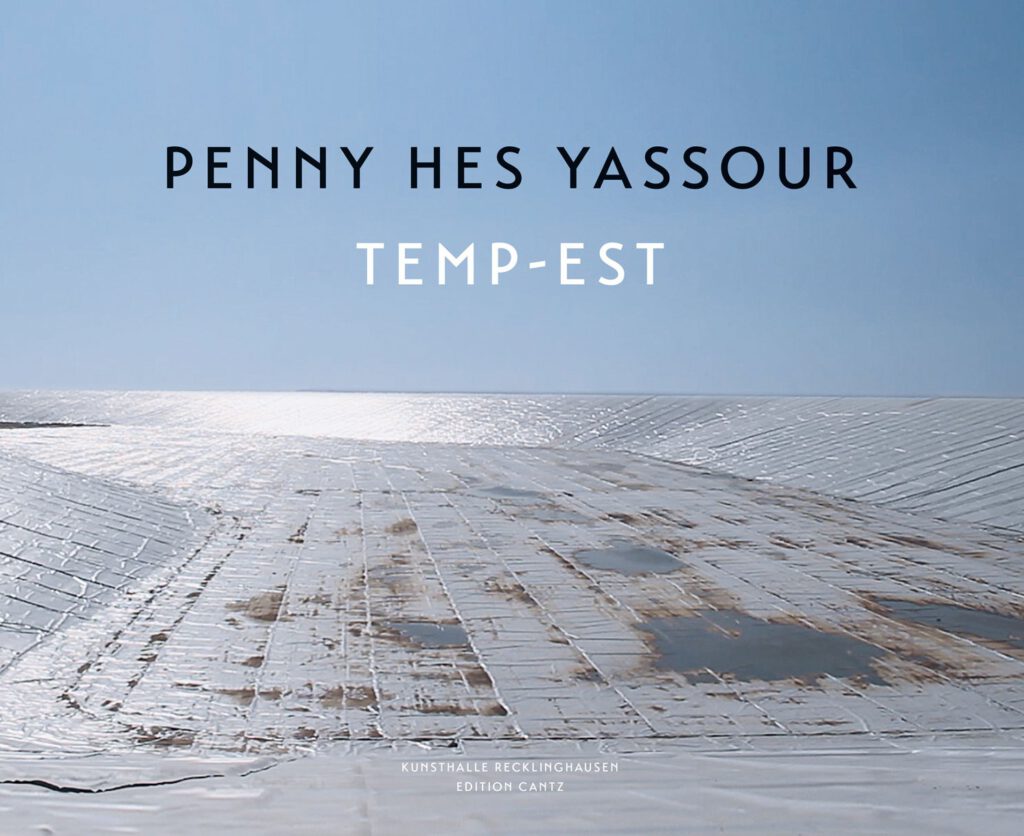
Penny Hes Yassour
Temp-Est24€ Add to cartA Monograph about the Award-Winning Israeli Artist
Penny Hes Yassour (b. 1950, lives and works at kibbutz En-Harod Ihud) tells stories and keeps history alive, explores the boundary between remembering and forgetting. In her installations she combines sound, image, and a multi-part world of objects into narrative mise-en-scènes of great poetic power. Hes Yassour leads the viewer through the Jordan Valley with its many watchtowers, accompanies the transformation of the landscape in a gigantic, stagelike water basin, and documents the flight of bats in a narrow, labyrinthine spatial installation. The book published on the occasion of the artist’s first exhibition in Germany provides comprehensive insights into her subtle artistic work.
- Release December 2025
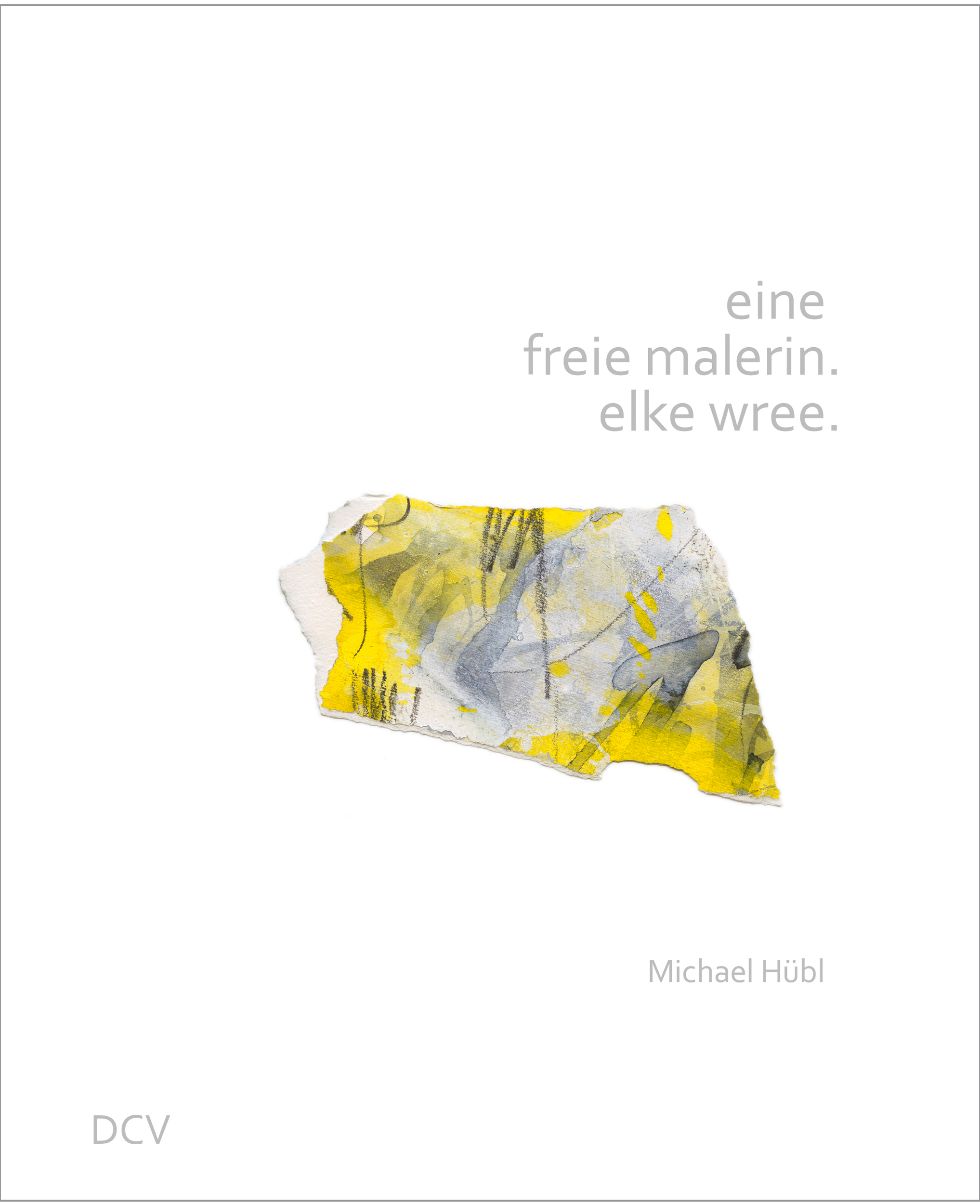
eine freie malerin.
elke wree.26€ Add to cartThe painter Elke Wree’s career (born 1940, lives in Karlsruhe) was defined by the debates of the post-war era. Art was considered a search for truth and intended to reveal the existentially essential. Fundamental questions were: Realism or abstraction? Genuine or fake? This book provides insight into the search for an authentic, contemporary visual language. Wree’s formative teachers in Karlsruhe and Berlin are discussed, as are her changing social environments and the rapid societal changes. Wree’s paintings were always nature-inspired abstraction with overlapping color spaces and painting gestures. Wree groups her pictures with terms such as condensations and clearings, in-between lands, or traces of light and time. This volume is simultaneously a biography, panorama, analysis, and homage.
-

Corona, Queens
Photographs by Cara Galowitz32€ Add to cartFor seven years Cara Galowitz (b. 1964, lives and works in New York) walked the streets of Corona, Queens every day during her lunch break from her nearby museum job, where she worked as an art director. These photographs, which she calls “an exercise in seeing”, capture the vivid juxtapositions of one of the most ethnically diverse neighborhoods in the world.
Through layers of irony, humor, and visual sophistication, these photographs evoke a place that is a continual work-in-progress, where the past, be it faded lettering or crumbling architecture, collides with the present in the form of spontaneous street decorations, signage, graffiti, and religious iconography. The images evoke the struggle and resilience of the people of Corona, as well as capturing the quirky beauty of the streets.
Cara Galowitz is a graduate of the Cooper Union School of Art where she focused on graphic design, photography, and fine art. She has pursued a long career as a museum art director and has shown work at the Newark Museum, the Museum of the City of New York, and the Grey Art Gallery.
-

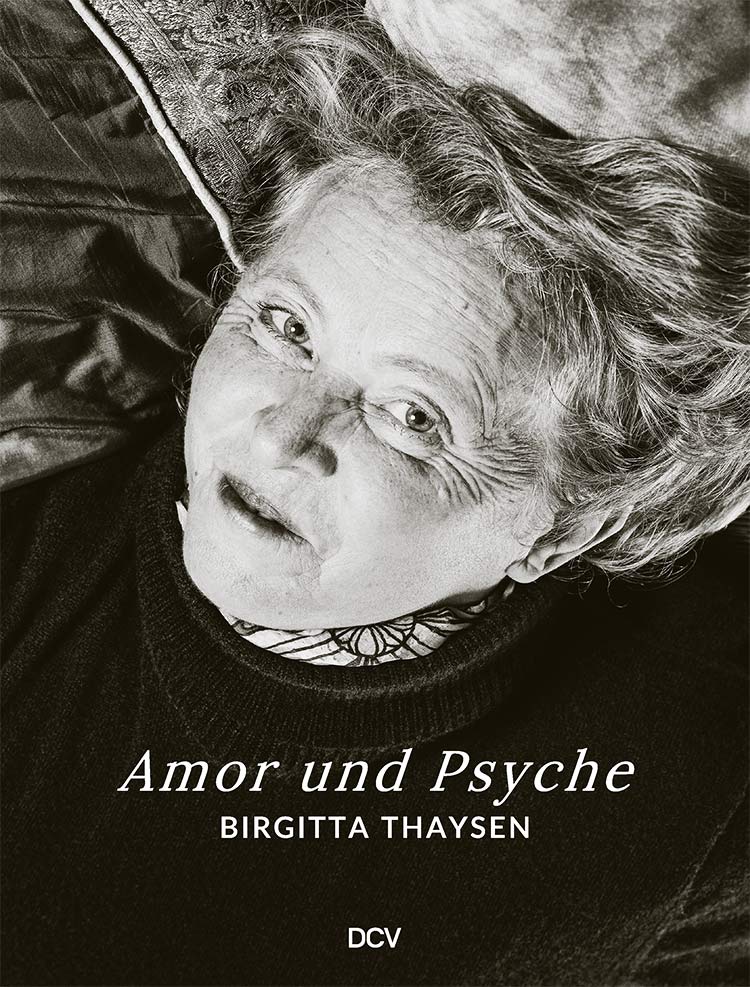
Birgitta Thaysen
Amor and Psyche24€ Add to cartAspects of Love
The fine art photographer Birgitta Thaysen (b. Gelsenkirchen, Germany, 1962; lives and works in Düsseldorf) studied with Bernd and Hilla Becher at the Düsseldorf Academy of Fine Arts and in Nan Hoover’s master class. Her photographic oeuvre encompasses urban motifs as well as likenesses of humans. In black-and-white portrait shots, she revisits the ancient myth of Amor and Psyche; embodiments of the yearning for love and the bafflements of the soul, the title characters have long been vehicles for variegated interpretations in visual art. Thaysen chose to shoot her portraits at Künstlerverein Malkasten, Düsseldorf, where the tale is present in an adaptation as a lavishly made wallpaper from the nineteenth century. She captured the protagonists lying on the floor, bedded on cushions, their heads upside down, for a vertiginous exploration of states of mind between self-abandonment and doubt.
Birgitta Thaysen studied art with Bernd and Hilla Becher at the Düsseldorf Academy of Fine Arts. Her conceptual photographic series have been seen by wide audiences in numerous exhibitions.
-

Alexander Ruthner
Cour: Sommer36€ Add to cartContemplating Nature in a Reduced-Mobility Environment
“The events of the year 2021, which was defined by lockdowns, the pandemic, and restrictions, has brought out the resonance in my pictures of Gustave Courbet’s realism,” Alexander Ruthner (b. Vienna, 1982; lives and works in Vienna) says about his most recent works: oil paintings featuring lush green vegetation and veritable down comforters painted all-over in saturated color gradients. The works will make their public début as the publication is released in the summer of 2021, hence the word “Sommer” in the title. The other word, “Cour,” is a nod to the first syllable of the French painter’s name as well as French for “court,” a term the artist creatively reinterprets as a synonym for the solitary “castle of the mind” to which we have retreated under pandemic conditions. Ruthner, who studied with Peter Kogler, Daniel Richter, and Albert Oehlen, revisits the boscage and pasture painting of past eras in new works that propose a distinctive personal interpretation of that tradition’s charm.
Alexander Ruthner’s work has been shown at Kunsthalle Wien, the Whitechapel Gallery, London, and the National Museum of Montenegro, among other venues.
-

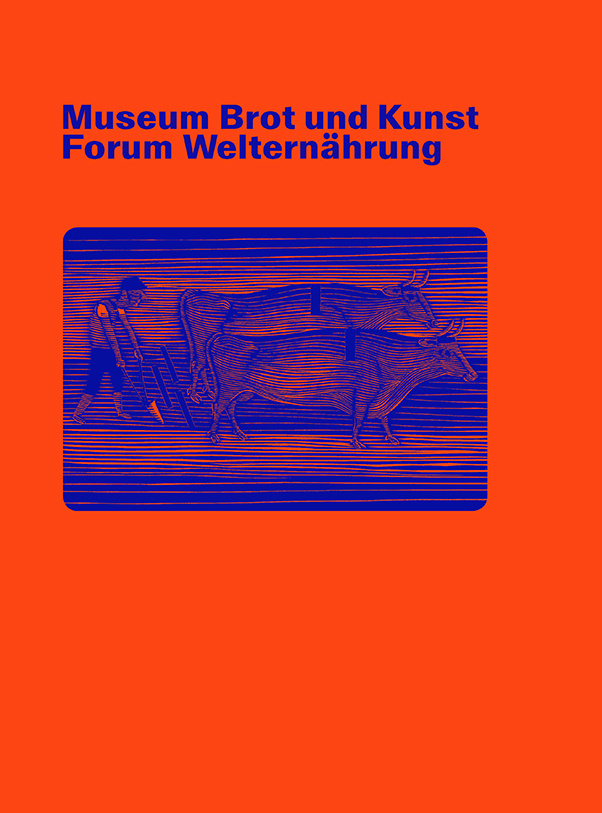
Museum Brot und Kunst
Forum Welternährung24€ Add to cartFood, Art, and Consumption
The craving for food and the desire to avoid being hungry have been among humanity’s central concerns for millennia. Economic activity, science, politics, culture—our basic need for sustenance informs and influences every domain of our lives. The catalogue accompanying the permanent exhibition at the Museum Brot und Kunst—Forum Welternährung sheds light on nineteen thematic foci around the significance of bread as the quintessential food. Founded in 1955, the Museum of Bread and Art was the first institution of its kind in the world dedicated to this subject; its collection comprises a large number of artifacts from across several centuries that speak to the histories of culture, society, and technology. The generously illustrated publication presents a panorama of the wide field of human nourishment in dialogue with art, helping the reader grasp the complexities of the world in which we live.
With works by Ernst Barlach, Bernhard Johannes Blume, Pieter Brueghel, Marc Chagall, Salvador Dalí, Simone Demandt, Agnes Denes, Frans Francken, Georg Flegel, Erich Heckel, Christian Jankowski, Markus Lüpertz, Gerhard Marcks, Max Pechstein, Pablo Picasso, Claire Pentecost, Thomas Rentmeister, Daniel Spoerri, Andy Warhol and others.
The book was included in the shortlist of the competition “Schönste Deutsche Bücher 2021”.
-

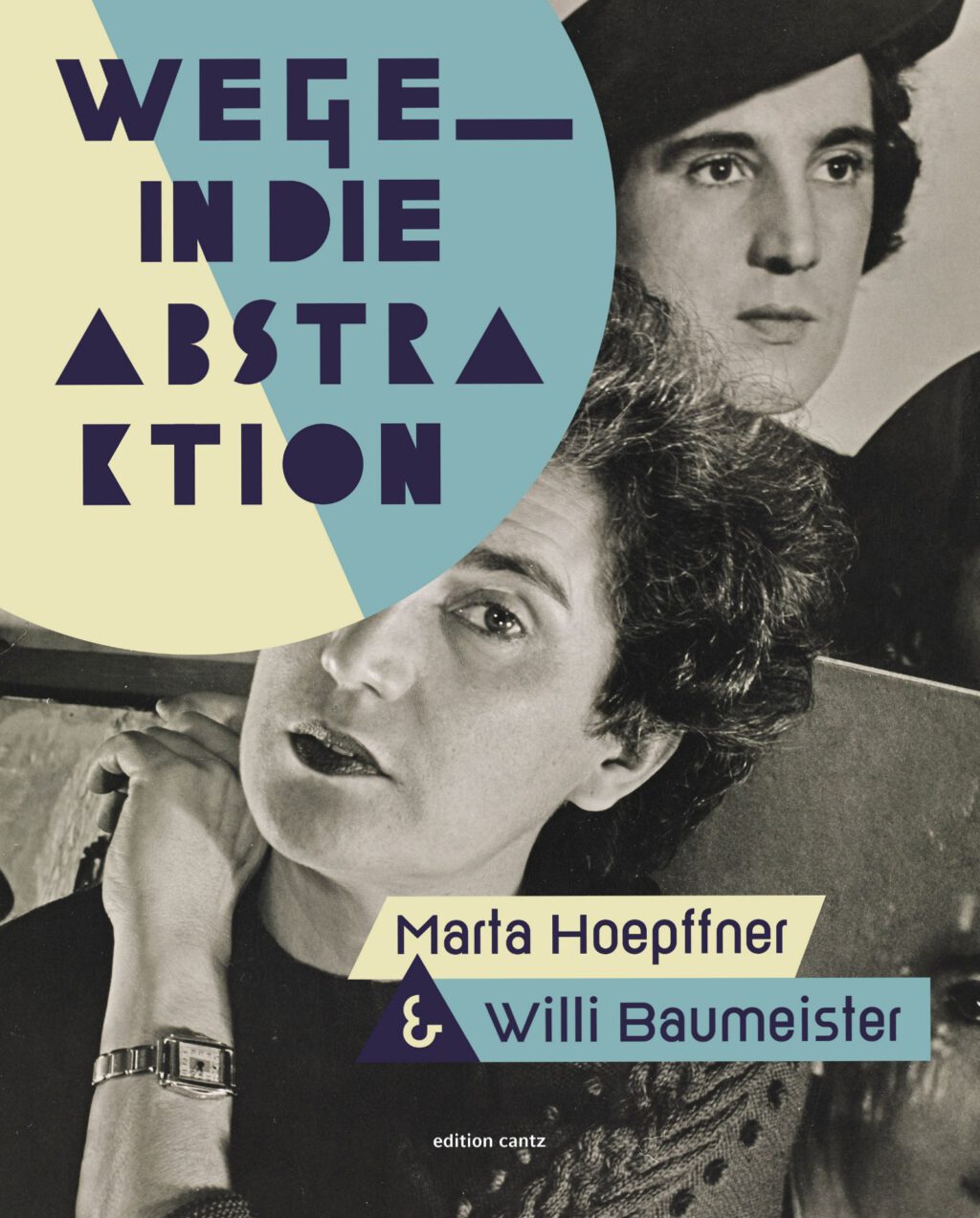
Wege in die Abstraktion
Marta Hoepffner und Willi Baumeister24,90€ Add to cartUnknown Influences of Modern Painting and Photography
Marta Hoepffner (b. 1912, Pirmasens; d. 2000, Lindenberg) is considered a pioneer of experimental photography. For the first time, this book compares the artist’s early photographic experiments, portraits, and color photographic studies with the paintings of Willi Baumeister (b. 1889, Stuttgart, d. 1955 Stuttgart). As professor at the Frankfurter Kunstschule – today’s Städelschule – Baumeister had a decisive influence on the development of his student Hoepffner. An extraordinary book that presents more than fifty works from the 1910s to the 1970s.
Marta Hoepffner’s works have been exhibited at, among others, the Centre Georges Pompidou in Paris, the San Francisco Museum of Modern Art, and the National Portrait Gallery in London. Willi Baumeister studied at the Kunstakademie in Stuttgart and was a member of the influential November Group. He was defamed as “degenerate” during the Nazi regime and is now considered one of the outstanding artists of modernism.
-

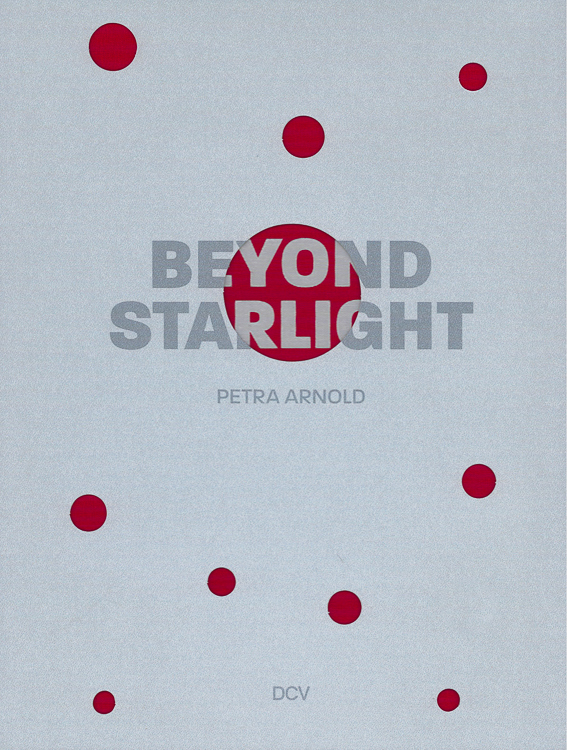
Petra Arnold
Beyond Starlight39,90€ Read moreThe Fischer Family of Circus Artists: A Photographic Long-term Observation
For more than a decade, the photographer Petra Arnold has shadowed the Zirkus Starlight troupe and the Fischers, a family of performers, taking analog photographs, mostly black-and-white, of their life behind the scenes. When she began the project, the Fischers were a large family, with thirty grandchildren. Over time, the company has had to downsize – the business environment is difficult, and few people can make a living as circus artists these days. Arnold’s photographs peek behind the curtain for a study of an existence between circus family and family circus – mostly outside the limelight. The portraits and unstaged scenes are documents of contemporary history and draw attention to the steady decline of circus culture.
-

Margret Eicher
Lob der Malkunst38€ Add to cartContemporary Visual Communication in a Historic Weaving Technique
Margret Eicher’s (b. Viersen, Germany, 1955; lives and works in Berlin) large-format tapestries combine the baroque form of the woven picture with familiar motifs excerpted from contemporary media images. She digitizes her sources and then assembles them in painstaking editing work on the computer. The resulting ‘media tapestries’ occupy the interface between the traditional work of art as a physical object and the electronic noise of the digital realm: two worlds that at first glance would seem to be incompatible yet find themselves in harmonious union in Eicher’s art. In Göttliche Liebe (Divine Love), for example, Caravaggio’s Crowning with Thorns meets a kissing gay couple from a pro-tolerance campaign in Berlin, while Botticelli’s Birth of Venus is sampled together with a subway station in Frankfurt. In conceptual art production, the creative idea is central and its realization becomes secondary; in a final twist, Lob der Malkunst (Praise of Painting) elects this practice as its artistic lodestar. Eicher installs the painter Martin Kippenberger in the interior of Berlin’s Paris Bar, where he poses as a dandy and presides over a clash between the different tendencies in the art of the twentieth and twenty-first centuries.
-
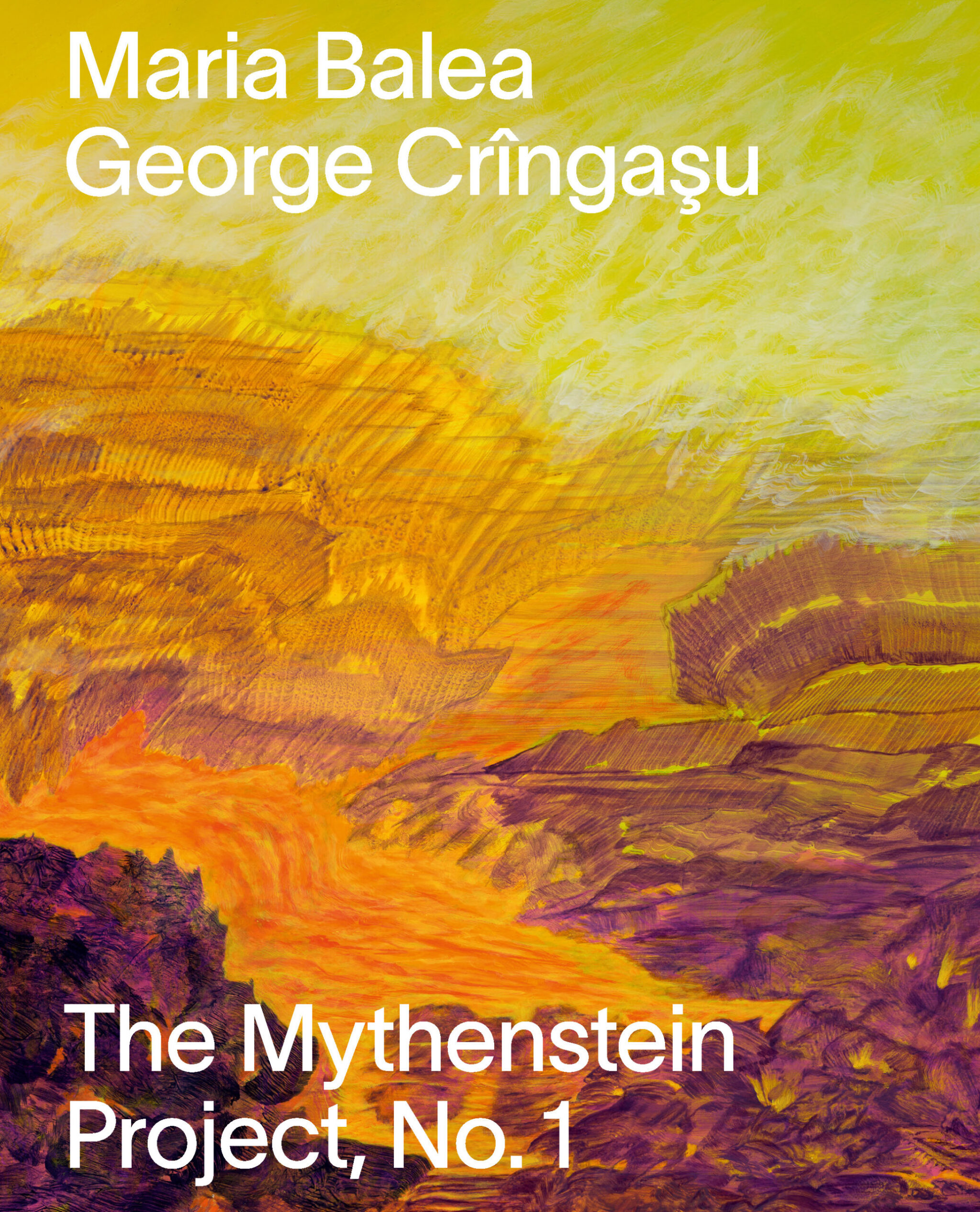
Maria Balea & George Crîngașu
The Mythenstein Project18€ Add to cartMaria Balea (b. Sighetu Marmației, 1990; lives and works in Cluj-Napoca, Romania) and George Crîngașu (b. Focșani, 1988; lives and works in Cluj-Napoca and Rome) are among the youngest members of the School of Cluj, which has attained international renown in Adrian Ghenie, Hortensia Mi Kafchin, and Ciprian Mureșan. The overarching theme in their works in a range of media is the lived reality of today’s young people between a physical world defined by uncertainties and a virtual parallel universe whose boundless possibilities make it a fascinating yet also often deceptive safe haven. Both artists roam this dizzying kaleidoscope of worlds on a quest for beauty: Balea, through a romantically idealized focus on remnants of untouched or deserted nature; Crîngașu, by abandoning himself to the graphical possibilities of the digital realm, where beauty is often bound up with the bending of natural laws and the physical impossibility of architecture. Yet both, the retreat to an ostensibly natural state and the escape into garish artificiality, are overshadowed by a nameless menace.
-

Martin Noël
paintprintpaint35€ Add to cartA Comprehensive Overview on the tenth Anniversary of the Death of Martin Noël
Martin Noël (b. 1956, Berlin; d. 2010, Bonn) was a German painter, draftsman, and printmaker. He was one of the formative innovators of the long-neglected techniques of linocut and woodcut. With his large-format works on paper, he created a position for himself in contemporary art that is as much respected as it is independent. On the occasion of the tenth anniversary of the artist’s death, this volume presents a comprehensive overview of his work from the mid-1980s to the last year of his life in 2010. Thirty-five exceptional works document Noël’s path from his early years as a painter, via the middle phase marked by printing blocks, linocuts and woodcuts, up to his late paintings.
Martin Noël studied Graphics and Painting at the Rheinische Fachhochschule Köln, Cologne. His works are included in, among others, the Federal Collection of Contemporary Art, the Kunstsammlungen Chemnitz, and the collection of the Museum Pfalzgalerie Kaiserslautern.