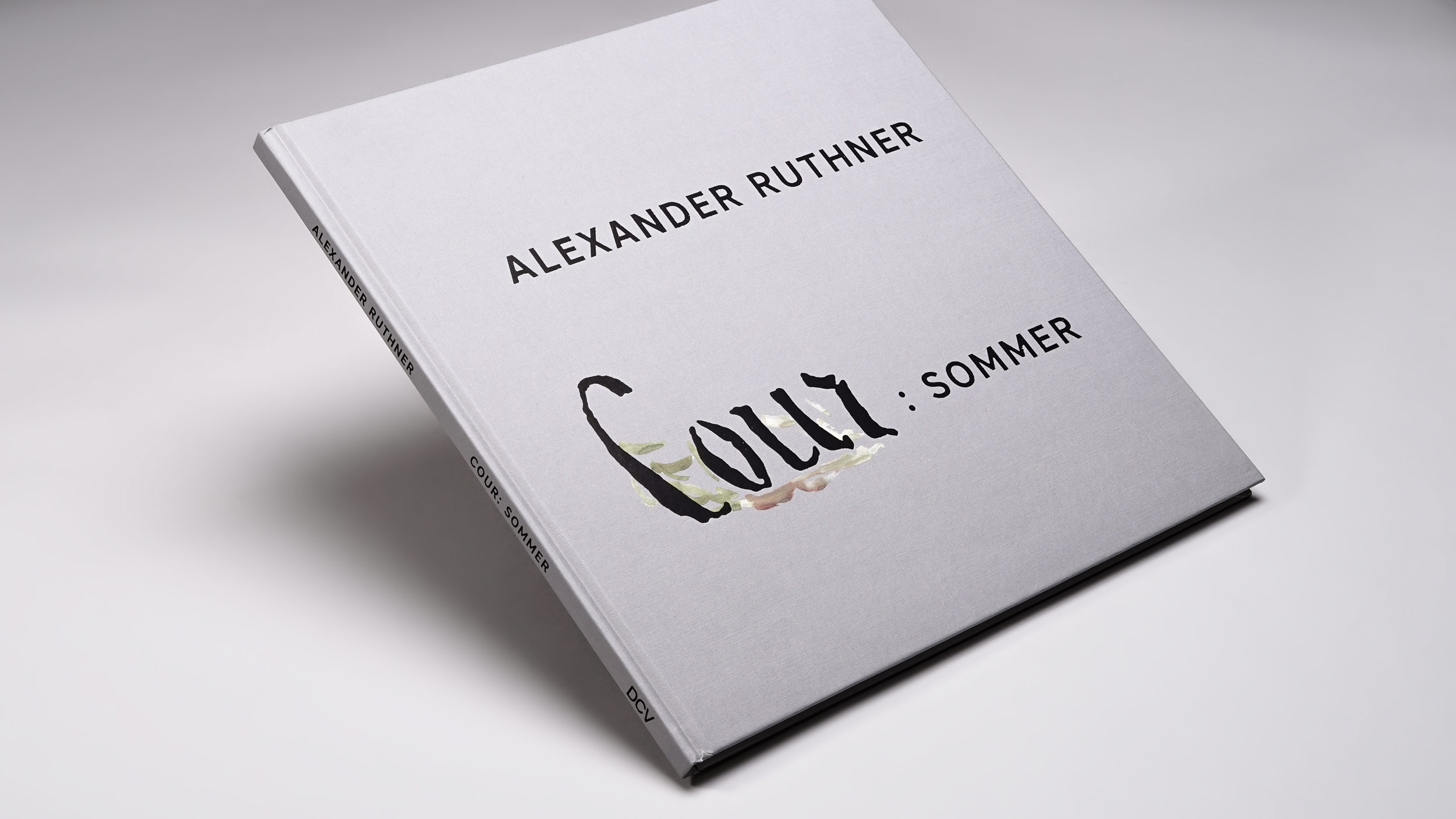
Alexander Ruthner
Cour: Sommer
 | |
|---|---|
| Editor(s) | Philipp Haverkampf, Carolin Leistenschneider |
| Author(s) | Alexander Ruthner, Elisabeth von Samsonow |
| Design | Alexander Ruthner |
| Cover | Hardcover |
| Size | 30 x 30 cm |
| Pages | 64 |
| Illustrations | 20 |
| Language(s) | German, English |
| ISBN | 978-3-96912-054-5 |
Contemplating Nature in a Reduced-Mobility Environment
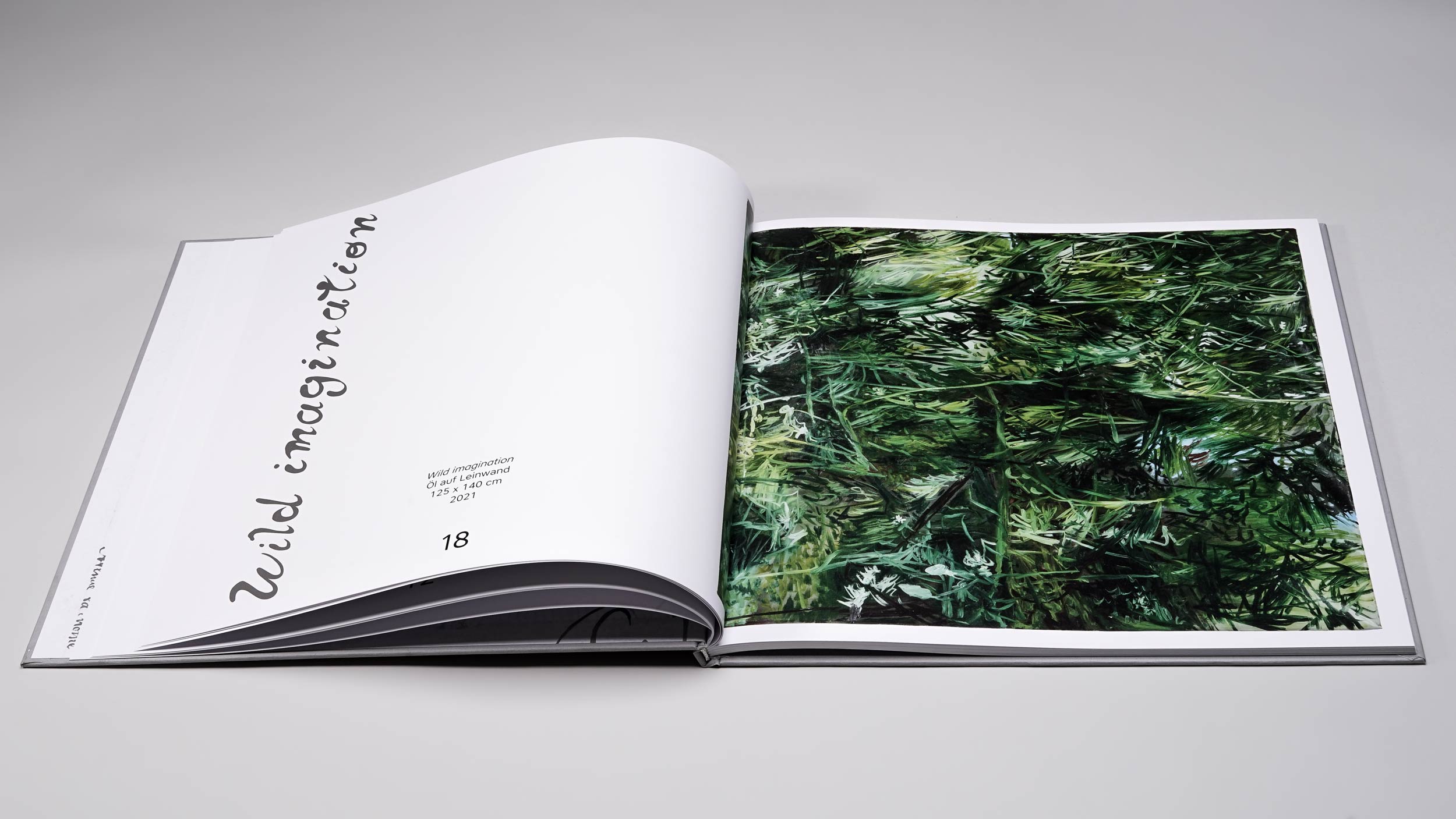
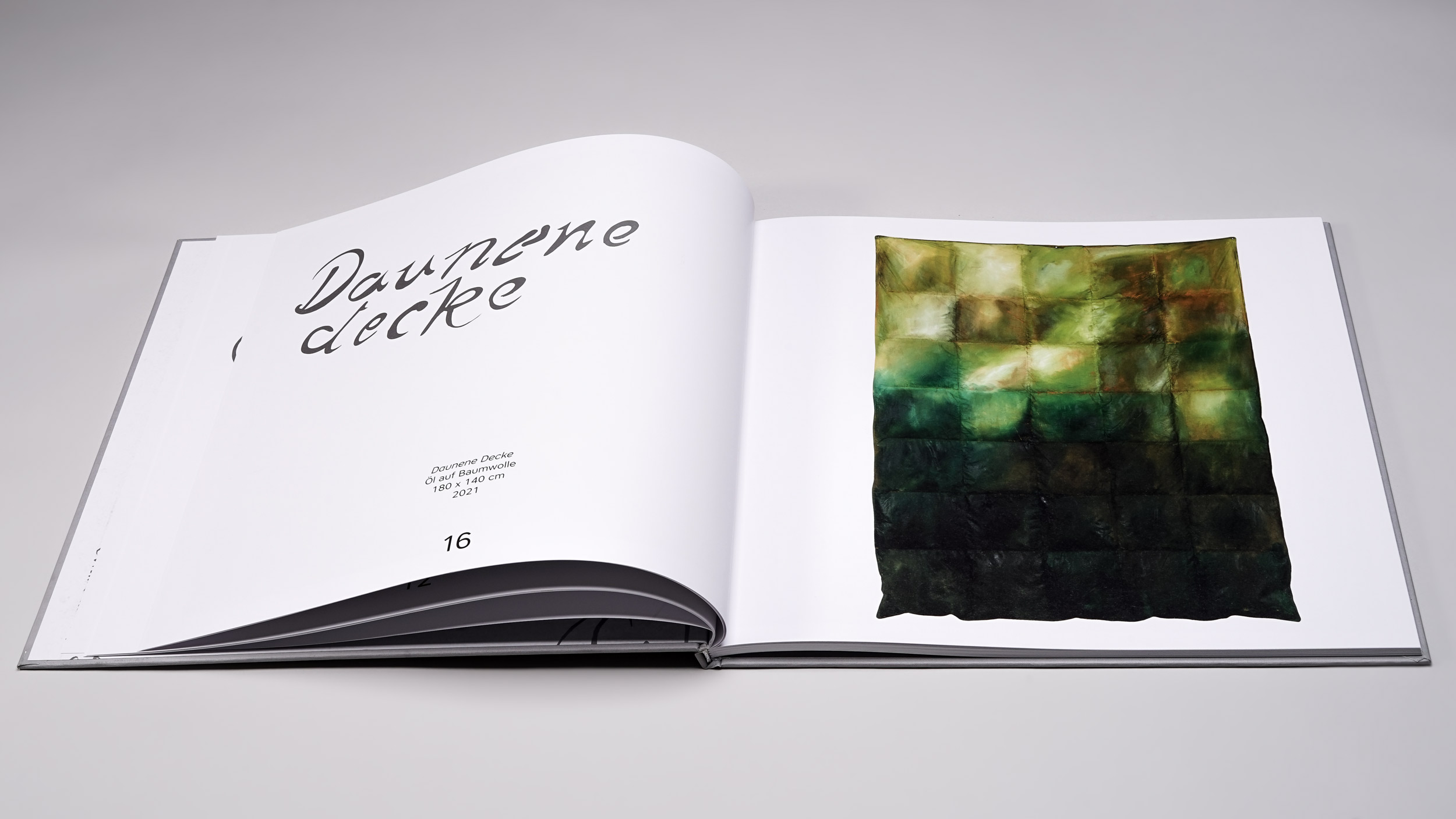
“The events of the year 2021, which was defined by lockdowns, the pandemic, and restrictions, has brought out the resonance in my pictures of Gustave Courbet’s realism,” Alexander Ruthner (b. Vienna, 1982; lives and works in Vienna) says about his most recent works: oil paintings featuring lush green vegetation and veritable down comforters painted all-over in saturated color gradients. The works will make their public début as the publication is released in the summer of 2021, hence the word “Sommer” in the title. The other word, “Cour,” is a nod to the first syllable of the French painter’s name as well as French for “court,” a term the artist creatively reinterprets as a synonym for the solitary “castle of the mind” to which we have retreated under pandemic conditions. Ruthner, who studied with Peter Kogler, Daniel Richter, and Albert Oehlen, revisits the boscage and pasture painting of past eras in new works that propose a distinctive personal interpretation of that tradition’s charm.
Alexander Ruthner’s work has been shown at Kunsthalle Wien, the Whitechapel Gallery, London, and the National Museum of Montenegro, among other venues.
Description
“The events of the year 2021, which was defined by lockdowns, the pandemic, and restrictions, has brought out the resonance in my pictures of Gustave Courbet’s realism,” Alexander Ruthner (b. Vienna, 1982; lives and works in Vienna) says about his most recent works: oil paintings featuring lush green vegetation and veritable down comforters painted all-over in saturated color gradients. The works will make their public début as the publication is released in the summer of 2021, hence the word “Sommer” in the title. The other word, “Cour,” is a nod to the first syllable of the French painter’s name as well as French for “court,” a term the artist creatively reinterprets as a synonym for the solitary “castle of the mind” to which we have retreated under pandemic conditions. Ruthner, who studied with Peter Kogler, Daniel Richter, and Albert Oehlen, revisits the boscage and pasture painting of past eras in new works that propose a distinctive personal interpretation of that tradition’s charm.
Alexander Ruthner’s work has been shown at Kunsthalle Wien, the Whitechapel Gallery, London, and the National Museum of Montenegro, among other venues.
Additional information
| | |
|---|---|
| Editor(s) | Philipp Haverkampf, Carolin Leistenschneider |
| Author(s) | Alexander Ruthner, Elisabeth von Samsonow |
| Design | Alexander Ruthner |
| Cover | Hardcover |
| Size | 30 x 30 cm |
| Pages | 64 |
| Illustrations | 20 |
| Language(s) | German, English |
| ISBN | 978-3-96912-054-5 |
More books
-

Feuer und Farbe
Gemälde und Grafiken von Walter Jacob35€ Add to cartWalter Jacob (1893-1964) was a painter whose oeuvre and life reflected the discontinuities of the twentieth century in condensed form. Contemplative natural scenes and the self-portraits were constants to which he hewed throughout his career; in stylistic terms, however, his oeuvre could hardly be more contradictory. Working first in the Impressionist, then in the Expressionist style, he eventually forged a form of expression tending toward abstraction, although he rejected modernist painting throughout his life. The Nazis considered his early work “degenerate,” which led him—a committed National Socialist and active member of the SA—to adapt not just his ideological convictions, but also his aesthetics to the new era: starting in the mid-1930s, he produced naturalistic depictions, sometimes suggestive of the New Objectivity, of “popular” motifs like landscapes, animals, soldiers, and more. Tellingly, though, the backs of some of his canvases are taken up by works that suggest the pleasure he took in experimenting with color and form. The same tension is palpable in the abstract landscapes of his late oeuvre. This catalog gathers works to retrace Jacob’s checkered career, complemented by (art) historical essays that embed his output in its context.
-

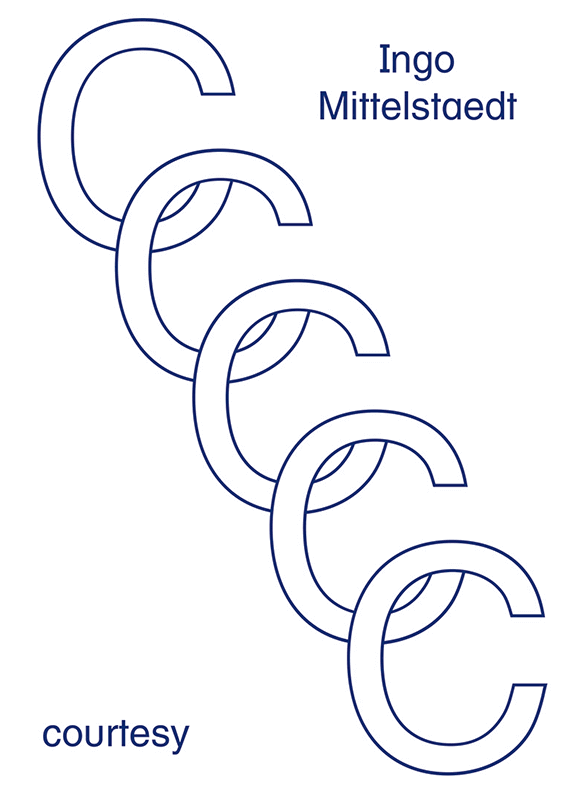
Ingo Mittelstaedt
Courtesy15€ Add to cartPerception and Comprehension in Photography
Ingo Mittelstaedt (b. 1978, Berlin; lives and works in Berlin and Hamburg) creates staged photographs, combining and contrasting them with diverse objects in expansive installations. His pictorial arrangements probe a variety of concerns and imageries that he sources from museum settings or the modes of representation in ordinary advertising brochures. Gestures of showing, pointing, bringing out, and uncovering are leitmotifs in Mittelstaedt’s canny and subtly humorous exploration of the potentials and limitations of the photographic medium.
Ingo Mittelstaedt studied fine arts at the Hochschule für Bildende Künste Braunschweig and received numerous emerging-artist awards, including the New York fellowship of the Niedersächsische Sparkassenstiftung. His work has been shown at Kunstverein Hannover, the Wilhelm-Hack-Museum, Ludwigshafen, Marta Herford, and elsewhere.
-

Nobuyuki Tanaka
Primordial Memories25€ Add to cartThe craft of traditional Japanese lacquer finishing in contemporary art
In his extraordinary sculptures, Nobuyuki Tanaka (b. 1971 in Tokyo) combines a lacquer finishing that has been practiced in Japan for centuries with an organic formal language. Tanaka is considered the most important representative and pioneer of the use of lacquer in contemporary art. He uses the material in polished deep black or intense red as a multi-layer coating for large-format sculptures. This results in abstract works with lively, curved, glossy surfaces in which the multi-faceted effect created by the interplay with changing light conditions plays a key role. The lavishly illustrated book includes texts by Britta E. Buhlmann, Beatrice Kromp, Antje Papist-Matsuo, Annette Reich, Atsuhiko Shima, and Nobuyuki Tanaka.
In his extraordinary sculptures, the artist combines a treatment of lacquer practiced for centuries in Japan with an organic language of form.
An exceptional representative and pioneer of the use of lacquer in contemporary art, Tanaka uses the lacquer mostly in polished deep black, sometimes also in intense red, as a multi-layer coating for his large-scale sculptures.
-

Penny Hes Yassour
Temp-Est24€ Add to cartA Monograph about the Award-Winning Israeli Artist
Penny Hes Yassour (b. 1950, lives and works at kibbutz En-Harod Ihud) tells stories and keeps history alive, explores the boundary between remembering and forgetting. In her installations she combines sound, image, and a multi-part world of objects into narrative mise-en-scènes of great poetic power. Hes Yassour leads the viewer through the Jordan Valley with its many watchtowers, accompanies the transformation of the landscape in a gigantic, stagelike water basin, and documents the flight of bats in a narrow, labyrinthine spatial installation. The book published on the occasion of the artist’s first exhibition in Germany provides comprehensive insights into her subtle artistic work.
-

Female Gaze
From Virtual to Reality25€ Add to cartWorks of Art Take a Stance
The “female gaze” embodies a stance that is the polar opposite of the “male gaze.” The latter term came into use in the movie and advertising industries in the 1970s to describe the fact that women typically appear in films in supporting roles, as accessories to men, rather than as protagonists. The male gaze originated in a patriarchal society that has begun to change. The female gaze champions a modern form of emancipation that challenges men to abandon entrenched structures. Much more importantly, it encourages women to become aware of the strength that lies in their femininity and make it the source of their own creative expression and their own perspective on the world. For many years, the writer Silke Tobeler has visited artists in their studios, collecting the photographs she took there and her conversations with her hosts on her blog, Female Gaze.
-

Fritz Overbeck und Hermine Overbeck-Rohte
Der Briefwechsel38€ Add to cartIntimate Glimpses from the Marriage of Two Worpswede Artists
In the final years of the nineteenth century, numerous painters settled in the village at the foot of Weyerberg hill, followed by young women who took classes with the local artists. Fritz Overbeck (b. Bremen, 1869; d. Bröcken near Vegesack, 1909) and Hermine Overbeck-Rohte (b. Walsrode, 1869; d. Bremen, 1937) became one of Worpswede’s husband-and-wife creative duos, though their union has been less celebrated than those of Otto Modersohn and Paula Becker or Rainer Maria Rilke and Clara Westhoff. Like the stories of their more famous neighbors, theirs exemplifies life and work in the artists’ colony, but also the dogged struggle for equality in the creative professions. Yet unlike those other relationships, theirs did not break up over the conflict between art and marital life; it lasted until Fritz Overbeck’s tragic early death. In a first, this book contains virtually the entire extant correspondence between the Overbeck-Rohtes in unabridged form and with numerous annotations. Offering fresh and nuanced insight into the lives and oeuvres of its protagonists, it makes for moving and entertaining reading.
-
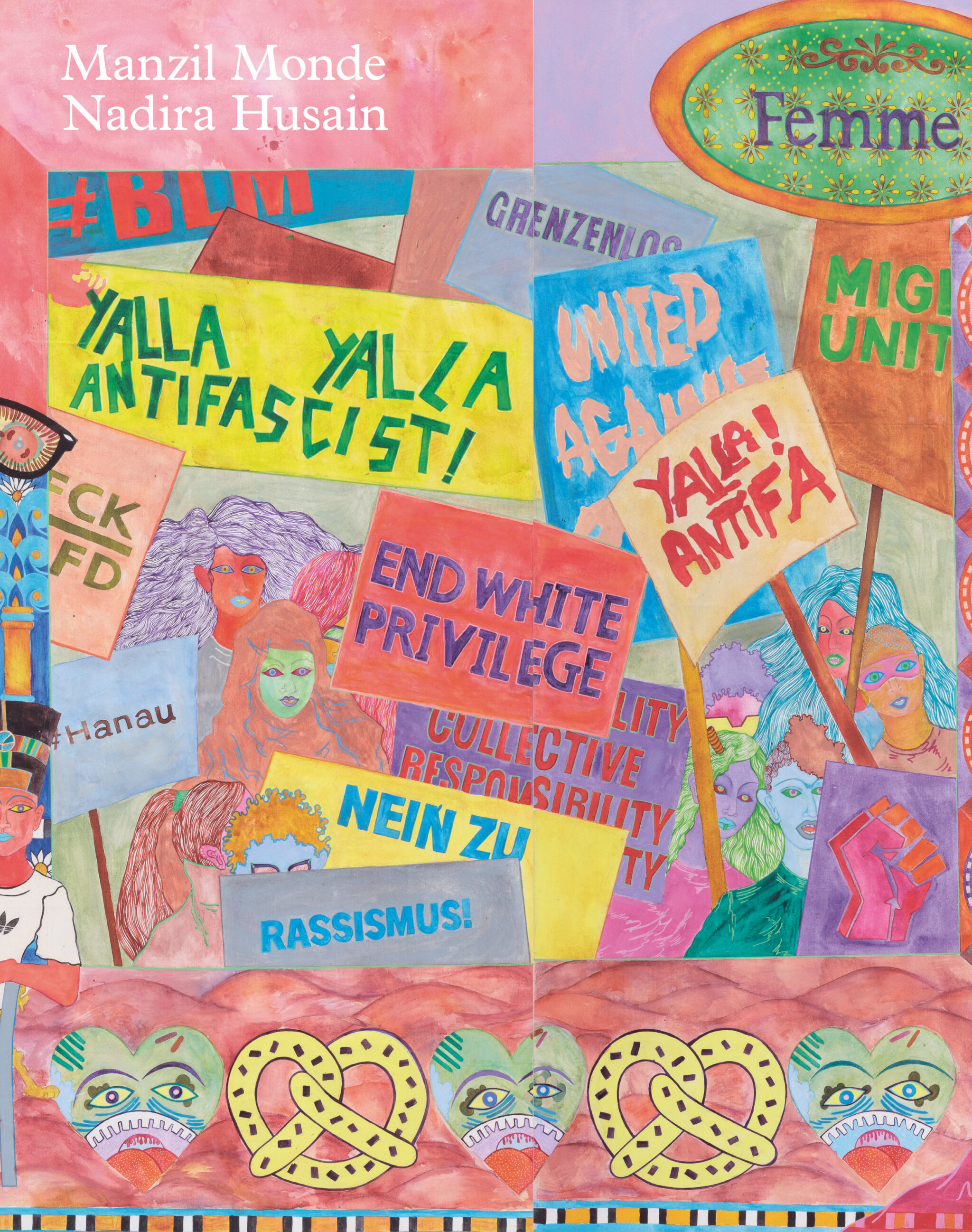
Nadira Husain
Manzil Monde30€ Add to cartNadira Husain’s (b. Paris, 1980; lives and works in Berlin, Paris, and Hyderabad) work combines figures, symbols, and ornaments from different cultures in complex imageries that reflect her own multicultural experience. To achieve a harmonious, though by no means placid, coexistence of all elements, the artist harnesses painting, drawing, printing processes, traditional artisan practices, and a range of materials including textile and ceramics, recognizing no hierarchy of media or genre. Hybridization and the translocation of motifs serve her to tease out similarities as well as divergences between myth and pop culture: the Indian deity, the cartoon character, and the fashion label appear as equals in the universe of her art.
The book contains several essays that explore Nadira Husain’s oeuvre as a significant contribution to the discourse around postmigration, transculturality, and feminism in contemporary art.
Nadira Husain studied at the École nationale supérieure des beaux-arts in Paris and the University of British Columbia in Vancouver. She is currently a visiting professor at the Berlin University of the Arts, where she co-teaches with the Belarusian artist Marina Naprushkina.
-

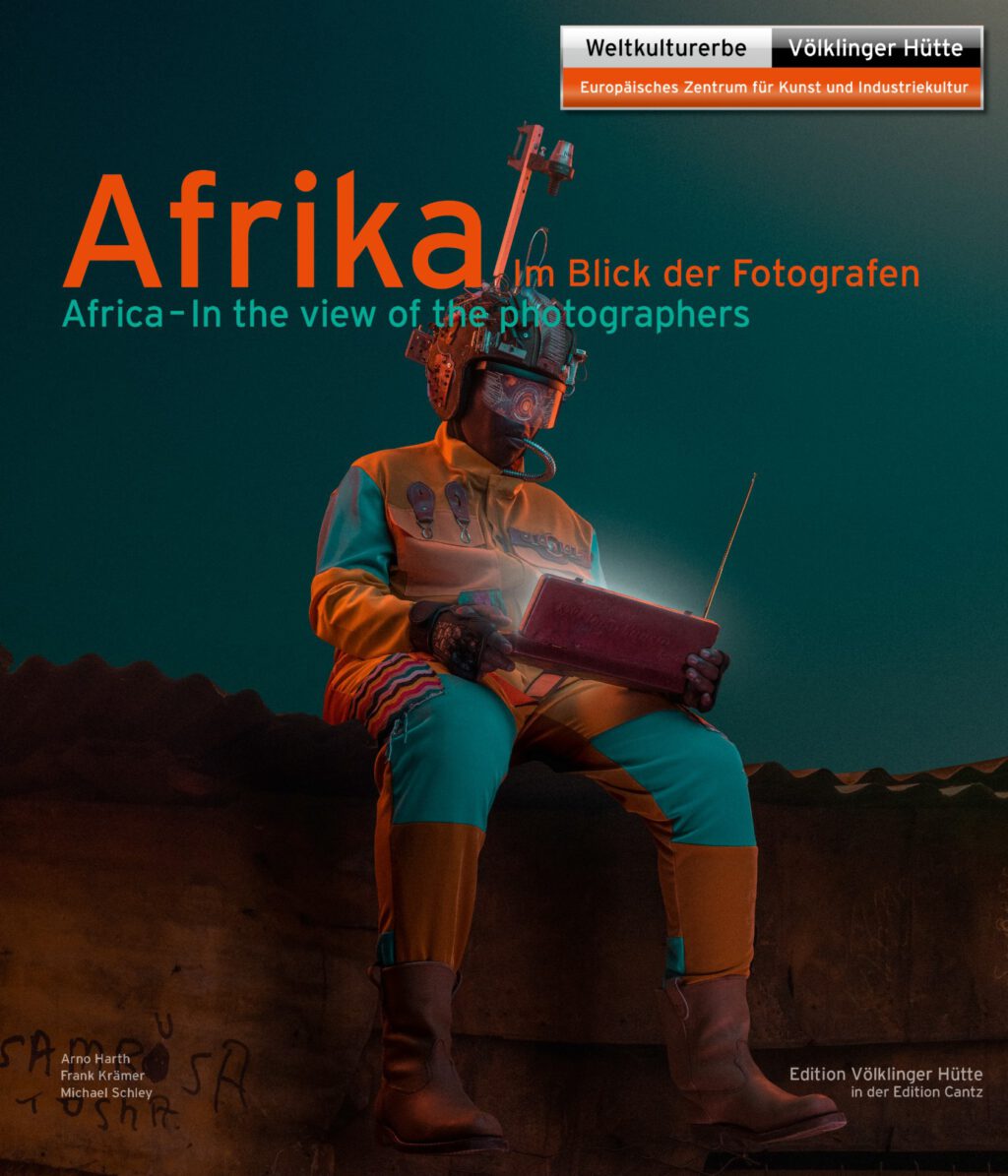
Africa
in the View of the Photographers19,90€ Add to cartContemporary Photography from Africa
Stereotypes still dominate the Western image of Africa; we tend to know little about cities like Lagos, Porto-Novo, or Kinshasa. The book presents photographs by African artists who tell stories from everyday life in the metropolises, of the unruliness of nature and industry, of traces of the past and pop culture. Osborne Macharia, for example, interweaves Kenya’s cultural identity with fictional Afro-futuristic plots; Yoriyas documents the small moments of life in his native Casablanca in pictures that have been picked up by the New York Times, National Geographic, and Vogue; Alice Mann’s intimate essays in portraiture, meanwhile, explore ideas about the making of pictures as a collaborative act. With additional works by Ilan Godfrey, Fabrice Monteiro, Kibuuka Mukisa Oscar, Léonard Pongo, and Fethi Sahraoui, the book offers a profoundly original survey of African realities.
-

Stephan Kaluza
Die dritte Natur14€ Add to cartThe Nature of Art as Totality and Idyll
The philosophy of nature is central to the artist Stephan Kaluza’s (b. Bad Iburg, 1964; lives and works in Düsseldorf) work. As he sees it, there exists a succession of different natures: first nature is Kaluza’s designation for a world as immediately felt by (early) humans, part of an encompassing and close-range experiential totality they labeled ‘nature’ and perceived as a physical, but also spiritual and emotional concatenation of events. Second nature is stripped down to an objective and utilitarian quality; nature becomes a resource, the basis of life, the environment. In a kind of linguistic turn, speech mediates a surrogate, an alternative world, that positions nature as culture’s opposite; the former becomes replaceable in favor of latter. Yet this culture is far from devoid of yearnings for the immediacy that it has lost, and so develops an ‘artificial idyllic nature’ in turn. This third nature of the arts—a purely human nature—harks back to the archetypes of a first nature in escapism and totalized immersion.
-

Andreas Wegner
Wir fahren mit der Schneckenpost, weil die uns keinen Pfennig kost50€ Add to cartThe art of Andreas Wegner is an inquiry into capitalist urbanity. His interventions explore alternative models for urban interaction, trade, city development, traffic, or the use of public space. Inspired by Joseph Beuys’s social sculpture and Charles Fourier’s social utopias, Wegner founded, e.g. a cooperative department store in Berlin, a grocery store in Vienna, and conducted real estate business as a form of creative resistance. This monograph illustrates the artist’s most important projects with ample imagery, essays by renowned authors, interviews, and his own texts. Alongside collective initiatives, installations, photography, film, and sculpture, painting remains a constant in Wegner’s oeuvre to this day.
-

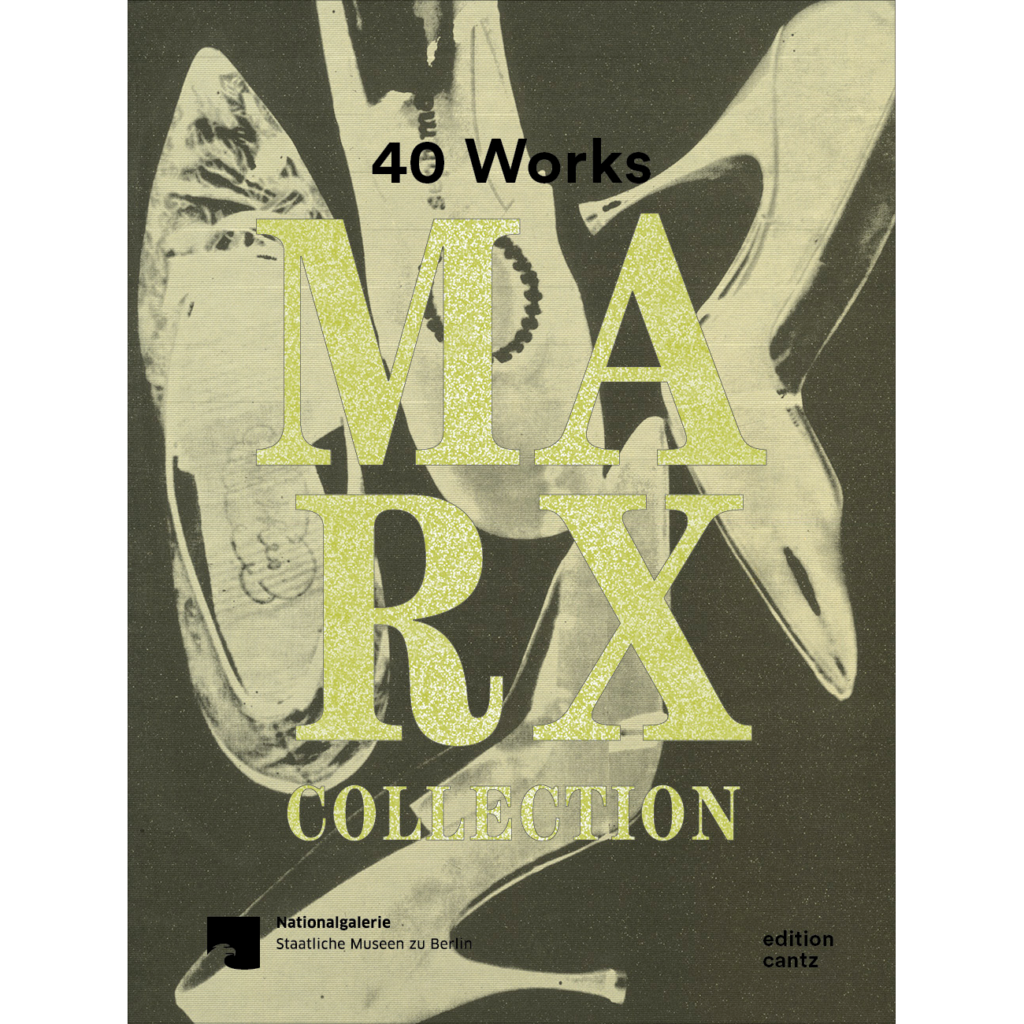
Marx Collection
40 Works29€ Add to cartSelected works from one of the most renowned collections of modern and contemporary art in Germany
Marx Collection – 40 Works is the first publication on this collection that focuses on important individual works. The selection ranges from the early 1960s to the present, encompassing one of the most exciting periods in recent art history. An illustrated chronicle provides background information on the historical context of the Marx Collection and its exhibition at the Nationalgalerie in Berlin. With work by Matthew Barney, Georg Baselitz, Joseph Beuys, Ross Bleckner, Francesco Clemente, Martin Disler, Rainer Fetting, Dan Flavin, Günther Förg, Peter Halley, Keith Haring, Candida Höfer, Donald Judd, Anish Kapoor, William Kentridge, Anselm Kiefer, Jeff Koons, Roy Lichtenstein, Richard Long, Gerhard Merz, Robert Rauschenberg, Ugo Rondinone, Thomas Ruff, Julian Schnabel, Cindy Sherman, Thomas Struth, Sam Taylor-Johnson, Cy Twombly, Andy Warhol, Rachel Whiterea
Dies ist die englische Ausgabe, hier geht’s zur deutschen Ausgabe
-

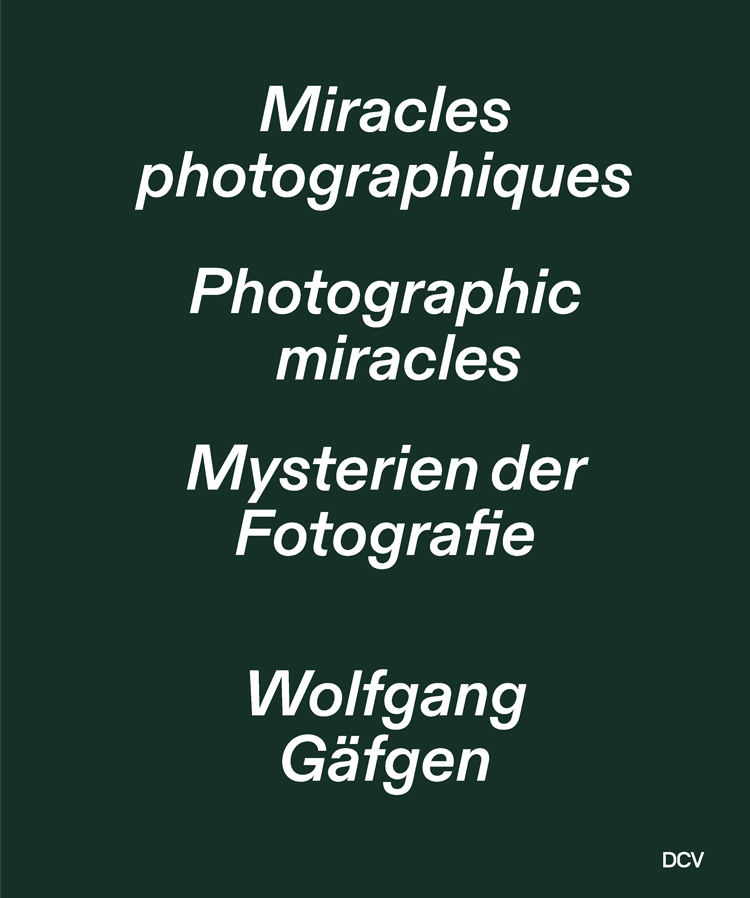
Wolfgang Gäfgen
Photographic Miracles45€ Add to cartA Mysterious Play of Light and Shadow
While Wolfgang Gäfgen’s (b. Hamburg, 1936; lives and works in Stuttgart and Esslingen) hand drawings and woodprints are widely acclaimed, only connoisseurs are familiar with his photographic oeuvre. The extensive body of analog black-and-white and color photographs spans the decades from the late 1960s to the present and is no less accomplished than the artist’s graphic works and prints. This book, with essays by Christian Gögger, Olivier Kaeppelin, Clemens Ottnad and Michel Poivert, is the first to gather a large selection of these pictures, illustrating the interdependencies between works in the different visual media of expression. Artfully arranged still lifes breathe a spectral animation into ostensibly trivial everyday objects. The human figures that appear now and then seem to be engaged in cultic performances; many of the photographic works are accompanied by ironic quotes from the earlier history of art or allusions to historic myths.
-

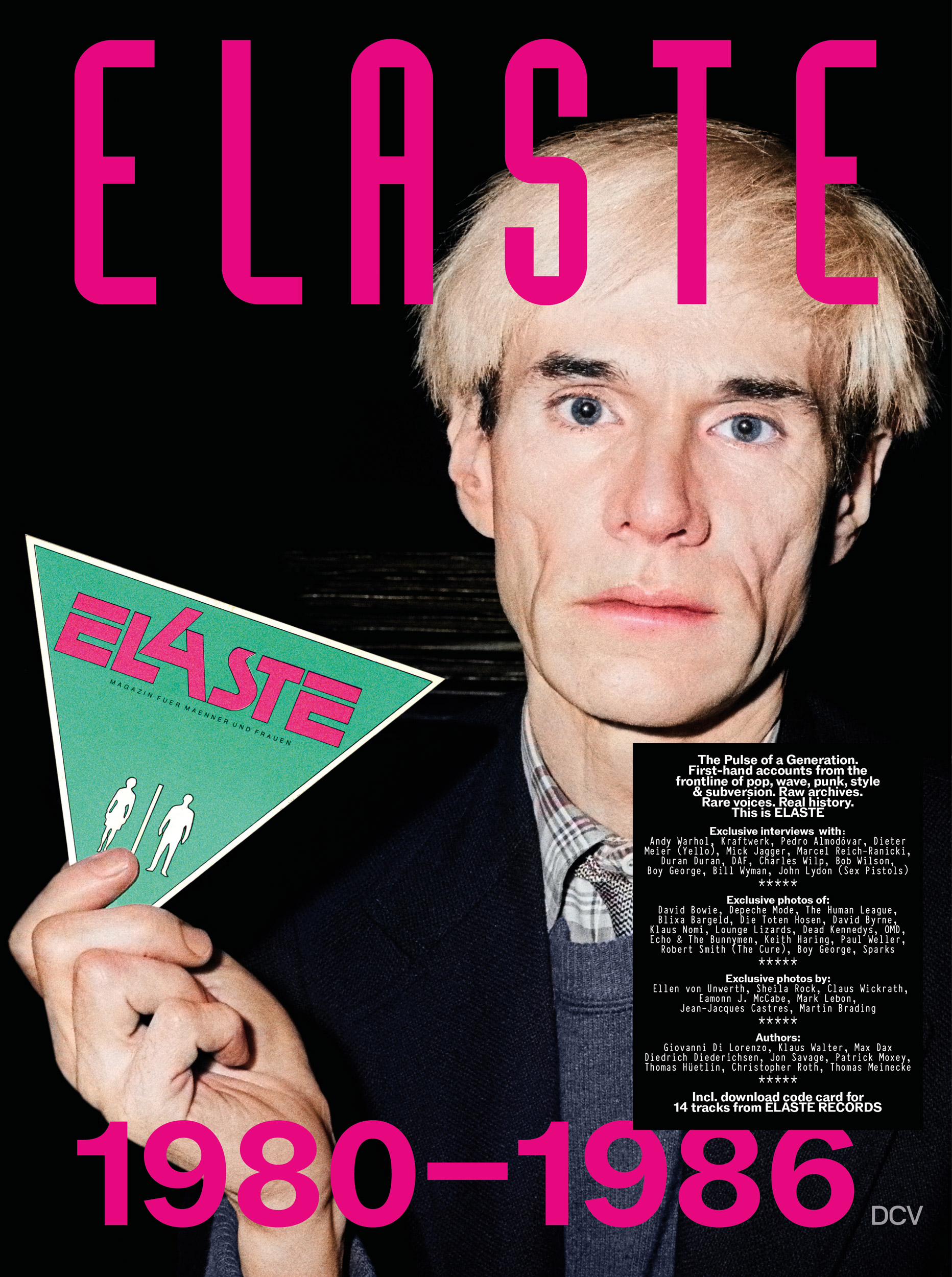
ELASTE
1980 – 198649€ Add to cartThe story of ELASTE is the story of a movement – that of the New Wave generation in West Germany. Founded in 1980 in Hanover, the magazine was a beacon of cultural revolt and the first glossy indie magazine of the Federal Republic: self-published, a statement somewhere between pop avant-garde, subversion, and a sharp sense of style. Among those who shaped the look and spirit of the magazine were Jon Savage, Ellen von Unwerth, and Diedrich Diederichsen. No other magazine operated at the intersection of music, fashion, and society quite like ELASTE — with headliners such as Warhol, The Rolling Stones, and Kraftwerk. This book by the magazine’s editors Thomas Elsner and Michael Reinboth, looks back — at the pioneering spirit, the minds, and the stories behind the magazine.
Incl. download code card for 14 tracks from ELASTE RECORDS
-

Sevina Tzanou
10€ Add to cartSevina Tzanou’s (b. Athens, 1994; lives and works in Bonn and Athens) large-format paintings show ecstatic bodies on the verge of abstraction that refuse to submit to categorization, cooptation, or control. They arise from the affect-laden situations the artist sets out to render in her paintings. She begins by priming the canvas with a monochrome coat of paint, on which she then sets down informal, expressive gestures, sometimes working with a mop or so-called “octopus brushes” that recall BDSM whips. The bodies depicted in the works are Tzanou’s painterly response to the abstract forms accreted on the canvas. Everything about her art is performative, the painterly process no less than the creation of bodies, gender, and sexual identity. Her subjects are drawn from ancient myths and motifs in the history of painting as well as contemporary debates.
-

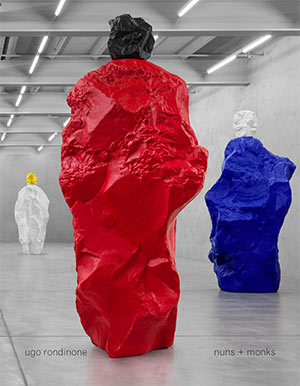
Ugo Rondinone
nuns + monks20€ Add to cartContemplation and Communion with the World
Ugo Rondinone (b. Brunnen, Switzerland, 1964; lives and works in New York) is a conceptual and installation artist whose oeuvre spans abstract painting, photography, and sculpture. Nature is where he has long found inspiration, regeneration, and comfort: “In nature, you enter a space where the sacred and the profane, the mystical and the secular vibrate against one another.” Rondinone’s works oscillate between the extremes of interiority and engagement with the wider world; stone is often present in his art as a recurrent material and symbol. The sculptures in the series nuns + monks originated as limestone models; the artist made three-dimensional scans and then cast the works in bronze. As a reflection of the inner self in the outside world, the friable mineral contrasts with the solidity of the bronze; the natural genesis of the millennia-old stones with the presence of the polychrome casts in the here and now. nuns + monks attest to a visibility while also giving the impression of flinching from the gazes to which they expose themselves.
Ugo Rondinone studied at the University of Applied Arts Vienna. His work has been presented at the Rockbund Art Museum, Shanghai, the Swiss National Museum, Zurich, MoMA/PS1, New York, and the Hamburger Bahnhof, Berlin, among others.
-
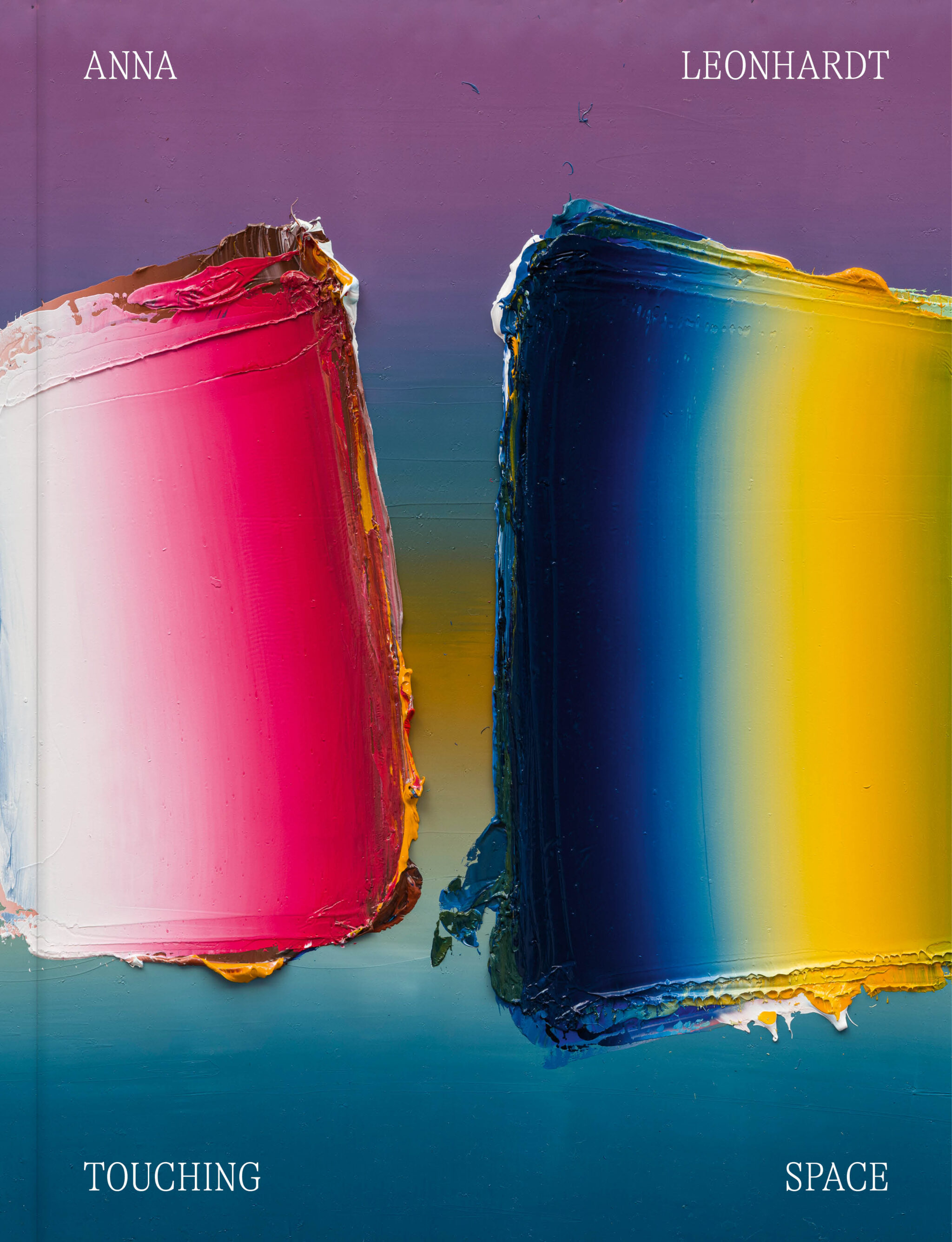
Anna Leonhardt
Touching Space34€ Add to cartAnna Leonhardt’s (b. Pforzheim, 1981; lives and works in New York and Leipzig) paintings probe her own experiences and moods, while also referencing works of literature and quoting phenomena in the history of her craft. Abstract surfaces composed of numerous layers that break the two-dimensional bounds of the canvas engender a physical and imagined space that is further expanded by the interrelations between the pictorial elements, an imaginary communication with other works of art, and the beholders. The publication Touching Space presents Anna Leonhardt’s most recent works. A compendium of writings on the subject of space by the phenomenologist Franz Xaver Baier and the artist’s correspondence with the curator Sophia Pietryga complement the imposing illustrations. The book is released in conjunction with the eponymous solo exhibition at Galerie She BAM! Laetitia Gorsy, Leipzig.
Anna Leonhardt studied painting and graphic art at the Dresden University of Fine Arts (HfBK) from 2002–2008, completing her education with postgraduate training with Ralf Kerbach until 2010.
-
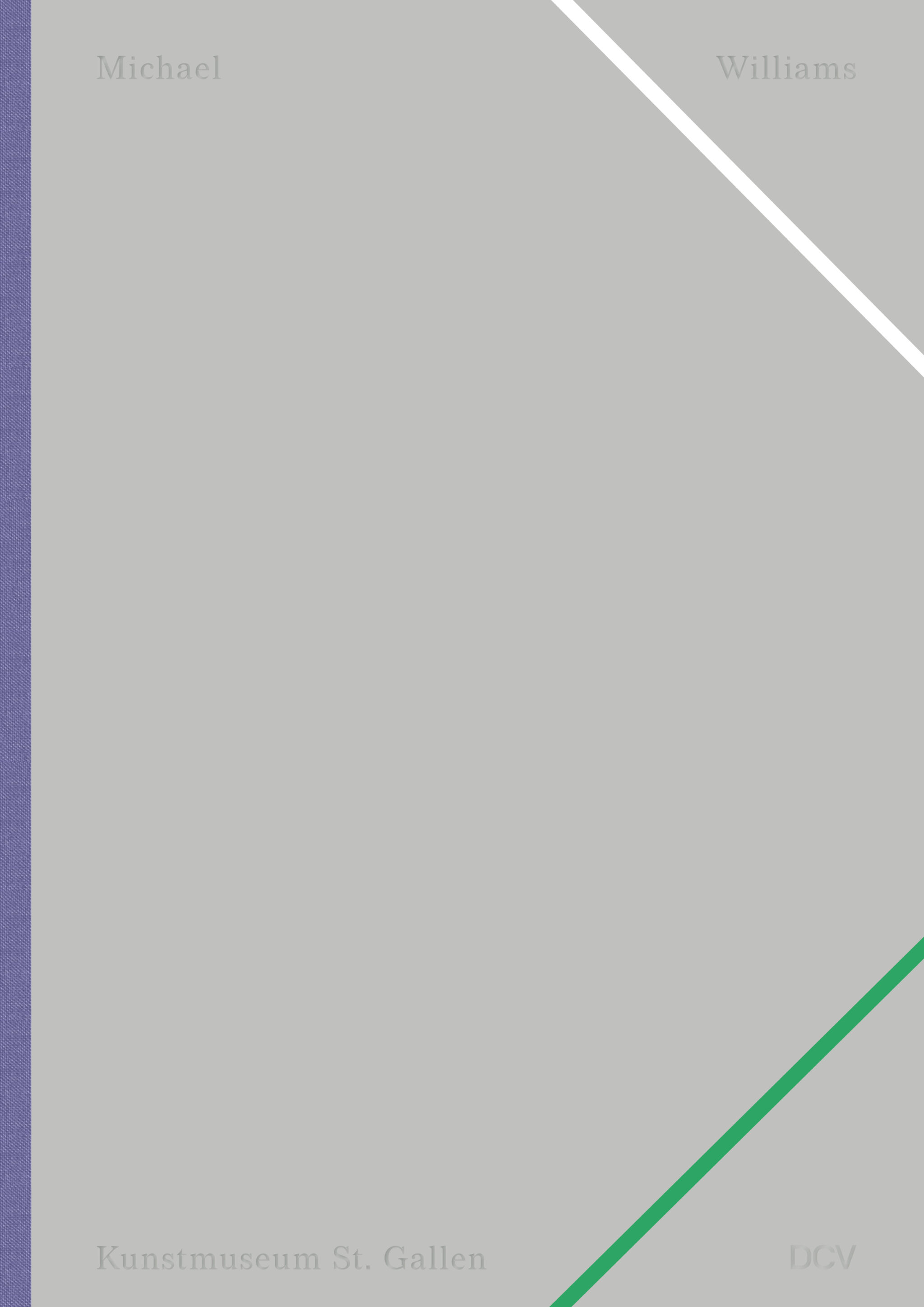
Michael Williams
Make Plans God Applauds42€ Add to cartMichael Williams (b. Doylestown, Pa., U.S., 1978; lives and works in Los Angeles, Ca.) is known for paintings whose source materials have been subjected to both analog and digital processes in an effort to render the fragmented nature of our existence today. During the lockdown, he created six large-format collage paintings. To make these modern history paintings, he mounted paper printouts on canvases and reworked the pictures with paint. They are, in short, classic collages, as in the exhilarating days of DADA, when the photographic image from newspapers first transmigrated into art. Michael Williams studied fine arts at Washington University, St. Louis, and has exhibited widely, including at the Wiener Secession, Vienna, and the Museum of Modern Art, New York.
- Release February 2026

Fidel Martínez
Todesfuge. Das Leben des Dichters Paul Celan26€ Add to cartThe Spanish graphic artist Fidel Martínez Nadal’s (b. Seville, 1979) graphic novel Todesfuge recounts the life of Paul Celan (1920–1970), one of the most eminent lyric poets of the twentieth century. The narrative interweaves biographical and literary aspects of Celan’s life, including his Jewish identity, his lifelong trauma as a Holocaust survivor, and his acclaimed poem Todesfuge. Martínez’s expressive and somber illustrations visualize Celan’s struggles with feelings of guilt, memory, and his creative efforts to find words for the unspeakable. An artistically brilliant homage to Paul Celan’s oeuvre, Todesfuge is an impressive contribution to the engagement with the Shoah in the medium of the graphic novel pioneered by Art Spiegelman.
-
Jan Zöller
10€ Add to cartJan Zöller’s (b. Haslach, 1992; lives and works in Karlsruhe) art has the aura of a jerry-rigged, cosmic, comedic theater. Flames gutter, pant legs and elbows dance, run, and go up in fire. Wells, basins, and tubs are central motifs, symbolizing communal settings, but also the circulation of vital energies, of human and economic interconnections. Zöller’s paintings take fractured or antiquated systems, today’s art world among them, and reforge them into something new. In painting, he reflects on what being an artist means to him, driven by an interest less in a dialogue with art history or other contemporary painters than in the psychosocial relationships and conditions that inform his work. His paintings, sculptures, and installations probe the discrepancy between economic production and the spiritual and magical dimension of art.
-
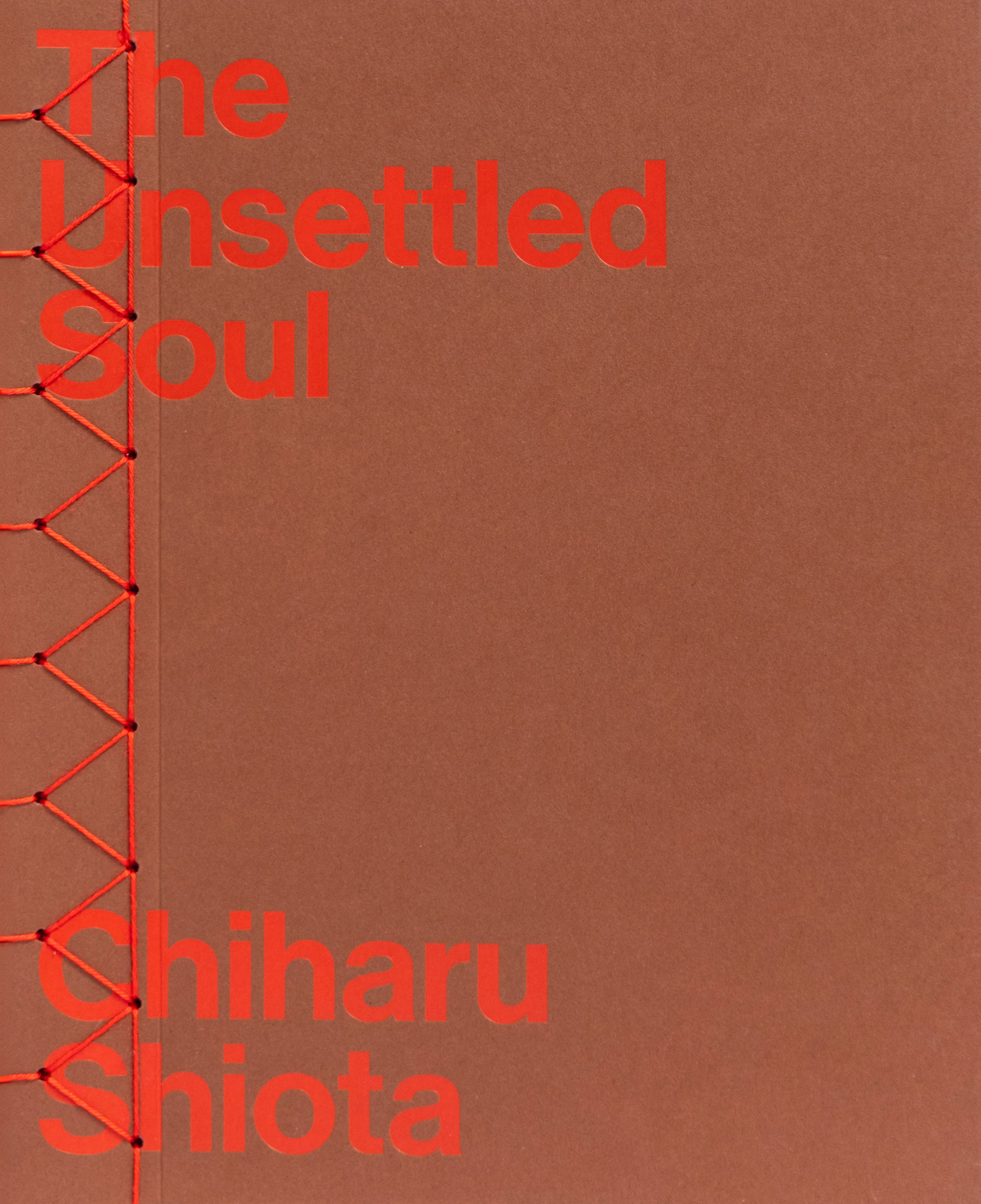
Chiharu Shiota
The Unsettled Soul48€ Add to cartWidely acclaimed for her distinctive visual language, which combines drawing, performance, sculpture, and installation art, Japanese artist Chiharu Shiota (b. 1972 in Osaka, lives and works in Berlin) addresses fundamental human concerns. Creating large-scale thread installations that incorporate a variety of everyday objects and memorabilia, she forms powerful environments that evoke a sense of nostalgia, personal history, and collective memory. The catalog accompanies the exhibition The Unsettled Soul, the first presentation of the artist in the Czech Republic. In addition to extensive photographic documentation of the exhibition at Kunsthalle Praha, the publication features an essay by Jason Waite discussing Shiota’s early works as well as an interview with the artist conducted by the editor, Christelle Havranek, about her key themes and the creation of the Prague exhibition.